

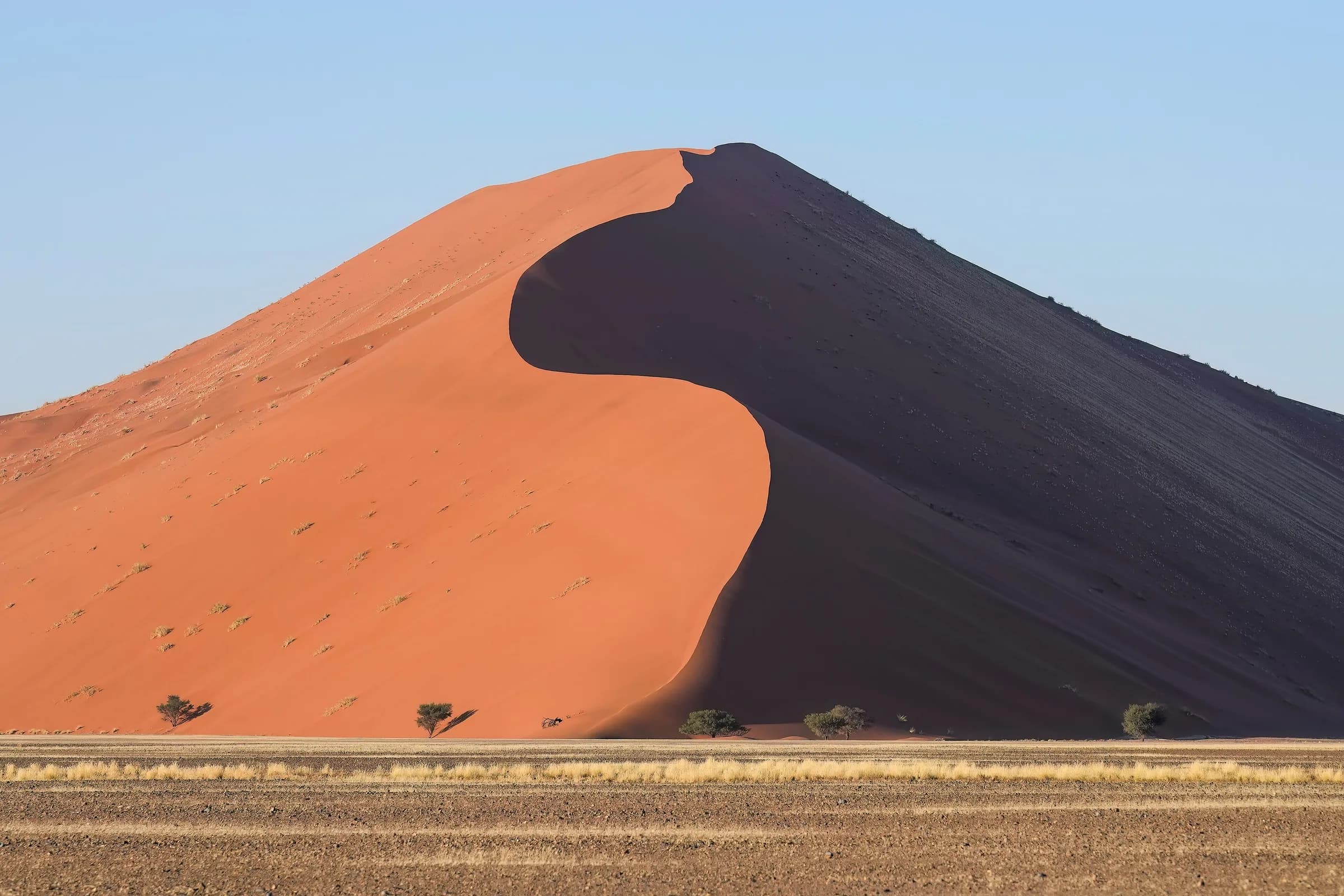
Namibia Visa: Requirements, e-Visa and Entry Rules
Most passports can apply online for a Namibian visa before flying, since Namibia replaced many of its old visa-free arrangements with an e-visa in 2025. A smaller group of mostly regional, mainly African passports still enter without any visa for short stays, while every other passport must get a visa from a Namibian embassy or the Ministry of Home Affairs before travel.
- Verified
Plusvisa is a private visa application service, not a government agency or embassy. Official government source: Namibia eServices Visa Portal (MHAISS), eservices.mhaiss.gov.na.
Do you need a visa for Namibia?
Every passport falls into one of these groups.
Which passport will you travel on?
Your route
Pick a passport
We will show the route Namibia puts you on, the government fee for each visa type, and the guide written for your nationality.
The three routes
- Visa-free
Visa-exempt (regional)
A short list of mostly African countries, including South Africa, Botswana, Zambia, Zimbabwe, Angola, Mozambique, Malawi, Kenya, Tanzania, Cuba, Brazil and Malaysia, can enter for tourism without a visa.
- e-Visa eligible
e-Visa eligible
Most of Europe, the Americas, Australia, New Zealand and many other countries can apply online before flying. The same list can also get a visa on arrival at major ports, but online application is recommended.
- Embassy visa only
Visa required in advance
Passports not on either list, and anyone travelling for work, study or long-term residence, must apply at a Namibian embassy, consulate, or the Ministry of Home Affairs before travelling.
How Namibia visa fees work

Set by the government. Visa fees are set by Namibia's Ministry of Home Affairs and Immigration and charged in Namibian dollars (NAD), whether applied for online, on arrival, or at an embassy.

African Union rate. A lower rate applies to passports from African Union member countries, and a higher rate applies to all other passports. Children under 6 are not charged, and children aged 6 to 11 pay a reduced rate.

How to pay. Online applications are paid by card on the government portal. Visa on arrival is paid at the port of entry. Embassies and consulates may ask for a bank transfer instead.

Refunds. The visa application fee is not refundable, including if the application is refused.
What Plusvisa charges
The government fee is passed through at cost. Our service fee is on top, and every passport's page shows the total before you start.
If we make a mistake that leads to a refusal, we refund our fee and re-apply free.
See the total for my passportYour document checklist

Valid passport
Must be valid for at least 6 months after your departure from Namibia, be machine-readable, and have at least 3 blank pages.

Passport-style photo
A recent colour photo. For paper applications, two prints with your name and signature on the back; for online applications, a digital colour image.

Scan of passport data page
A clear digital scan or photo of the passport's photo page, used for online applications.

Flight or onward ticket
Proof of your return or onward travel booking.

Proof of accommodation
Address and contact number of where you will stay for at least your first night.
Travel insurance
Confirmation of travel or medical insurance covering your stay.
Proof of funds
Evidence you can support yourself in Namibia, such as a recent bank statement or declared cash on arrival.
Only for some travellers

Invitation or motivation letter
Only if Business visitors, those invited by a Namibian resident, or independent travellers. Required when visiting a host, attending business meetings, or travelling independently without a travel agency.
Not eligible for any visa
Where the visa is accepted
The e-visa and visa on arrival are only accepted at these named airports, ports, and land border posts.
- Hosea Kutako International Airport (Windhoek)
- Eros Airport (Windhoek)
- Walvis Bay Airport
- Ondangwa Airport
- Oranjemund Airport
- Gobabis Airport
- Grootfontein Airport
- Keetmanshoop Airport
- Lüderitz Airport
- Mpacha Airport
- Rundu Airport
- Singalamwe Airport
- Lüderitz Port
- Walvis Bay Port
- Ariamsvlei (South Africa)
- Noordoewer (South Africa)
- Oranjemund (South Africa)
- Klein Manasse (South Africa)
- Velloorsdrift (South Africa)
- Sendelingsdrift (South Africa)
- Oshikango (Angola)
- Omahenene (Angola)
- Katwitwi (Angola)
- Nkurenkuru (Angola)
- Rucana (Angola)
- Sarasungu (Angola)
- Katima Mulilo (Zambia)
- Kasika (Zambia)
- Impalila Island
- Mohembo (Botswana)
- Ngoma (Botswana)
- Mata-Mata (Botswana)
- Trans-Kalahari (Botswana)
Choose your port of arrival carefully
The application, step by step
Before you apply
- 1
Check your route
Confirm whether your passport is visa-exempt, can use the e-visa, or needs a visa applied for at an embassy.
- 2
Gather your documents
Collect your passport, a photo, proof of accommodation, your flight booking, travel insurance and proof of funds.
On the official portal
- 3
Register an account
Create an account on the Ministry of Home Affairs and Immigration's eServices portal with an email address and password.
- 4
Complete the application
Enter your passport, personal and travel details, including your intended port of arrival and length of stay.
- 5
Upload documents and pay
Upload your photo and passport scan, confirm the declaration, and pay the visa fee online.
After you apply
- 6
Download and print
Download your e-visa or approval notice and print it; you must carry the printed copy when you travel.
- 7
Present it on arrival
Show your passport and printed e-visa at the port of entry, where a Visitor's Entry Permit is stamped into your passport.
Official website: eservices.mhaiss.gov.na (opens in a new tab)
The only official website, and how to check status
This government eServices portal is the only official site for Namibian e-visa and visa on arrival applications. Other websites that offer to arrange a Namibian visa are private services, not the government.
Why Namibia visas get rejected
Almost every refusal is a file problem, not a judgement about you.
Incomplete application
Missing answers, unsigned forms, or missing documents can delay or cause a refusal.
Insufficient funds
Not showing enough money or proof of means to support yourself during the stay.

Passport problems
A passport that is not valid for at least 6 months after departure, has no blank pages, or is damaged.

No onward travel
No return or onward ticket and no other proof you will leave Namibia.
Past immigration or criminal record
A previous deportation, entry refusal, or criminal conviction in any country.

Health grounds
Certain contagious diseases or conditions declared on the application form can lead to refusal.
Fraudulent or inconsistent information
Details on the application that do not match the passport or supporting documents.
Sockets and power in Namibia

Type D
Three round pins · 5 A

Type M
Three large pins · 15 A
Type D
Namibia uses type D and M sockets. If your own plugs are a different type, one type D adapter covers the whole trip.
Voltage
220 V · 50 Hz
Check the label on chargers and appliances: anything marked 100–240 V, 50/60 Hz works here with only an adapter, no converter.

Pack: a type D adapter unless your own plugs already match, and a small power strip — hotel rooms rarely have more than two sockets.
Namibia drives on the left
Traffic side:
Namibia · left-hand traffic

Getting around
Distances are huge and public transport is limited, so most visitors self-drive or join a tour. A 4x4 helps on gravel roads and desert routes; car hire is easiest from Windhoek's airport.
Health
Malaria risk exists in the north, including Etosha and the Caprivi Strip; check antimalarial advice before travel. Namibia is not a yellow fever area; a certificate is only needed after arriving from a yellow fever country.

Wildlife and etiquette
Keep a safe distance from wild animals, even in rest camps, and follow park rules on speed and gate times. Greet people before getting to business, and ask before photographing locals.
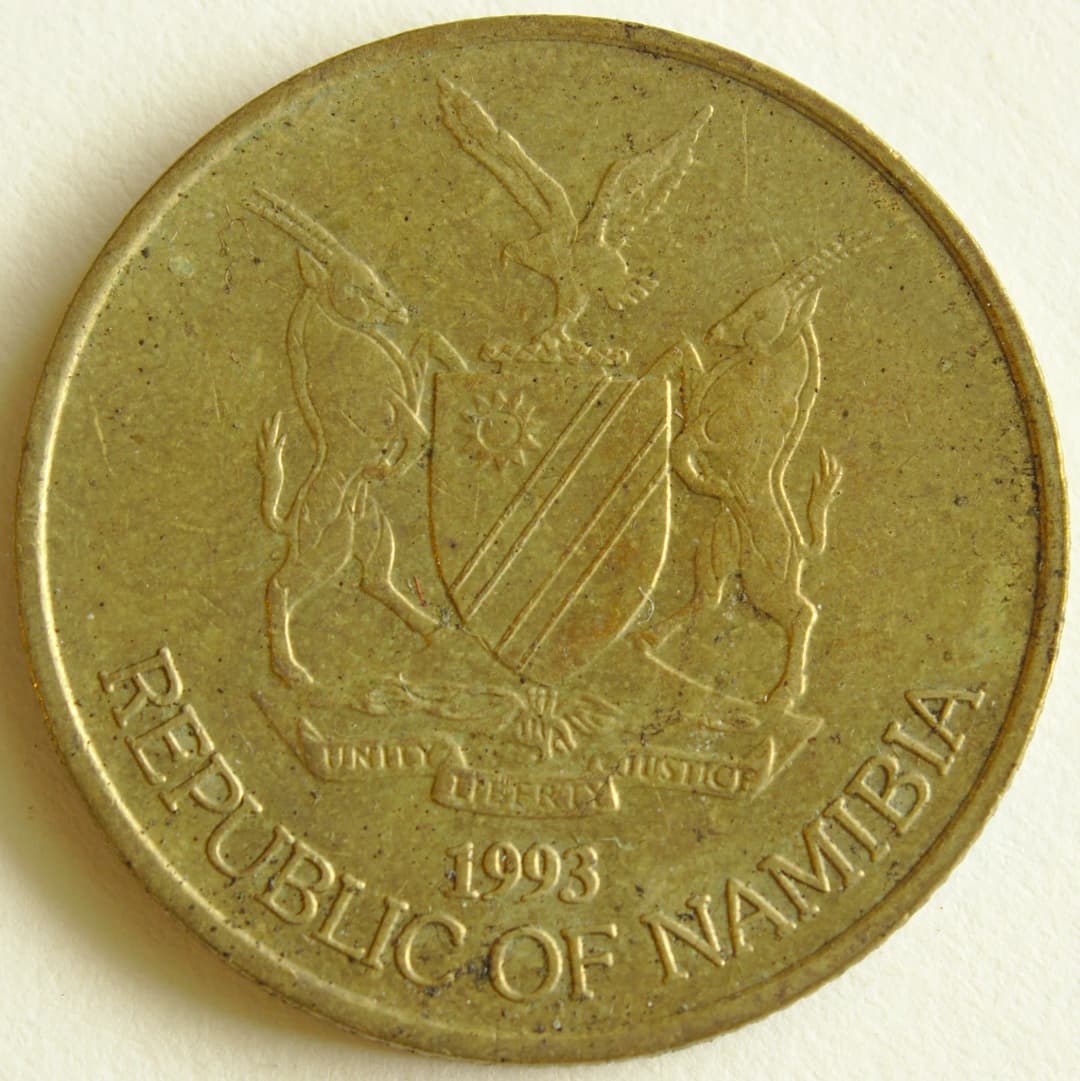
Namibian Dollars, cash and cards
Namibia uses the Namibian Dollar (NAD).

NAD and rand both work
The Namibian dollar is pegged 1:1 to the South African rand, and rand notes are accepted everywhere. Namibian dollars are not usable outside Namibia, so spend or change them before you leave.

Cards in cities, cash elsewhere
Visa and Mastercard are widely accepted in Windhoek, Swakopmund and other towns, but many rural lodges, fuel stations and small shops take cash only.

Plan ATM withdrawals
ATMs are common in cities but scarce in national parks and remote areas, and daily withdrawal limits are often low. Withdraw enough cash in a city before heading out on a self-drive route.
Weather by month (Windhoek)
- Daytime high
- Grey row = night low
- Best time to go
- Daytime high
- Grey row = night low
- Best time to go
| Month | High, °C | Low, °C | Rain, mm |
|---|---|---|---|
| January | 31.5 | 16.6 | 89.9 |
| February | 29.9 | 16.1 | 90.7 |
| March | 28.4 | 14.7 | 83.7 |
| April | 26 | 11.8 | 56.7 |
| May · best | 23.4 | 7.7 | 5.9 |
| June · best | 20.8 | 4.1 | 1.8 |
| July · best | 20.9 | 3.7 | 0.6 |
| August · best | 24.4 | 6.2 | 0.6 |
| September · best | 28.8 | 10.2 | 4.5 |
| October · best | 31.3 | 13.7 | 20.5 |
| November | 31.8 | 15 | 33.6 |
| December | 32.2 | 16.1 | 53.3 |
Monthly averages. Source: NASA POWER climatology, 2001-2020.
May · ideal
The best window runs May, June, July, August, September and October.
High 23.4°CLow 7.7°CRain 5.9 mm
Sweet spot: Windhoek has a dry, semi-arid climate. Winter (May-September) is dry and sunny with mild days and cool nights; summer (November-April) is hotter and brings most of the rain, usually short afternoon storms. The dry winter is most comfortable and best for wildlife viewing.
Tipping in Namibia
$2,000
Restaurant bill
If a service charge is not already added
10–15%
on a $2,000 bill: $200
Bar
Rounding up is common; a percentage tip is not expected
No tip expected
Taxi
Rounding up is usual
No tip expected
Hotel porter or housekeeping
Per bag or per day
$20–$50
Safari or tour guide
Per day, usually given directly in cash at the end of the trip
$150–$350
SIM, eSIM or roaming?
Local SIM
RecommendedLocal SIM card
≈ $100
MTC or TN Mobile counters at Hosea Kutako International Airport or in-town shops Bring your passport to register the SIM; add a data bundle on top of the SIM price.
eSIM
Travel eSIM
≈ $15
Installed online before you travel, from an eSIM provider Convenient if your phone supports eSIM and you want data working as soon as you land.
Roaming
Roaming from home
Activated through your home network before departure Usually the most expensive option; check your operator's rates for Namibia first.
If it's your first time: three you shouldn't skip
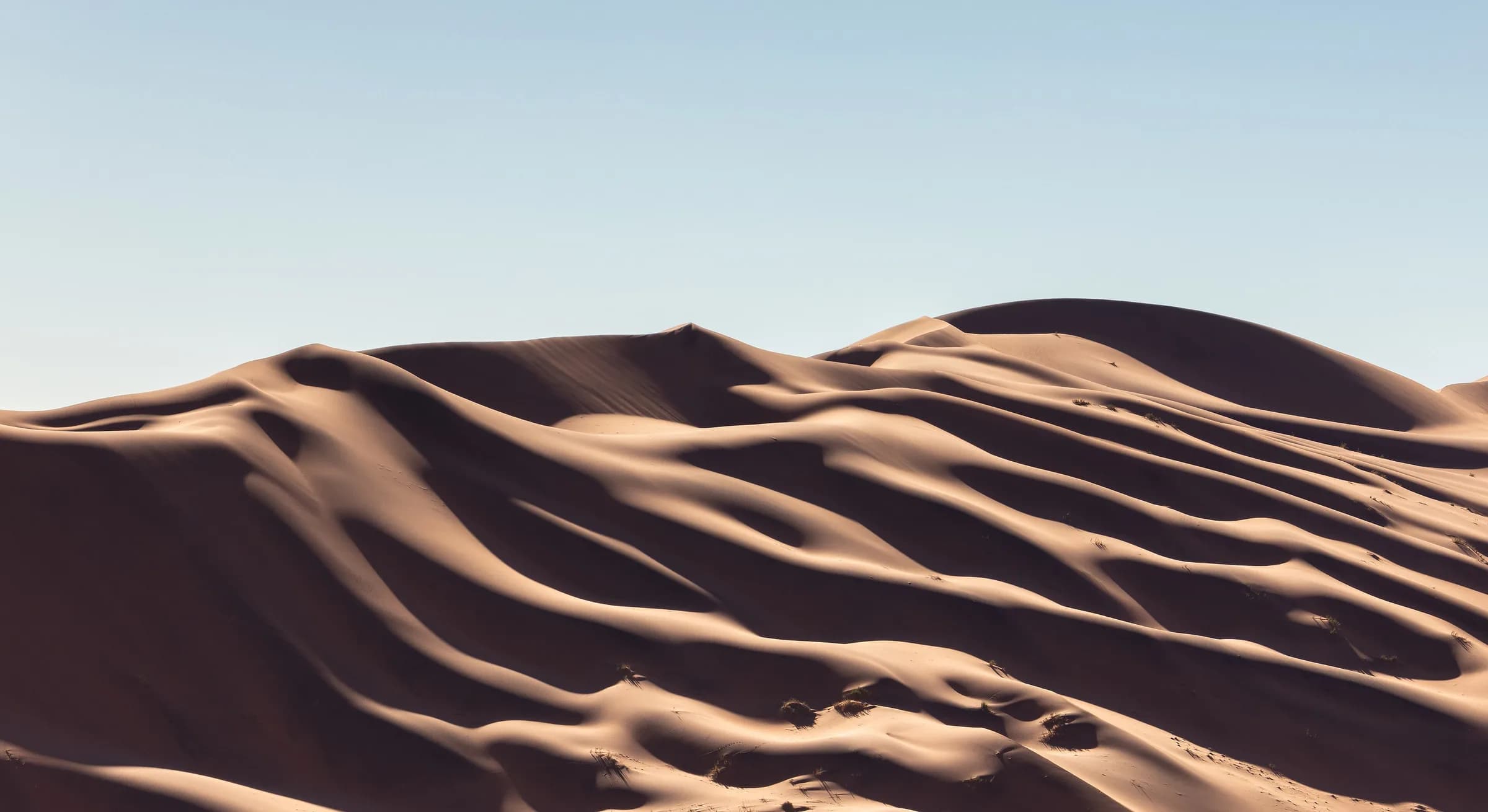
Namib-Naukluft National Park
Sossusvlei and Deadvlei
Towering red sand dunes and a white clay pan with ancient dead trees; best visited at sunrise.
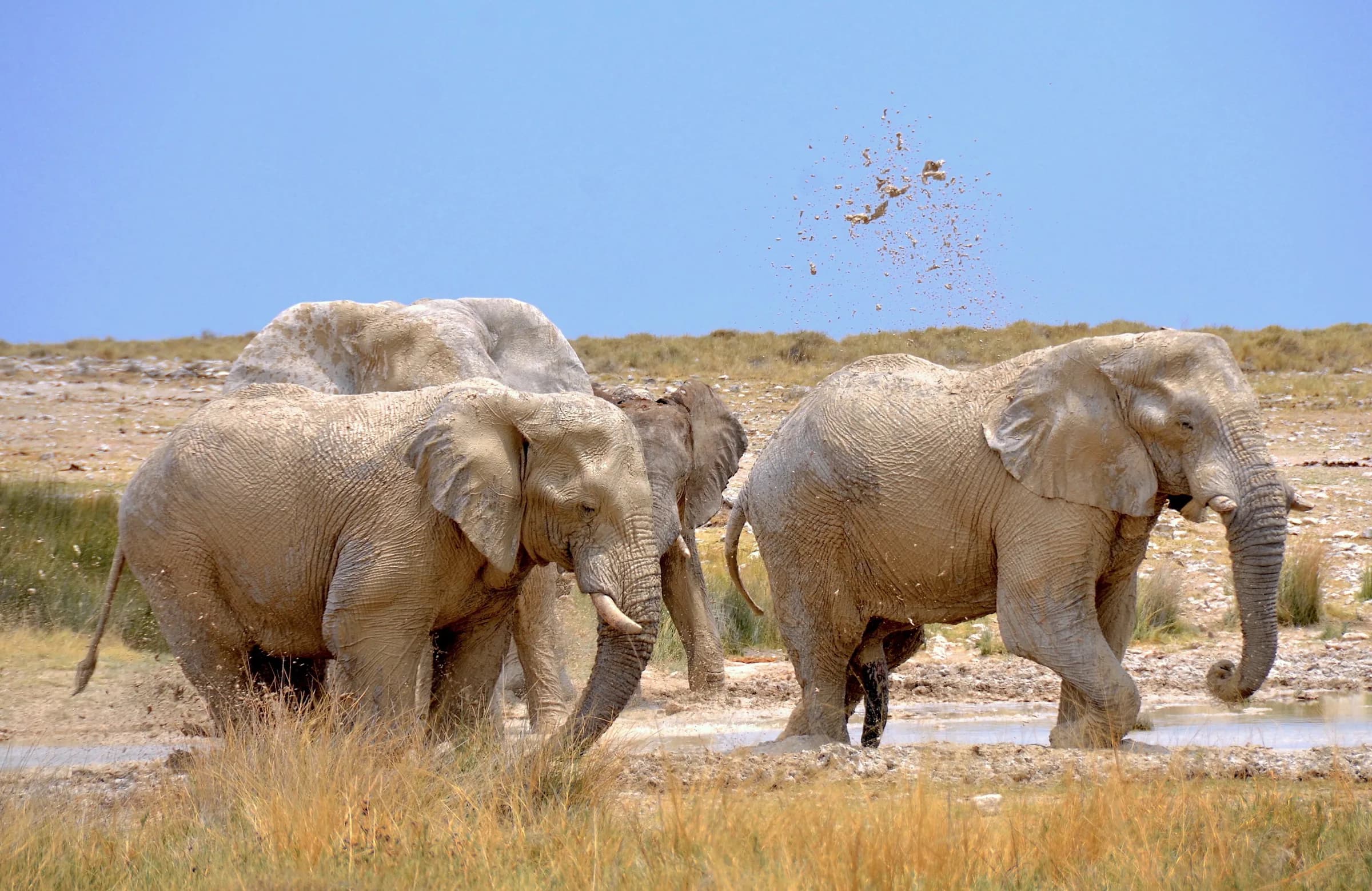
Etosha
Etosha National Park
One of Africa's great wildlife parks, with waterholes where elephants, lions and rhinos gather.
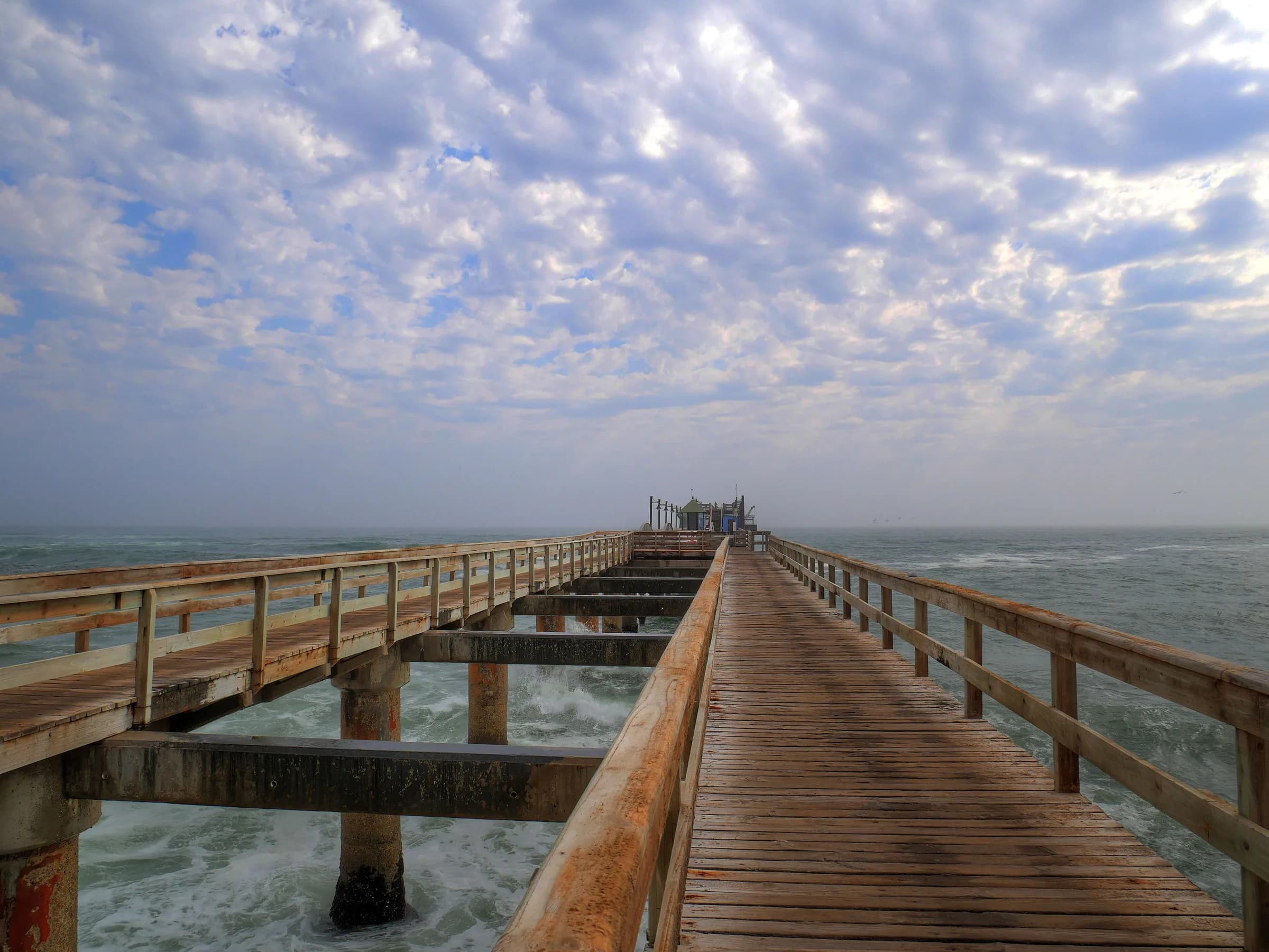
Swakopmund
Swakopmund
A coastal town with German-colonial architecture, fresh seafood, and desert adventure activities nearby.
Questions everyone asks about Namibia visas
It depends on your passport. A short list of mostly regional passports can enter visa-free for up to 90 days. Most other passports can apply online for an e-visa before flying. Everyone else must get a visa from a Namibian embassy, consulate, or the Ministry of Home Affairs before travelling.
Yes, if your passport is on the e-visa eligible list, you can apply on the government's eServices portal and print the approved visa to carry with you. The government recommends this over a visa on arrival.
Yes, at a shorter list of airports, ports and land borders, for the same nationalities eligible for the e-visa. Applying online in advance avoids queues on arrival.
Most visitor visas and visa exemptions allow up to 90 days in a year, which can be used in one visit or split across several trips.
Yes. Each child needs their own passport and a separate visa application, even when travelling with a parent.
Namibia is not a yellow fever area, so a certificate is not generally required. It can be asked for if you are arriving from, or have recently transited through, a country with yellow fever risk.
Only citizens of a few neighbouring countries with specific agreements, such as Botswana, can use an ID card. Everyone else needs a valid passport to enter Namibia.
Only at the airports, seaports and land border posts the e-visa and visa on arrival are accepted at. Entering elsewhere can mean the visa is not accepted.
Now read the one written for your passport
Each guide has the fee for that passport, its maximum stay, the rules that apply only to it, and the application itself.
Türkiye
Route, fee and documents for this passport
United Kingdom
Route, fee and documents for this passport
Spain
Route, fee and documents for this passport
Germany
Route, fee and documents for this passport
France
Route, fee and documents for this passport
Czechia
Route, fee and documents for this passport
Canada
Route, fee and documents for this passport
Austria
Route, fee and documents for this passport
Every other passport →
Pick your passport for your route, your fee and your documents.