

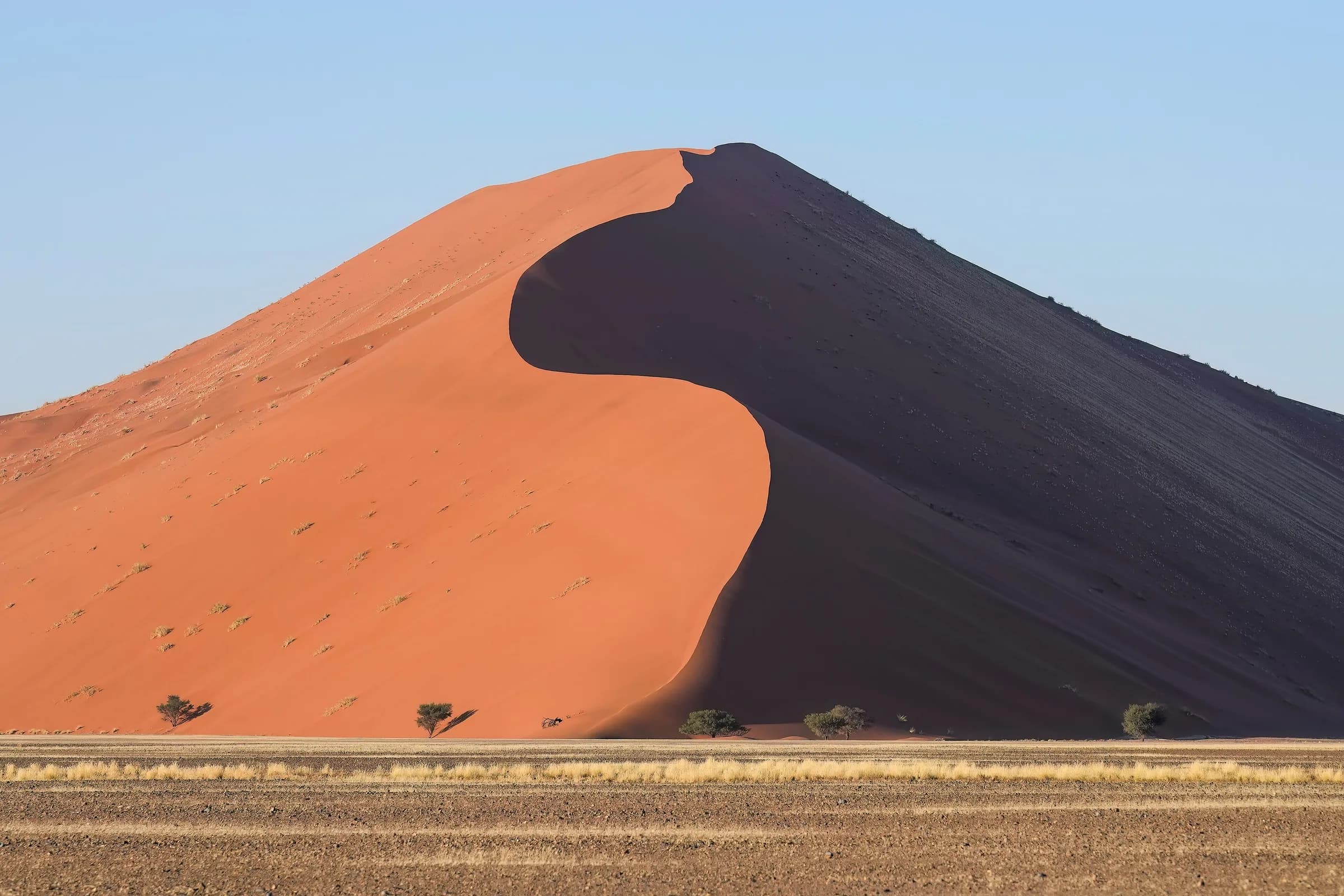

Namibia Visa for UK Citizens: e-Visa and Entry Rules
- Visa required · e-Visa
- Apply at least 0 days before arrival
- Verified
Plusvisa is a private visa application service, not a government agency or embassy. Official government source: Namibia eServices Visa Portal (MHAISS), eservices.mhaiss.gov.na.
Table of contents

Passport
Valid 6 months after departure
UK government advice counts 6 months from arrival, so allow for the stricter date.

Stay
Up to 90 days a year
Per year, in one stay or in parts.

Apply
Online before you fly
Visa on arrival exists, but online is recommended.
Three routes into Namibia
Most people
e-Visa (apply online)
Apply on the Namibian eServices portal before you travel. Print the approved visa and show it at the port of entry. Use only a listed airport, port or land border.
Optional
Visa on arrival
UK passport holders can get a visa at a shorter list of entry points. The government recommends applying online before you fly instead.
Work or longer stay
Visa from the Namibian High Commission
Needed for work, volunteering or stays longer than the main route allows. Visa on arrival does not cover these. Apply through the Namibian High Commission in the UK.
How long you may stay
UK passport holders may stay up to 90 days a year in Namibia. The 90 days can be used in one stay or split across visits.

A yearly total: The 90 days is a total for each year, not 90 days on every entry. Keep count across trips.

e-Visa and visa on arrival: The visa you get is valid for the period you request. It cannot give more than 90 days a year.

Longer stays or work: Work, volunteering and stays longer than the main route allows need the right visa. Apply through the Namibian High Commission in the UK before you travel.

Check your entry stamp: Check the date and the length of stay on your entry stamp. Officials check it when you leave. Overstaying can lead to detention, arrest or a fine, and removal and trouble re-entering.
Extensions: No online extension process is published. Extensions are handled by the Ministry of Home Affairs and Immigration in Windhoek.
Your document checklist
Ten things to have ready before you start your application, as a UK applicant.

Valid passport
Valid 6 months after departure (UK advice: after arrival). At least 3 blank pages. Machine-readable.
Passport-style photo
Recent colour photo. Online applications need a digital colour image.
Scan of passport data page
Clear digital scan or photo of the photo page, for the online application.

Flight or onward ticket
Proof of your return or onward travel booking.

Proof of accommodation
Address and contact number of where you will stay, at least for your first night.
Travel insurance
Confirmation of travel or medical insurance covering your stay.

Proof of funds
Evidence you can support yourself, such as a recent bank statement.
Only for some visa types

Invitation or motivation letter
Only if Business visitors, those invited by a Namibian resident, or independent travellers. Letter from the host, company or organisation, or a motivation letter for independent travel.Full birth certificate for each child
Only if Parents travelling with children aged 17 and under. Full (unabridged) certificate with both parents' details. Abridged certificates are not accepted. UK-born children: order a full copy from GOV.UK.Consent affidavit
Only if Travelling with one parent, another adult or a child you are not the parent of. Sworn consent from the other parent or guardian, or from the child's parents or guardians if you are not the parent.
When should you apply?
Enter your arrival date and we'll work backwards.
Processing
Pick your arrival date
- 1
Apply online
—
Form and uploads, about 30 min
- 2
Pay the fee
—
By card, on the portal
- 3
Processing
See the portal
Official estimate
- 4
Approval emailed
—
Keep a copy on your phone
- 5
Arrive in Namibia
—
Show the approval at the border
No official minimum lead time for the online e-visa. Allow about 3 weeks to leave room for processing and a resubmission. Other visa routes need more notice; see the High Commission route.
Four questions, 20 seconds
Is your trip for tourism, a visit or family, not work, study, volunteering or residence?
Will you stay 90 days or less in the year?
Will you enter at a listed airport, seaport or land border?
Does your passport have 6 months' validity after departure and 3 blank pages?
Result
Answer all four
Four quick checks of the rules that most often catch travellers out, and we'll tell you where you stand.
The application, step by step
Before you apply
- 1
Check your route
Confirm that you can use the e-visa or visa on arrival. Work, study or longer stays need a visa from the Namibian High Commission in the UK.
- 2
Check your passport
Check it is valid 6 months after departure and has at least 3 blank pages. UK advice counts 6 months from arrival.
Renew early if it is close to the limit.
- 3
Gather your documents
Collect your passport, a passport-style photo, proof of accommodation, your flight booking, travel insurance and proof of funds. Add children's documents if they apply.
On the official portal
- 4
Register an account
Create an account on the Namibia eServices portal with an email address and password.
- 5
Complete the application
Enter your passport, personal and travel details, your entry point and your length of stay.
- 6
Upload documents and pay
Upload your photo and passport scan, confirm the declaration and pay the visa fee by card.
After you apply
- 7
Download and print
Download your e-visa or approval notice and print it. You must carry the printed copy.
- 8
Present it on arrival
Show your passport and printed e-visa at the port of entry. A Visitor's Entry Permit is stamped into your passport.

Check the entry stamp date and length of stay.
Official website: eservices.mhaiss.gov.na (opens in a new tab)
Questions UK travellers actually ask
Yes. From 1 April 2025, UK passport holders need a visa to visit Namibia. Most apply for an e-visa online before they fly. Visa on arrival is also available at some entry points.
Yes, at a shorter list of airports, seaports and land borders. The UK government and the Namibian authorities recommend applying online before you travel instead.
Up to 90 days a year. You can use the 90 days in one stay or in parts. It is a yearly total, not 90 days on every entry.
Yes. Each child needs their own passport and visa application, even when travelling with a parent. Parents must carry a full birth certificate for children aged 17 and under. Abridged certificates are not accepted.
The destination rule counts 6 months after departure. UK government advice counts 6 months after arrival. Renew early if your passport is close to that limit.
Only if you arrive from, or recently passed through, a country listed as a yellow fever transmission risk. UK travel health advice has more detail.
No. UK citizens need a valid passport to enter Namibia.
The official sources do not publish a fixed fine. UK government advice warns you could be detained, arrested or fined, and removed. Contact the Ministry of Home Affairs and Immigration if you overstay.
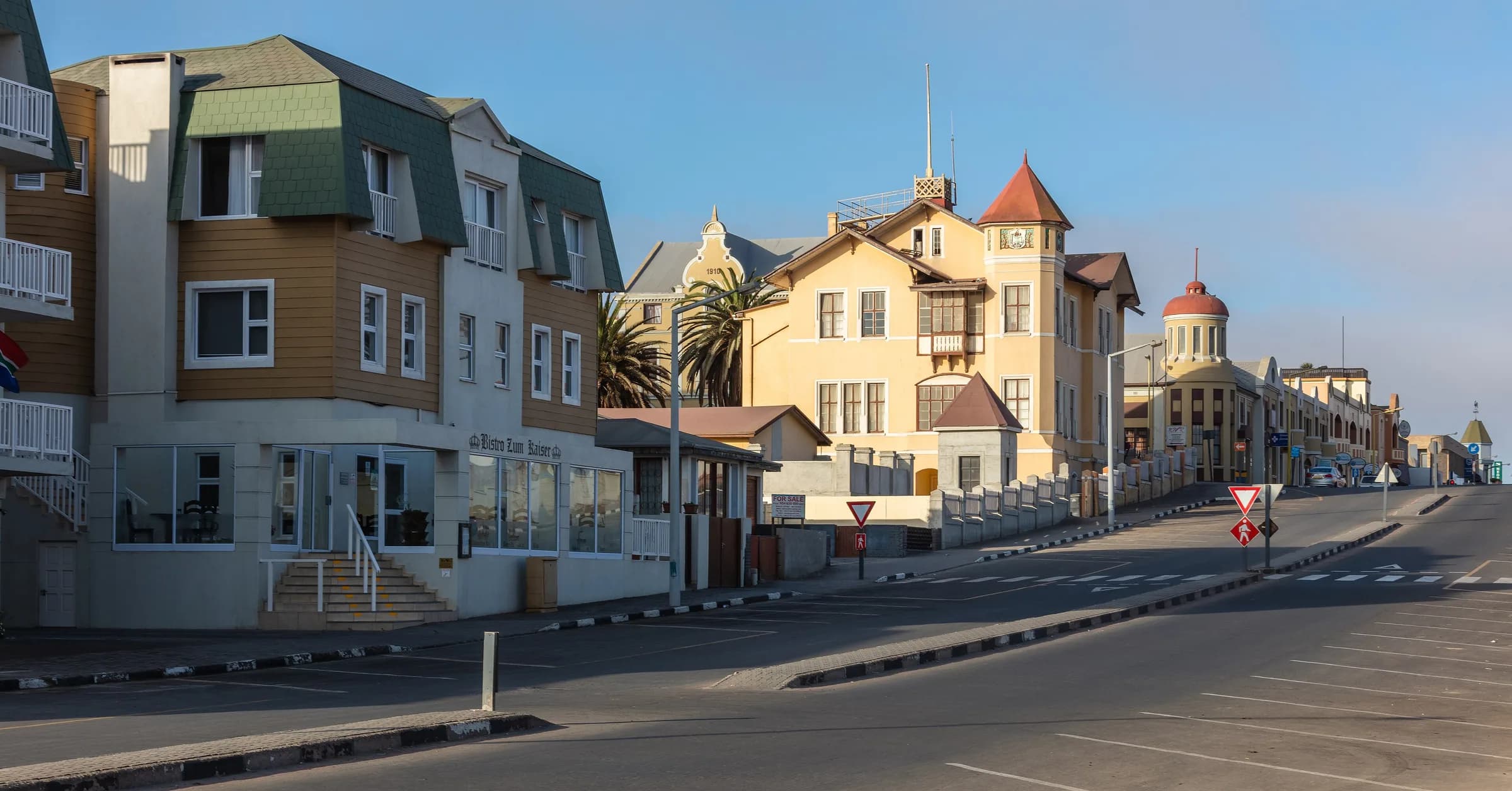
Visa sorted
The things that make the first
48 hours easy, compared with home
Your UK plug won't fit. Here's what will.

Type D
Three round pins · 5 A

Type M
Three large pins · 15 A
Type D
Namibia uses type D and M sockets and your plugs are type G. A G-to-D adapter works for the whole trip.
Voltage
220 V · 50 Hz
Against 230 V · 50 Hz at home. Check the label on chargers and appliances: anything marked 100–240 V, 50/60 Hz works in both.

Pack: one type D adapter and a small power strip — hotel rooms rarely have more than two sockets.
Namibia drives on the left — just like home
Compare traffic side:
Namibia · left-hand traffic — same as United Kingdom

Getting around
Distances are huge and public transport is limited, so most visitors self-drive or join a tour. A 4x4 helps on gravel roads and desert routes; car hire is easiest from Windhoek's airport.

Health
Malaria risk exists in the north, including Etosha and the Caprivi Strip; check antimalarial advice before travel. Namibia is not a yellow fever area; a certificate is only needed after arriving from a yellow fever country.

Wildlife and etiquette
Keep a safe distance from wild animals, even in rest camps, and follow park rules on speed and gate times. Greet people before getting to business, and ask before photographing locals.
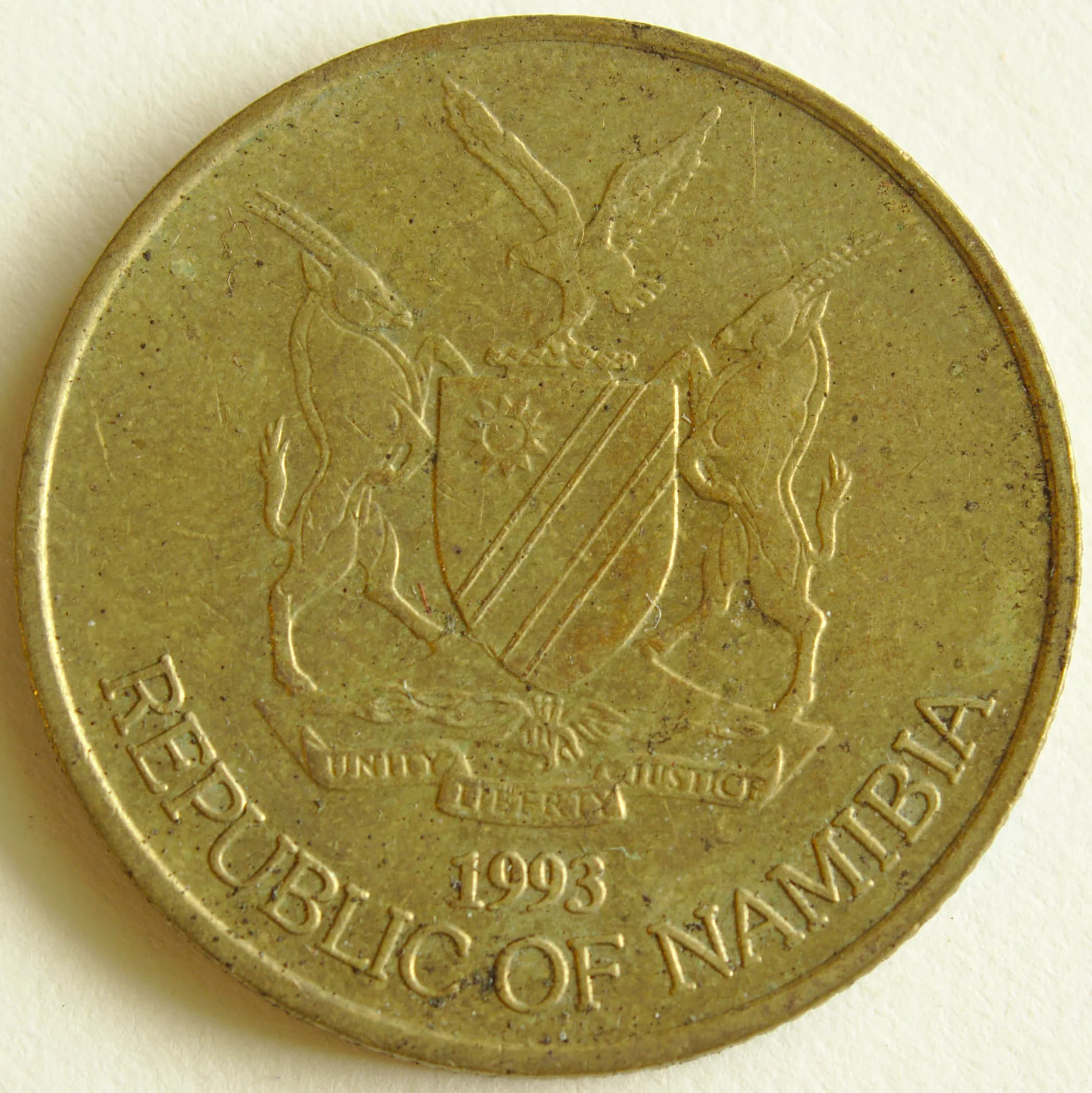
Namibian Dollars, cash and cards
Namibia uses the Namibian Dollar (NAD).

NAD and rand both work
The Namibian dollar is pegged 1:1 to the South African rand, and rand notes are accepted everywhere. Namibian dollars are not usable outside Namibia, so spend or change them before you leave.

Cards in cities, cash elsewhere
Visa and Mastercard are widely accepted in Windhoek, Swakopmund and other towns, but many rural lodges, fuel stations and small shops take cash only.

Plan ATM withdrawals
ATMs are common in cities but scarce in national parks and remote areas, and daily withdrawal limits are often low. Withdraw enough cash in a city before heading out on a self-drive route.
Weather by month (Windhoek)
- Daytime high
- Grey row = night low
- Best time to go
- Daytime high
- Grey row = night low
- Best time to go
| Month | High, °C | Low, °C | Rain, mm |
|---|---|---|---|
| January | 31.5 | 16.6 | 89.9 |
| February | 29.9 | 16.1 | 90.7 |
| March | 28.4 | 14.7 | 83.7 |
| April | 26 | 11.8 | 56.7 |
| May · best | 23.4 | 7.7 | 5.9 |
| June · best | 20.8 | 4.1 | 1.8 |
| July · best | 20.9 | 3.7 | 0.6 |
| August · best | 24.4 | 6.2 | 0.6 |
| September · best | 28.8 | 10.2 | 4.5 |
| October · best | 31.3 | 13.7 | 20.5 |
| November | 31.8 | 15 | 33.6 |
| December | 32.2 | 16.1 | 53.3 |
Monthly averages. Source: NASA POWER climatology, 2001-2020.
May · ideal
The best window runs May, June, July, August, September and October.
High 23.4°CLow 7.7°CRain 5.9 mm
Sweet spot: Windhoek has a dry, semi-arid climate. Winter (May-September) is dry and sunny with mild days and cool nights; summer (November-April) is hotter and brings most of the rain, usually short afternoon storms. The dry winter is most comfortable and best for wildlife viewing.
One time zone
London
--:--:--
Windhoek
--:--:--
How much to tip, in GBP
$2,000
Restaurant bill
If a service charge is not already added
10–15%
on a $2,000 bill: $200
Bar
Rounding up is common; a percentage tip is not expected
No tip expected
Taxi
Rounding up is usual
No tip expected
Hotel porter or housekeeping
Per bag or per day
$20–$50
Safari or tour guide
Per day, usually given directly in cash at the end of the trip
$150–$350
SIM, eSIM or roaming?
Local SIM
RecommendedLocal SIM card
≈ $100
MTC or TN Mobile counters at Hosea Kutako International Airport or in-town shops Bring your passport to register the SIM; add a data bundle on top of the SIM price.
eSIM
Travel eSIM
≈ £11.81US$15
Installed online before you travel, from an eSIM provider Convenient if your phone supports eSIM and you want data working as soon as you land.
Roaming
Roaming from home
Activated through your home network before departure Usually the most expensive option; check your operator's rates for Namibia first.