


Namibia Visa for Austrian Citizens: e-Visa and Entry Rules
- Visa required · e-Visa
- Apply at least 0 days before arrival
- Verified
Plusvisa is a private visa application service, not a government agency or embassy. Official government source: Namibia eServices Visa Portal (MHAISS), eservices.mhaiss.gov.na.
Table of contents

Passport validity
6 months after departure
Machine-readable passport

Blank pages
At least 3
Austria's foreign ministry says 2. Plan for 3.

Main route
Apply online before flying
Visa on arrival also possible
Two routes into Namibia
Most people
e-Visa (apply online)
Apply on Namibia's eServices portal before you fly. The visa is issued electronically. Print it and show it at the port of entry. Only listed airports, ports and land borders accept it.
No online visa
Visa on arrival
Available at a shorter list of airports and land borders. Austria's foreign ministry lists it for Austrian citizens. The government recommends applying online instead.
How long you may stay
Visitors may stay up to 90 days in a year. The 90 days can be used in one stay or split across several trips. It is not 90 days on every entry.

Visitor stays: Your visa or entry gives up to 90 days per year. The total counts across all visits in that year.

Check your entry stamp: Austria's foreign ministry asks you to check the entry date in your passport stamp. Errors can lead to arrest or a fine.

Extensions: No online extension process is published. Extensions, where allowed, are handled by the Ministry of Home Affairs and Immigration in Windhoek.

Overstaying: No fixed fine is published. Overstaying can lead to removal and trouble entering again. Contact the Ministry of Home Affairs and Immigration if this happens.
Your document checklist
12 things to have ready before you start your application, as an Austrian applicant.

Valid Austrian passport
Valid at least 6 months after you leave Namibia, machine-readable, with at least 3 blank pages (destination guide). Austria's foreign ministry lists 2. Plan for 3.
Passport-style photo
A recent colour photo. Online applications need a digital colour image.
Scan of passport photo page
A clear digital scan or photo of the photo page, for the online application.

Return or onward ticket
Proof that you will leave Namibia. Austria's foreign ministry lists a return or onward ticket as required.

Proof of funds
Bank statements for the last 3 months, showing you can pay for your stay.
Travel health insurance
Covers medical care for your whole stay. Austria has no social security agreement with Namibia, and hospital costs can be high.
Only for some visa types

Proof of accommodation
Only if Not needed if you have an invitation letter. Address and contact number of where you stay, at least for your first night.Invitation or motivation letter
Only if Business visitors and those invited by a Namibian resident. From your host, business contact or organisation. Needed for business visits and visits to a host.Tour booking confirmation
Only if Only if you have booked a tour. Proof of a booked tour, if your trip includes one.English translation
Only if Only for papers not in English. Papers not in English need a translation into English by a court-sworn translator.Yellow fever vaccination certificate
Only if Only if you come from or transit a yellow fever area. Required if you enter directly from a yellow fever area. The destination guide says it can also be asked for after transit through a risk country.Travel consent letter for minors
Only if Children travelling without both parents. For under-18s travelling without both parents: a signed consent letter, a copy of the birth certificate and copies of the parents' passports.
When should you apply?
Enter your arrival date and we'll work backwards.
Processing
Pick your arrival date
- 1
Apply online
—
Form and uploads, about 30 min
- 2
Pay the fee
—
By card, on the portal
- 3
Processing
See the portal
Official estimate
- 4
Approval emailed
—
Keep a copy on your phone
- 5
Arrive in Namibia
—
Show the approval at the border
No official earliest date is set for the online e-visa. Apply at least 21 days before you fly to leave room to resubmit. Austrian citizens use the same rule as the destination guide.
Four questions, 20 seconds
Are you travelling as a tourist or on a short visit, not to work, study or live in Namibia?
Does your Austrian passport stay valid for 6 months after you leave Namibia, with at least 3 blank pages?
Will you enter at a listed airport, port or land border?
Do you have a return or onward ticket and a place to stay for your first night?
Result
Answer all four
Four quick checks of the rules that most often catch travellers out, and we'll tell you where you stand.
The application, step by step
Before you apply
- 1
Check your passport
It must be valid 6 months after you leave Namibia and have blank pages. Plan for 3 blank pages.

Austria's foreign ministry lists 2 blank pages.
- 2
Gather your documents
Prepare your passport scan, a digital photo, proof of accommodation or an invitation, proof of funds, travel insurance and your return ticket.
On the official portal
- 3
Open the eServices portal
Register on the Ministry of Home Affairs and Immigration's eServices portal. Use an email address and password.
- 4
Enter your details
Enter your passport, personal and travel details. Include your port of arrival and length of stay.
- 5
Upload and pay
Upload your photo and passport scan, confirm the declaration and pay the visa fee by card on the portal.
After you apply
- 6
Print your e-visa
Download the approval and print it. You must carry the printed copy when you travel.
- 7
Show it on arrival
Show your passport and printed e-visa at a listed port of entry. A Visitor's Entry Permit is stamped into your passport. Check the date in the stamp.
Official website: eservices.mhaiss.gov.na (opens in a new tab)
Questions Austrian travellers actually ask
Yes. Austrian citizens need a visa. Most can apply online on Namibia's eServices portal before they fly. Visa on arrival is also possible at listed points.
Yes, at a shorter list of airports, ports and land borders. Austria's foreign ministry lists it. The government recommends the online e-visa instead, to avoid queues.
No. Namibia needs a valid passport. The destination guide says ID cards are not accepted for entry. Emergency or other non-standard passports should be checked with the Namibian mission first.
The destination guide says at least 3. Austria's foreign ministry lists 2. Choose a passport with 3 free pages to be safe.
Only if you come directly from a yellow fever area. Austria's foreign ministry says it is required for direct arrival from such an area. The destination guide also notes it can be asked for after transit through a risk country.
Up to 90 days in a year. You can use the days in one stay or split across trips. It is not 90 days on every entry.
Austria's foreign ministry strongly recommends travel health insurance that covers all risks. Austria has no social security agreement with Namibia, and hospital bills can be high.
Each child needs their own passport and visa. Children under 18 who travel without both parents need a signed consent letter, a copy of the birth certificate and copies of the parents' passports.
Visa sorted
The things that make the first
48 hours easy, compared with home
Your Austrian plug won't fit. Here's what will.

Type D
Three round pins · 5 A

Type M
Three large pins · 15 A
Type D
Namibia uses type D and M sockets and your plugs are type C and F. A C-to-D adapter works for the whole trip.
Voltage
220 V · 50 Hz
Against 230 V · 50 Hz at home. Check the label on chargers and appliances: anything marked 100–240 V, 50/60 Hz works in both.

Pack: one type D adapter and a small power strip — hotel rooms rarely have more than two sockets.
Namibia drives on the left — the opposite of home
Compare traffic side:
Namibia · left-hand traffic — the opposite of Austria

Getting around
Distances are huge and public transport is limited, so most visitors self-drive or join a tour. A 4x4 helps on gravel roads and desert routes; car hire is easiest from Windhoek's airport.

Health
Malaria risk exists in the north, including Etosha and the Caprivi Strip; check antimalarial advice before travel. Namibia is not a yellow fever area; a certificate is only needed after arriving from a yellow fever country.

Wildlife and etiquette
Keep a safe distance from wild animals, even in rest camps, and follow park rules on speed and gate times. Greet people before getting to business, and ask before photographing locals.
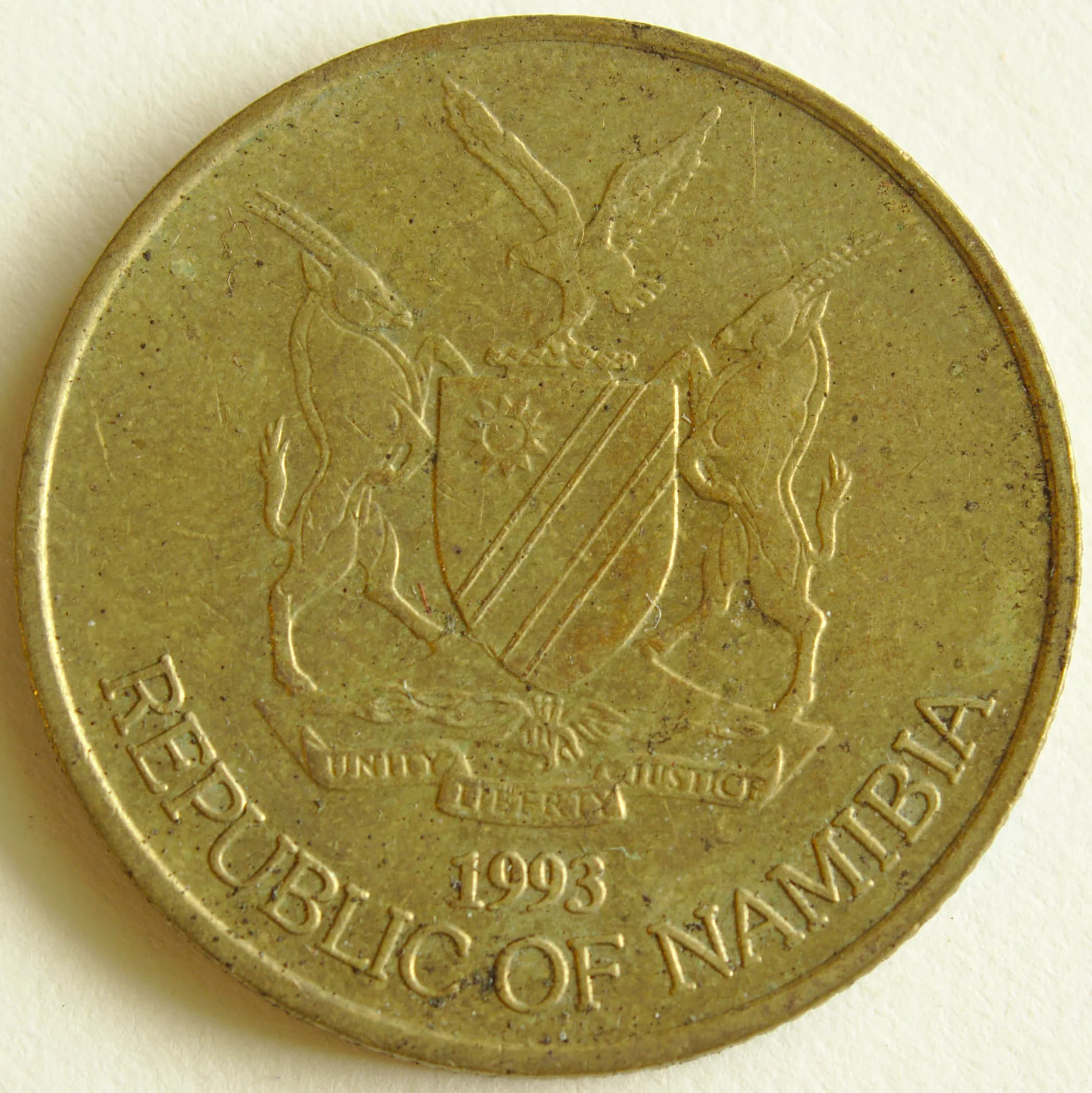
Namibian Dollars, cash and cards
Namibia uses the Namibian Dollar (NAD).

NAD and rand both work
The Namibian dollar is pegged 1:1 to the South African rand, and rand notes are accepted everywhere. Namibian dollars are not usable outside Namibia, so spend or change them before you leave.

Cards in cities, cash elsewhere
Visa and Mastercard are widely accepted in Windhoek, Swakopmund and other towns, but many rural lodges, fuel stations and small shops take cash only.

Plan ATM withdrawals
ATMs are common in cities but scarce in national parks and remote areas, and daily withdrawal limits are often low. Withdraw enough cash in a city before heading out on a self-drive route.
Weather by month (Windhoek)
- Daytime high
- Grey row = night low
- Best time to go
- Daytime high
- Grey row = night low
- Best time to go
| Month | High, °C | Low, °C | Rain, mm |
|---|---|---|---|
| January | 31.5 | 16.6 | 89.9 |
| February | 29.9 | 16.1 | 90.7 |
| March | 28.4 | 14.7 | 83.7 |
| April | 26 | 11.8 | 56.7 |
| May · best | 23.4 | 7.7 | 5.9 |
| June · best | 20.8 | 4.1 | 1.8 |
| July · best | 20.9 | 3.7 | 0.6 |
| August · best | 24.4 | 6.2 | 0.6 |
| September · best | 28.8 | 10.2 | 4.5 |
| October · best | 31.3 | 13.7 | 20.5 |
| November | 31.8 | 15 | 33.6 |
| December | 32.2 | 16.1 | 53.3 |
Monthly averages. Source: NASA POWER climatology, 2001-2020.
May · ideal
The best window runs May, June, July, August, September and October.
High 23.4°CLow 7.7°CRain 5.9 mm
Sweet spot: Windhoek has a dry, semi-arid climate. Winter (May-September) is dry and sunny with mild days and cool nights; summer (November-April) is hotter and brings most of the rain, usually short afternoon storms. The dry winter is most comfortable and best for wildlife viewing.
One time zone
Vienna
--:--:--
Windhoek
--:--:--
How much to tip, in EUR
$2,000
Restaurant bill
If a service charge is not already added
10–15%
on a $2,000 bill: $200
Bar
Rounding up is common; a percentage tip is not expected
No tip expected
Taxi
Rounding up is usual
No tip expected
Hotel porter or housekeeping
Per bag or per day
$20–$50
Safari or tour guide
Per day, usually given directly in cash at the end of the trip
$150–$350
SIM, eSIM or roaming?
Local SIM
RecommendedLocal SIM card
≈ $100
MTC or TN Mobile counters at Hosea Kutako International Airport or in-town shops Bring your passport to register the SIM; add a data bundle on top of the SIM price.
eSIM
Travel eSIM
≈ €13.89US$15
Installed online before you travel, from an eSIM provider Convenient if your phone supports eSIM and you want data working as soon as you land.
Roaming
Roaming from home
Activated through your home network before departure Usually the most expensive option; check your operator's rates for Namibia first.