

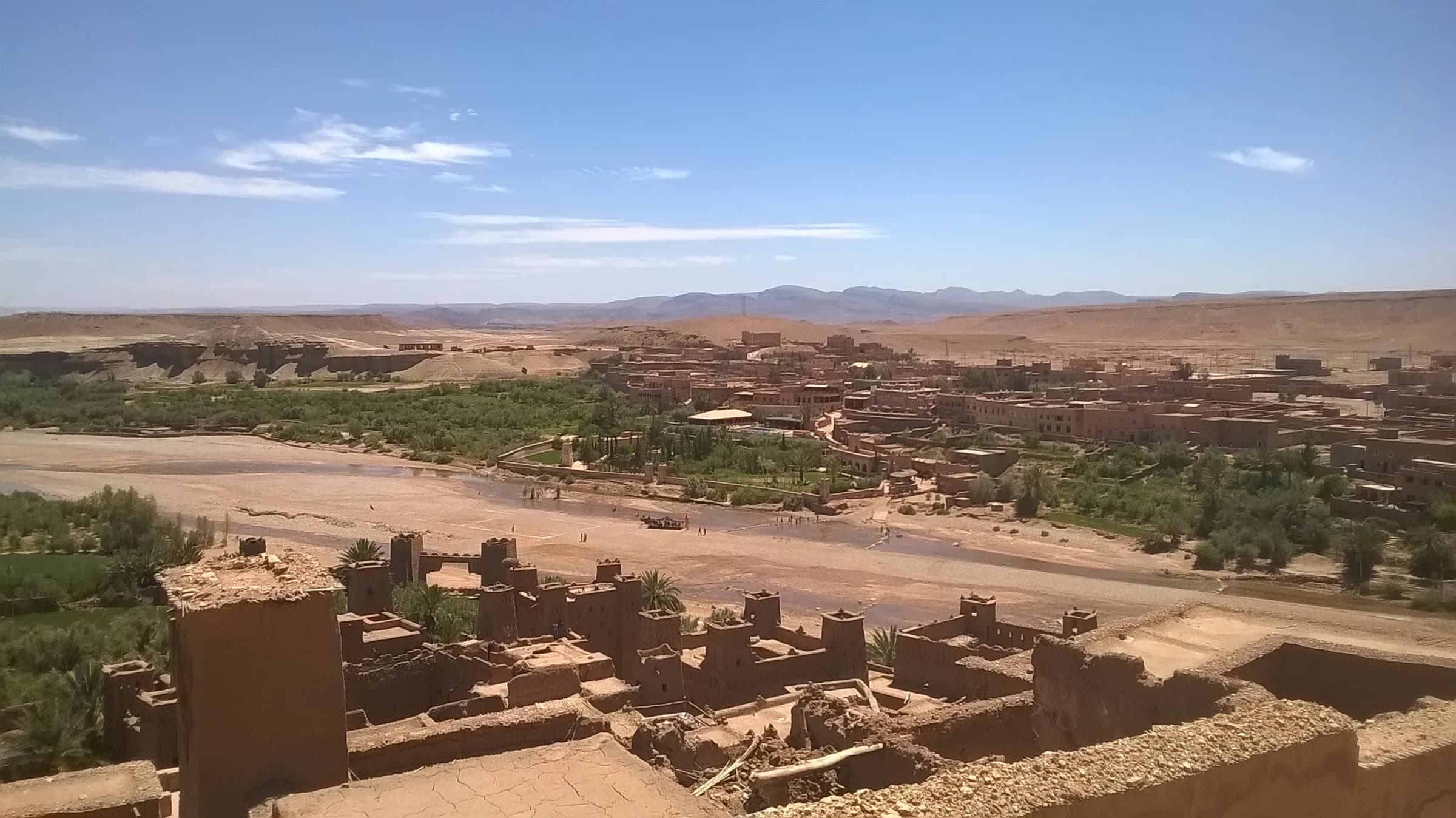
Morocco Visa Guide: Requirements, e-Visa & Entry Rules
Most passports can enter Morocco without a visa for short stays. A small group of nationalities can apply online for an e-Visa, and some other visa-required travellers may also use it if they hold a valid visa or residence permit from an eligible country. A few visa-free nationalities now need an online travel authorisation instead, and everyone else must apply at a Moroccan embassy or consulate.
- e-Visa for 103 passports
- Government fee from $76
- Verified
Plusvisa is a private visa application service, not a government agency or embassy. Official government source: Accès Maroc (e-Visa portal), acces-maroc.ma.
Do you need a visa for Morocco?
Which group a traveller falls into depends on nationality, and sometimes on an existing visa or residence permit from another country.
Which passport will you travel on?
Your route
Pick a passport
We will show the route Morocco puts you on, the government fee for each visa type, and the guide written for your nationality.
The three routes
- e-Visa eligible
103 passports
A short list of nationalities can apply directly. Others can apply if they hold a valid visa or residence permit from the EU, US, UK, Canada, Australia, Japan, New Zealand, Switzerland or the UAE.
- Visa-free
Visa-free entry
Most EU, EFTA and Gulf states, plus nationalities such as the UK, US, Canada, Australia, Japan, Brazil and China, enter visa-free, usually for 90 days. A few of these must instead get an online travel authorisation (AEVM) before flying.
- Embassy visa only
Visa required
Nationalities outside the groups above, plus those barred from the e-Visa altogether, must apply for a visa at a Moroccan embassy or consulate before travel.
Government fees by passport
| Passport | Business trip E-visa | Business trip E-visa (Express) | Tourist | Tourist E-visa | Guide |
|---|---|---|---|---|---|
| United Kingdom | — | — | — | — | Read guide |
| United States | — | — | — | — | Read guide |
| Canada | — | — | — | — | Read guide |
| Australia | — | — | — | — | — |
| Ireland | — | — | — | — | Read guide |
| Germany | — | — | — | — | Read guide |
| Belgium | — | — | — | — | Read guide |
| Vietnam | $77 | $108 | — | $77 | Read guide |
| Thailand | $76 | $105 | — | $76 | Read guide |
| Laos | $77 | $108 | — | $77 | Read guide |
| Jordan | $77 | $108 | — | $77 | Read guide |
| Israel | $76 | $105 | — | $76 | Read guide |
| India | $77 | $108 | — | $77 | Read guide |
| Guatemala | $77 | $108 | — | $77 | Read guide |
| France | — | — | — | — | Read guide |
| Denmark | — | — | — | — | Read guide |
| Cambodia | $77 | $108 | — | $77 | Read guide |
| Sweden | — | — | — | — | Read guide |
| Norway | — | — | — | — | Read guide |
| Netherlands | — | — | — | — | Read guide |
| Luxembourg | — | — | — | — | Read guide |
| Finland | — | — | — | — | Read guide |
| Azerbaijan | — | — | — | — | Read guide |
Which Morocco visa exists, and what it allows
| e-Visa | Options | Processing | Usual government fee |
|---|---|---|---|
| Business trip E-visaeVisa · 101 passports |
| 7–10 business days | $772 passports pay a different fee |
| Business trip E-visa (Express)eVisa · 101 passports |
| 2–3 business days | $1082 passports pay a different fee |
| TouristeVisa · 3 passports |
| 5–7 business days | Government fee not listed |
| Tourist E-visaeVisa · 101 passports |
| 7–10 business days | $772 passports pay a different fee |
| Tourist E-visa (Express)eVisa · 101 passports |
| 2–3 business days | $1082 passports pay a different fee |
How Morocco visa fees work

Set by the government. The e-Visa fee is set by the Moroccan government and charged in Moroccan dirhams (MAD). It is the same whether the purpose is tourism or business.

Standard or express service. Applicants can choose a standard service, decided within about 72 working hours, or a faster express service at a higher fee, decided in about 24 working hours.

No refunds. Once an application is validated and paid, it cannot be cancelled or refunded, even if the e-Visa is later refused.

Payment doesn't guarantee entry. Holding a paid e-Visa does not give an automatic right of entry. Border police can still refuse entry if a traveller doesn't meet the required conditions.
What Plusvisa charges
The government fee is passed through at cost. Our service fee is on top, and every passport's page shows the total before you start.
If we make a mistake that leads to a refusal, we refund our fee and re-apply free.
See the total for my passportYour document checklist

Passport bio page
Clear colour scan of the identity and validity pages. Valid for the whole stay; no fixed minimum validity in months is published. No diplomatic passports. jpg, jpeg or pdf, under 1 MB.

Passport-style photo
Colour photo, 35 x 45 mm, taken within the last 6 months, showing the face clearly to ICAO standards. File must be jpg, jpeg or pdf, under 1 MB.
Only for some travellers

Residence card or permit
Only if Applicants qualifying through residence in an eligible country rather than nationality. Clear colour copy, both sides, valid for at least 180 days from the application date. Receipts, renewal slips or work permits are not accepted.Valid foreign visa
Only if Applicants qualifying through an existing visa from an eligible country. Clear colour copy of a valid, multiple-entry, non-electronic visa valid for at least 90 days from the application date. Electronic authorisations like an ESTA or eTA do not qualify.Business purpose document
Only if Business e-Visa applicants only. Proof of the trip's purpose: an invitation, event registration, or a recommendation from a relevant chamber or ministry.
Not eligible for any e-Visa
Where an e-Visa is accepted
Visas and e-Visas are accepted at Morocco's international airports, its main seaports and open land crossings. Always confirm with your carrier before travelling.
- Casablanca
- Marrakech
- Rabat
- Fès
- Tangier
- Agadir
- Tanger Med
- Nador
- Casablanca
The official list does not name them one by one.
Choose your port of arrival carefully
The application, step by step
Before you apply
- 1
Check your eligibility
Use the eligibility checker on the official portal to see whether you can apply for the e-Visa, based on your nationality, country of residence, and any existing visa you hold.
- 2
Prepare your documents
Get a recent passport-style photo and clear colour scans of your passport, and, if relevant, your residence permit or existing visa, in jpg, jpeg or pdf format under 1 MB each.
On the official portal
- 3
Create your application
Register on the portal and enter your details exactly as they appear on your passport, residence card or visa.
- 4
Upload your documents
Attach your photo and document scans. Group family or travel-party applications into one file so they are processed together.
- 5
Pay and submit
Check every field and document before paying. Once paid, the application cannot be cancelled or refunded.
After you apply
- 6
Track your request
Log in to your account on the portal to see whether your application is in process, waiting to be completed, or refused.
- 7
Carry your e-Visa and supporting documents
Print and carry the e-Visa with your passport, a return ticket, proof of funds and travel insurance, in case they're checked at boarding or the border.
Official website: acces-maroc.ma (opens in a new tab)
The only official website, and how to check status
www.acces-maroc.ma is the only official Moroccan e-Visa website. Any other site offering to process a Morocco e-Visa is a private service, not the government.
acces-maroc.ma (opens in a new tab)Accès Maroc (e-Visa portal)Checking your status
Log in to your account on the portal and select 'follow my eVisa request'. The status shows as in process, waiting to be completed, or application refused.
Why Morocco e-Visas get rejected
Almost every refusal is a file problem, not a judgement about you.
Incomplete or incorrect details
Data that doesn't match the passport, residence card or visa exactly can get an application rejected or stuck waiting to be completed.
Poor-quality or invalid documents
Blurry scans, wrong photo size, expired documents, or files in the wrong format or over the size limit are a common cause of refusal.

Ineligible passport type
Diplomatic, service and special passports, and refugee or stateless travel documents, are not accepted for the e-Visa at all.

False or misleading information
Any false declaration or documentary fraud can lead to refusal and further sanctions.

Not meeting border conditions
Even with a valid e-Visa, border police can refuse entry if a traveller lacks a return ticket, enough funds, or required travel insurance.
Sockets and power in Morocco
Type C
Two round pins · 2.5 A
Type E
Two round pins · 16 A
Type C
Morocco uses type C and E sockets. If your own plugs are a different type, one type C adapter covers the whole trip.
Voltage
220 V · 50 Hz
Check the label on chargers and appliances: anything marked 100–240 V, 50/60 Hz works here with only an adapter, no converter.

Pack: a type C adapter unless your own plugs already match, and a small power strip — hotel rooms rarely have more than two sockets.
Morocco drives on the right
Traffic side:
Morocco · right-hand traffic

Getting around
ONCF trains link the main cities fast and comfortably. Metered 'petit taxis' work within cities, while shared 'grand taxis' or buses cover longer routes. Hiring a car suits trips into the Atlas Mountains or desert.

Health and insurance
No vaccines are mandatory for most travellers, though routine and hepatitis A/B cover is often advised. Morocco's e-Visa rules expect travellers to carry health and repatriation insurance, so arrange this before you go.

Customs and etiquette
Dress modestly away from beaches and resorts, ask before photographing people, and expect reduced hours at restaurants and shops during Ramadan.
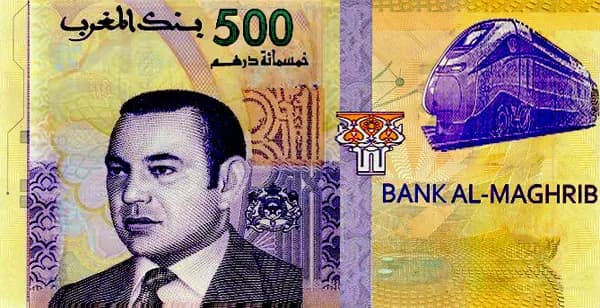
Moroccan Dirhams, cash and cards
Morocco uses the Moroccan Dirham (MAD).

Currency controls apply
Taking Moroccan dirhams out of the country is capped at 1,000 MAD. Bringing in or taking out foreign banknotes worth 100,000 MAD or more must be declared to customs on arrival.

ATMs are easy to find in cities
Cash machines are common in Rabat, Casablanca, Marrakech and other cities, but carry enough cash before heading into the mountains, desert or small towns.

Cash still rules day to day
Cards are accepted at hotels, bigger shops and restaurants, but markets, taxis and tips are usually cash-only, so keep small dirham notes on hand.
Weather by month (Rabat)
- Daytime high
- Grey row = night low
- Best time to go
- Daytime high
- Grey row = night low
- Best time to go
| Month | High, °C | Low, °C | Rain, mm |
|---|---|---|---|
| January | 16.6 | 10.8 | 65.7 |
| February | 17.2 | 10.8 | 52 |
| March · best | 19 | 12 | 55.2 |
| April · best | 20.4 | 13.5 | 37.5 |
| May · best | 23.1 | 15.7 | 18.6 |
| June | 25.6 | 18.2 | 2.7 |
| July | 27.3 | 19.7 | 1.6 |
| August | 28.3 | 20.6 | 2.5 |
| September · best | 26.5 | 19.5 | 33.3 |
| October · best | 24.4 | 17.7 | 54.6 |
| November · best | 20.2 | 14.4 | 98.1 |
| December | 17.8 | 12.1 | 67.3 |
Monthly averages. Source: NASA POWER climatology, 2001-2020.
March · ideal
The best window runs March, April, May, September, October and November.
High 19°CLow 12°CRain 55.2 mm
Sweet spot: Rabat has a Mediterranean-Atlantic climate: mild, wetter winters and warm, dry summers. Spring and autumn bring comfortable temperatures for sightseeing, while summer can get hot and winter brings most of the rain.
Tipping in Morocco
MAD 2,000
Restaurant bill
Leave cash even if a service charge is included
10–15%
on a MAD 2,000 bill: MAD 200
Cafe
MAD 2–MAD 10
Hotel porter
Per bag
MAD 10–MAD 20
Housekeeping
Per night
MAD 10–MAD 20
Petit taxi
Round up the metered fare
MAD 5–MAD 10
Grand taxi (shared, fixed price)
No tip expected
Tour guide, full day
Per person
MAD 100–MAD 200
SIM, eSIM or roaming?
Local SIM
RecommendedLocal prepaid SIM
≈ MAD 200
Maroc Telecom, Orange or Inwi counters at airports and in city shops; passport required to register Roughly 200 MAD for a data bundle around 50 GB; prices vary by operator and plan
eSIM
Travel eSIM
International eSIM providers' apps or websites, installed before you fly Convenient for short trips or late arrivals, usually no passport needed, but typically less data per dirham than a local SIM
Roaming
Roaming on your home plan
Activate through your home network before departure Simplest option but usually the most expensive for data-heavy use
If it's your first time: three you shouldn't skip
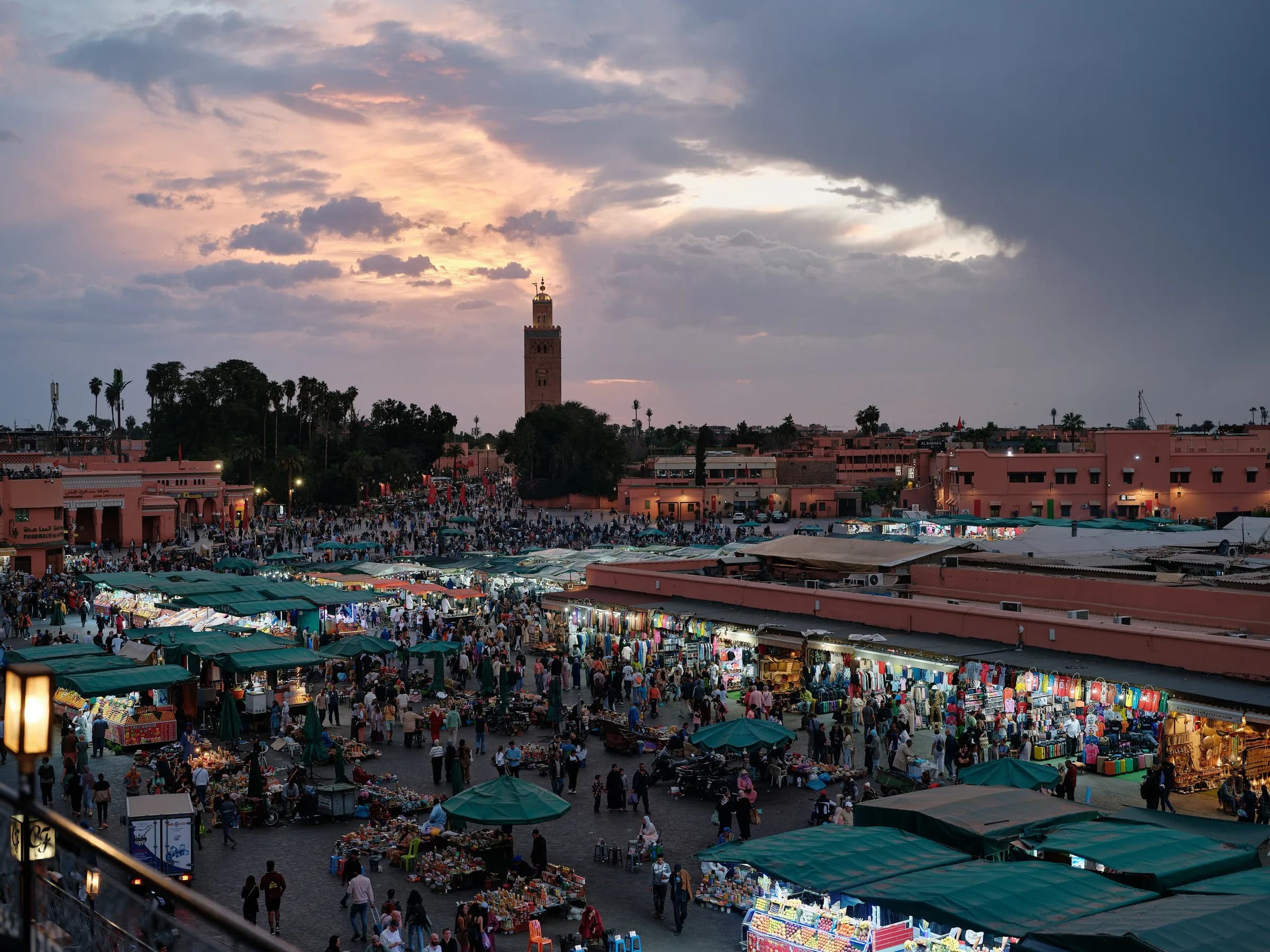
Marrakech
Jemaa el-Fna and the Medina
A UNESCO-listed square and old city packed with souks, food stalls and street performers, busiest after sunset.
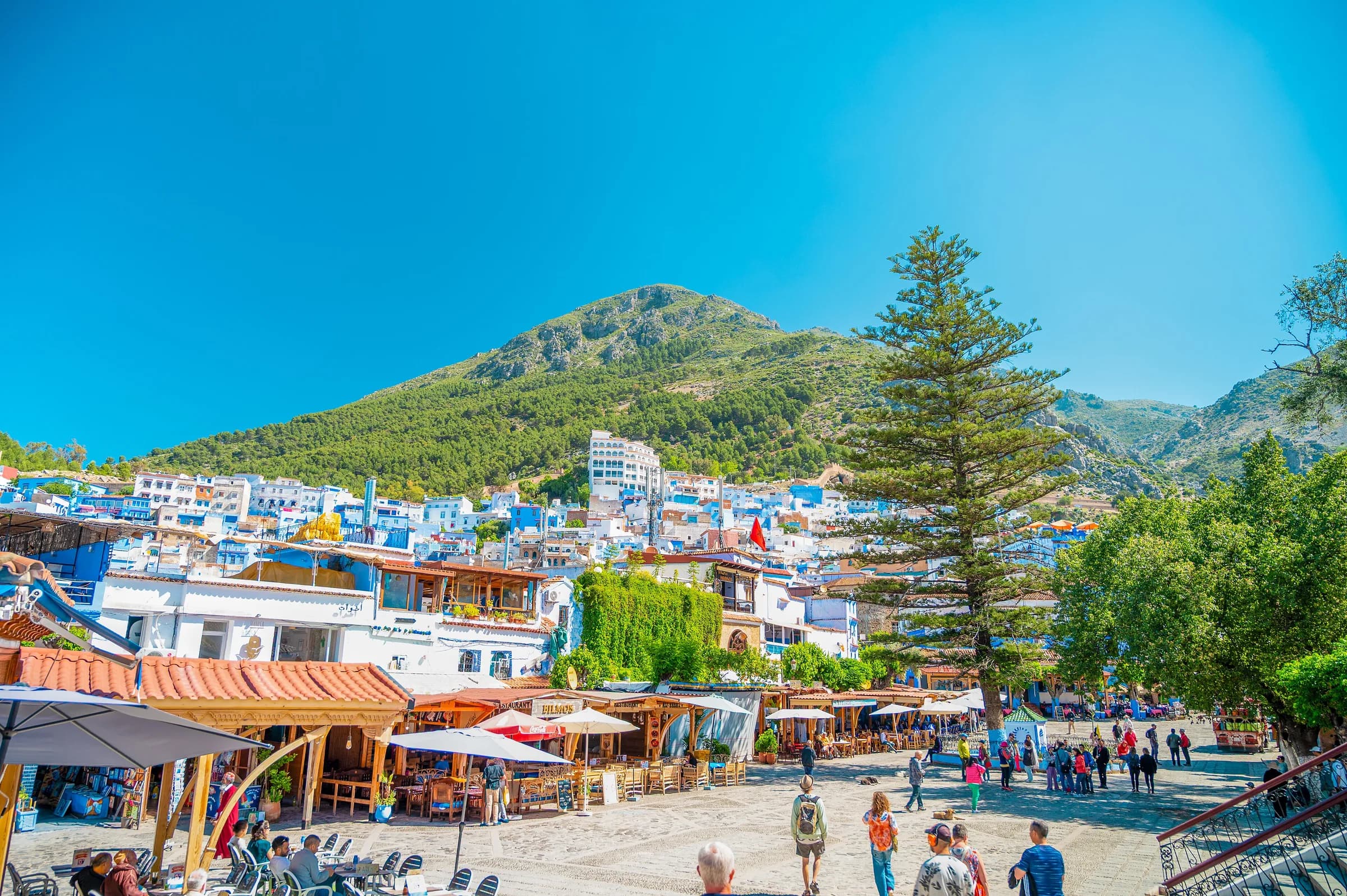
Chefchaouen
Chefchaouen's blue old town
A hillside medina painted in shades of blue, popular for slow wandering and mountain views.
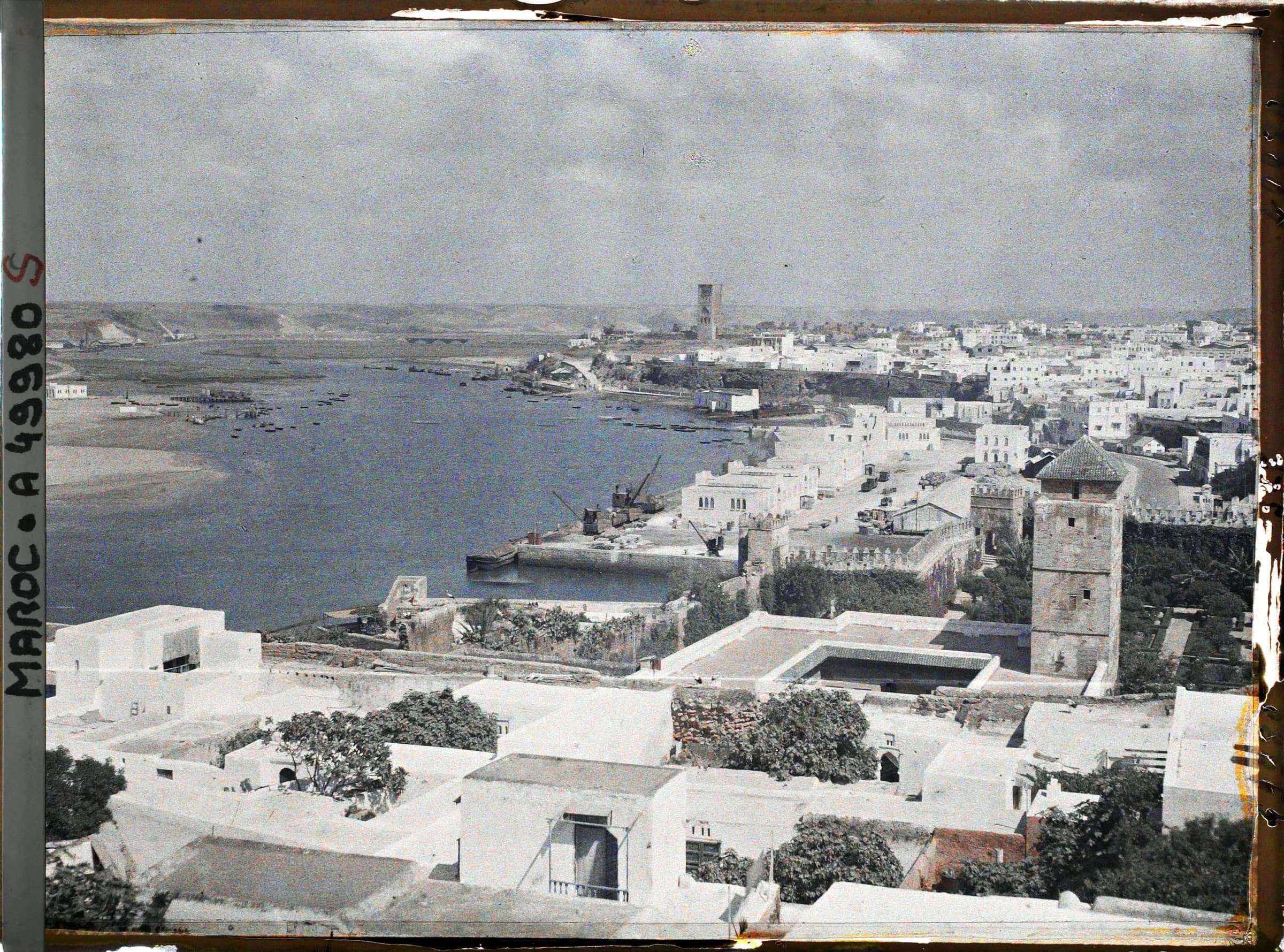
Rabat
Hassan Tower and the Kasbah of the Udayas
The capital's historic landmarks, from an unfinished minaret to a fortified kasbah overlooking the Atlantic.
Questions everyone asks about Morocco visas
It depends on your passport. Many nationalities enter visa-free for a set period, some can apply for an e-Visa online, a few need an online travel authorisation (AEVM) instead of a visa, and others must apply at a Moroccan embassy or consulate.
The e-Visa allows a single entry and a continuous stay of up to 30 days, and must be used within 180 days of being issued.
Extensions aren't automatic. You would need to request one from Morocco's immigration and national security authority, the Direction Générale de la Sûreté Nationale, with a justified reason before your permitted stay ends.
No. The e-Visa is single-entry, so leaving Moroccan territory, even briefly, uses it up.
Travellers who aren't visa-exempt and don't qualify for the e-Visa need to apply for a visa at a Moroccan embassy or consulate before travelling.
No. Morocco removed its passenger health form in 2023, and there is currently no separate arrival form besides the visa or entry stamp.
Bring your passport, your visa or e-Visa, a return ticket, proof you can support yourself financially, and travel insurance covering hospitalisation and repatriation.
Now read the one written for your passport
Each guide has the fee for that passport, its maximum stay, the rules that apply only to it, and the application itself.
United Kingdom
Route, fee and documents for this passport
Belgium
Route, fee and documents for this passport
Vietnam
Government fee from $77
Thailand
Government fee from $76
Laos
Government fee from $77
Jordan
Government fee from $77
Israel
Government fee from $76
India
Government fee from $77
Guatemala
Government fee from $77
Germany
Route, fee and documents for this passport
France
Route, fee and documents for this passport
Denmark
Route, fee and documents for this passport
Canada
Route, fee and documents for this passport
Cambodia
Government fee from $77
United States
Route, fee and documents for this passport
Sweden
Route, fee and documents for this passport
Norway
Route, fee and documents for this passport
Netherlands
Route, fee and documents for this passport
Luxembourg
Route, fee and documents for this passport
Ireland
Route, fee and documents for this passport
Finland
Route, fee and documents for this passport
Azerbaijan
Route, fee and documents for this passport
Every other passport →
Pick your passport for your route, your fee and your documents.
Morocco visa for every other passport (95)
- Albanian citizens
- Angolan citizens
- Antiguan citizens
- Bangladeshi citizens
- Barbadian citizens
- Belarusian citizens
- Belizean citizens
- Beninese citizens
- Bermudian citizens
- Bhutanese citizens
- Bolivian citizens
- Bosnian citizens
- Botswanan citizens
- Bruneian citizens
- Burundian citizens
- Cameroonian citizens
- Cape-Verdean citizens
- Central-African citizens
- Chadian citizens
- Comoran citizens
- Congolese citizens
- Costa-Rican citizens
- Cuban citizens
- Djiboutian citizens
- Dominica citizens
- Dominican citizens
- DRC citizens
- Ecuadorian citizens
- Egyptian citizens
- Salvadoran citizens
- Equatoguinean citizens
- Eritrean citizens
- Swazi citizens
- Ethiopian citizens
- Fijian citizens
- Gambian citizens
- Georgian citizens
- Ghanaian citizens
- Grenadian citizens
- Guinean citizens
- Bissau-Guinean citizens
- Guyanese citizens
- Haitian citizens
- Honduran citizens
- Jamaican citizens
- Kazakh citizens
- Kenyan citizens
- I-Kiribati citizens
- Kyrgyz citizens
- Liberian citizens
- Malagasy citizens
- Malawian citizens
- Malaysian citizens
- Maldivian citizens
- Malian citizens
- Mauritanian citizens
- Mauritian citizens
- Micronesian citizens
- Mongolian citizens
- Montenegrin citizens
- Mozambican citizens
- Namibian citizens
- Nepali citizens
- Nicaraguan citizens
- North-Korean citizens
- Macedonian citizens
- Pakistani citizens
- Panamanian citizens
- Papua-New-Guinean citizens
- Paraguayan citizens
- Rwandan citizens
- Vincentian citizens
- Santomean citizens
- Serbian citizens
- Seychellois citizens
- Sierra-Leonean citizens
- Somali citizens
- South-African citizens
- Sri-Lankan citizens
- Sudanese citizens
- Surinamese citizens
- Syrian citizens
- Tajik citizens
- Tanzanian citizens
- Togolese citizens
- Trinidadian citizens
- Turkmen citizens
- Ugandan citizens
- Ukrainian citizens
- Uruguayan citizens
- Uzbek citizens
- Ni-Vanuatu citizens
- Venezuelan citizens
- Zambian citizens
- Zimbabwean citizens