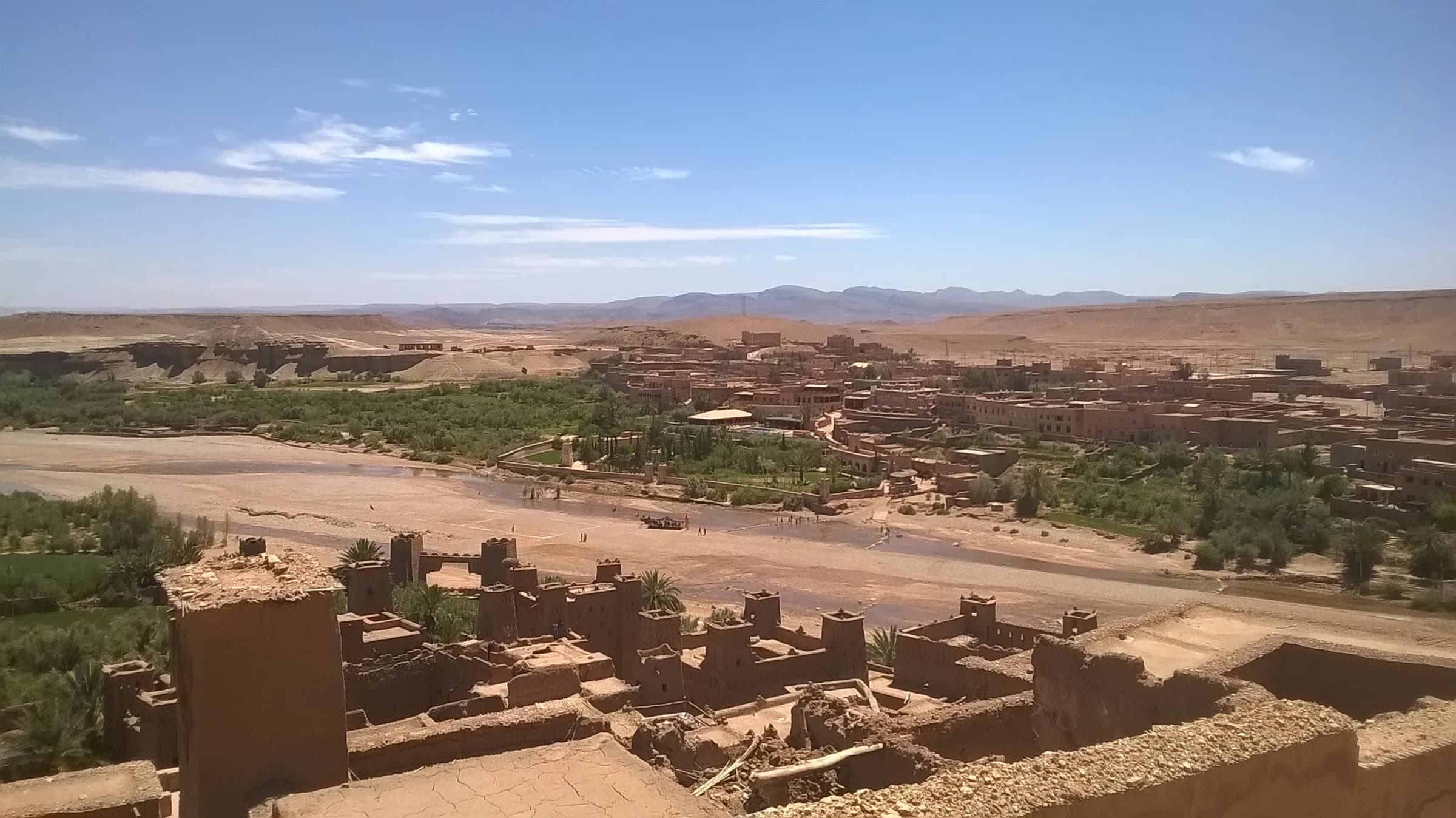


Morocco Visa for UK Citizens: Entry Rules 2024
- No visa needed
- Verified
Plusvisa is a private visa application service, not a government agency or embassy. Official government source: Accès Maroc (e-Visa portal), acces-maroc.ma.
Table of contents

Passport validity
3 months after arrival
Checked by border officials and often by airlines before boarding

Visa-free stay
Up to 90 days
For tourism only

Longer stays
Apply at a police station
Needed before the 90 days run out
Two routes into Morocco
Most UK travellers
Visa-free entry
A full British citizen passport lets you enter Morocco for tourism without applying for any visa or e-Visa. You get an entry stamp at the border and can stay up to 90 days.
Longer or other stays
Extension or embassy visa
To stay past 90 days, you must request an extension from a Moroccan police station before your visa-free period ends. For work, study or other non-tourist stays, check requirements with the Moroccan Consulate General in the UK first.
How long you may stay
A full British citizen passport allows a visa-free stay in Morocco of up to 90 days for tourism. This limit does not apply to work, study or other non-tourist purposes, which need separate permission.

90 days means tourism only: The 90-day visa-free period covers tourist visits. If you are going for work, study or another purpose, check requirements with the Moroccan Consulate General in the UK before you travel.

No automatic extension: There is no online extension. To stay longer than 90 days you must apply in person at a Moroccan police station before your permitted stay ends.

Get your entry stamp: Border officials should stamp your passport on arrival. Travellers without an entry stamp have had problems leaving Morocco, so check it is stamped before you leave the border.
Your document checklist
Six things to have ready before you start your application, as a UK applicant.

British citizen passport
Must be valid for at least 3 months after your arrival date. Must not be damaged. Check validity before booking.

Entry stamp
Ask the border official to stamp your passport on arrival. Some travellers have had problems leaving Morocco without one.

Return or onward ticket
Carry proof you will leave Morocco within your visa-free stay, in case it is checked at the border.

Proof of funds and travel insurance
Have evidence you can support yourself and insurance covering hospitalisation and repatriation, in case it is checked at the border.
Only for some visa types

Currency declaration
Only if Carrying a large amount of cash. Declare foreign currency over the official threshold when entering or leaving Morocco. Check the current threshold with Moroccan customs.Polio vaccine certificate
Only if Travelling from a polio-affected country. Carry proof of a polio vaccine if you are arriving from a country where polio is present.
Questions UK travellers actually ask
No. A full British citizen passport lets you enter Morocco without a visa for tourist stays of up to 90 days.
Your passport must be valid for at least 3 months after the date you arrive in Morocco, and must not be damaged.
There is no online extension. You must apply in person at a Moroccan police station before your 90 days run out.
Apply for an emergency travel document from the British embassy. You will also need a police report, called a déclaration de perte or déclaration de vol, before you can leave Morocco.
Yes, if you are carrying foreign currency above the official threshold you must declare it at the border. Check the current threshold with Moroccan customs before you travel.
Morocco removed its passenger health form in 2023. You only need a polio vaccine certificate if you are arriving from a country where polio is present.
This can attract extra scrutiny from police, immigration or customs. Only carry another person's passport if you have a clear, legitimate reason and they are travelling with you.
The 90-day visa-free rule covers tourism. For work, study or other purposes, check requirements with the Moroccan Consulate General in the UK before you travel.
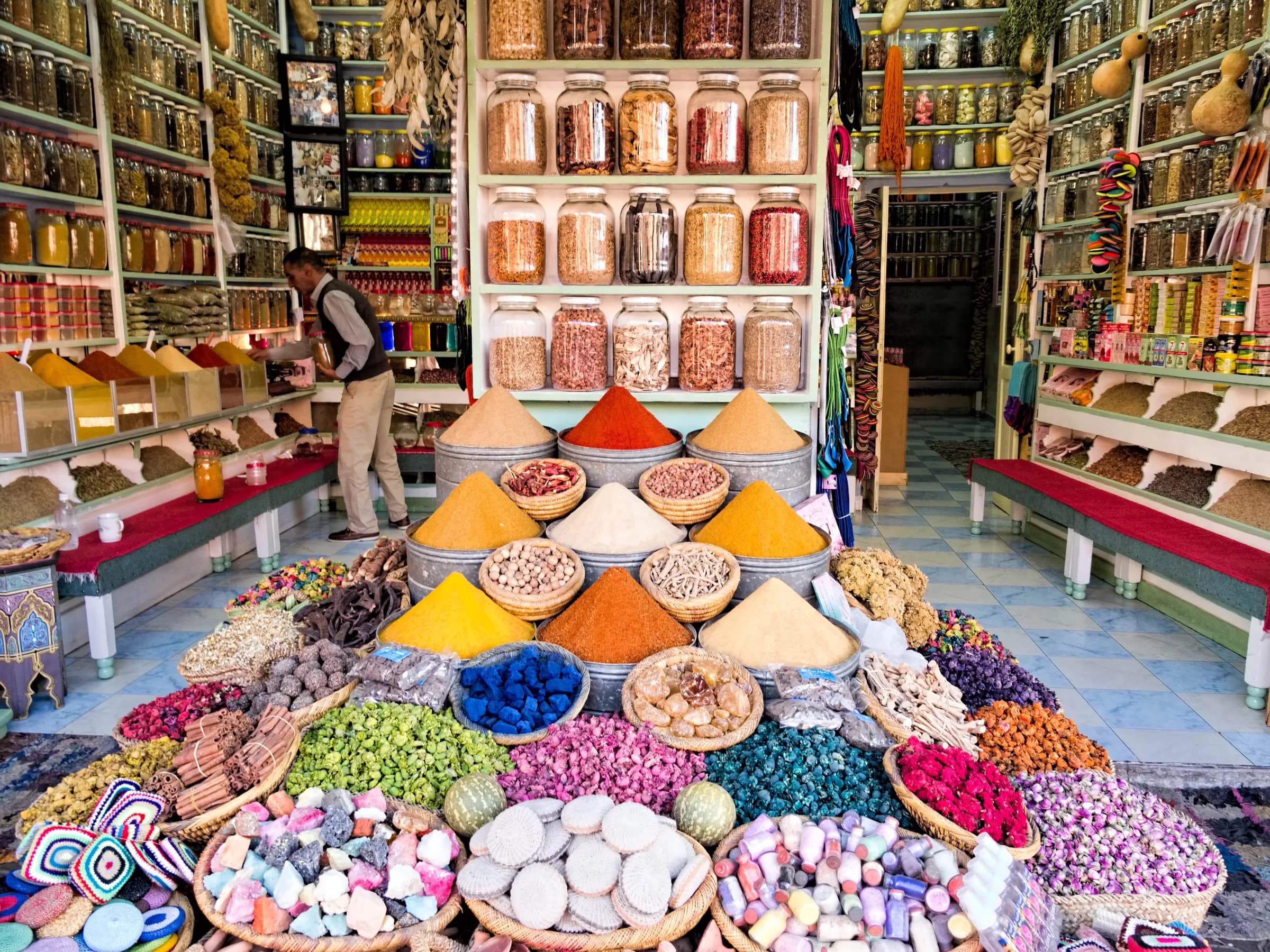
Visa sorted
The things that make the first
48 hours easy, compared with home
Your UK plug won't fit. Here's what will.
Type C
Two round pins · 2.5 A
Type E
Two round pins · 16 A
Type C
Morocco uses type C and E sockets and your plugs are type G. A G-to-C adapter works for the whole trip.
Voltage
220 V · 50 Hz
Against 230 V · 50 Hz at home. Check the label on chargers and appliances: anything marked 100–240 V, 50/60 Hz works in both.

Pack: one type C adapter and a small power strip — hotel rooms rarely have more than two sockets.
Morocco drives on the right — the opposite of home
Compare traffic side:
Morocco · right-hand traffic — the opposite of United Kingdom

Getting around
ONCF trains link the main cities fast and comfortably. Metered 'petit taxis' work within cities, while shared 'grand taxis' or buses cover longer routes. Hiring a car suits trips into the Atlas Mountains or desert.

Health and insurance
No vaccines are mandatory for most travellers, though routine and hepatitis A/B cover is often advised. Morocco's e-Visa rules expect travellers to carry health and repatriation insurance, so arrange this before you go.

Customs and etiquette
Dress modestly away from beaches and resorts, ask before photographing people, and expect reduced hours at restaurants and shops during Ramadan.
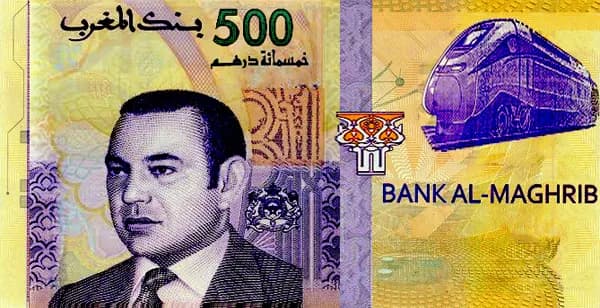
Moroccan Dirhams, cash and cards
Morocco uses the Moroccan Dirham (MAD).

Currency controls apply
Taking Moroccan dirhams out of the country is capped at 1,000 MAD. Bringing in or taking out foreign banknotes worth 100,000 MAD or more must be declared to customs on arrival.

ATMs are easy to find in cities
Cash machines are common in Rabat, Casablanca, Marrakech and other cities, but carry enough cash before heading into the mountains, desert or small towns.

Cash still rules day to day
Cards are accepted at hotels, bigger shops and restaurants, but markets, taxis and tips are usually cash-only, so keep small dirham notes on hand.
Weather by month (Rabat)
- Daytime high
- Grey row = night low
- Best time to go
- Daytime high
- Grey row = night low
- Best time to go
| Month | High, °C | Low, °C | Rain, mm |
|---|---|---|---|
| January | 16.6 | 10.8 | 65.7 |
| February | 17.2 | 10.8 | 52 |
| March · best | 19 | 12 | 55.2 |
| April · best | 20.4 | 13.5 | 37.5 |
| May · best | 23.1 | 15.7 | 18.6 |
| June | 25.6 | 18.2 | 2.7 |
| July | 27.3 | 19.7 | 1.6 |
| August | 28.3 | 20.6 | 2.5 |
| September · best | 26.5 | 19.5 | 33.3 |
| October · best | 24.4 | 17.7 | 54.6 |
| November · best | 20.2 | 14.4 | 98.1 |
| December | 17.8 | 12.1 | 67.3 |
Monthly averages. Source: NASA POWER climatology, 2001-2020.
March · ideal
The best window runs March, April, May, September, October and November.
High 19°CLow 12°CRain 55.2 mm
Sweet spot: Rabat has a Mediterranean-Atlantic climate: mild, wetter winters and warm, dry summers. Spring and autumn bring comfortable temperatures for sightseeing, while summer can get hot and winter brings most of the rain.
One time zone
London
--:--:--
Rabat
--:--:--
How much to tip, in GBP
MAD 2,000
Restaurant bill
Leave cash even if a service charge is included
10–15%
on a MAD 2,000 bill: MAD 200
Cafe
MAD 2–MAD 10
Hotel porter
Per bag
MAD 10–MAD 20
Housekeeping
Per night
MAD 10–MAD 20
Petit taxi
Round up the metered fare
MAD 5–MAD 10
Grand taxi (shared, fixed price)
No tip expected
Tour guide, full day
Per person
MAD 100–MAD 200
SIM, eSIM or roaming?
Local SIM
RecommendedLocal prepaid SIM
≈ MAD 200
Maroc Telecom, Orange or Inwi counters at airports and in city shops; passport required to register Roughly 200 MAD for a data bundle around 50 GB; prices vary by operator and plan
eSIM
Travel eSIM
International eSIM providers' apps or websites, installed before you fly Convenient for short trips or late arrivals, usually no passport needed, but typically less data per dirham than a local SIM
Roaming
Roaming on your home plan
Activate through your home network before departure Simplest option but usually the most expensive for data-heavy use