


Japan Visa Guide: e-Visa, Visa-Free and Requirements
Citizens of more than 50 countries can enter Japan visa-free for short stays under general visa exemption arrangements. A small number of other passports can apply online for Japan's e-visa, while everyone else must apply for a visa at a Japanese embassy or consulate before travel.
- e-Visa for 204 passports
- Verified
Plusvisa is a private visa application service, not a government agency or embassy. Official government source: Japan eVisa (Ministry of Foreign Affairs), evisa.mofa.go.jp.
Do you need a visa for Japan?
Most passports fall into one of these three groups.
Which passport will you travel on?
Your route
Pick a passport
We will show the route Japan puts you on, the government fee for each visa type, and the guide written for your nationality.
The three routes
- Visa-free
Visa exemption (temporary visitor)
Citizens of more than 50 countries, including the EU, UK, US, Canada and Australia, enter as a temporary visitor with only a valid passport, for 90, 30 or 15 days depending on nationality.
- e-Visa eligible
204 passports
A limited number of nationalities can apply online for Japan's e-visa before travel, avoiding an embassy visit. It is shown on a mobile device and is valid for arrival by air or scheduled passenger ferry only.
- Embassy visa only
Visa required
Passport holders without a visa exemption or e-visa route must apply for a visa at a Japanese embassy or consulate before travelling.
Government fees by passport
| Passport | Tourist E-visa | Guide |
|---|---|---|
| United Kingdom | — | — |
| United States | — | — |
| Canada | — | — |
| Australia | — | — |
| Ireland | Not listed | — |
| Germany | Not listed | — |
| Russia | — | Read guide |
| Vietnam | Not listed | Read guide |
| Sri Lanka | — | Read guide |
| Saudi Arabia | Not listed | Read guide |
| Philippines | Not listed | Read guide |
| Cambodia | Not listed | Read guide |
| India | Not listed | Read guide |
| Mongolia | — | Read guide |
| China | Not listed | Read guide |
Which Japan visa exists, and what it allows
| e-Visa | Options | Processing | Usual government fee |
|---|---|---|---|
| Tourist E-visaeVisa · 204 passports |
| 15–25 business days | Government fee not listed |
How Japan visa fees work

Who sets the fee. The Japanese government sets visa fees in yen. Japanese diplomatic missions abroad may collect the local currency equivalent.

Reciprocal exemptions. Some nationalities are exempt from paying a visa fee under reciprocal arrangements between their country and Japan. The fee tables show this per passport.

Refunds. Visa fees are not refunded if an application is refused, since they cover the cost of processing, not the outcome.

Express service. Official sources do not publish a separate express or expedited fee for Japanese visas or the e-visa.
What Plusvisa charges
The government fee is passed through at cost. Our service fee is on top, and every passport's page shows the total before you start.
If we make a mistake that leads to a refusal, we refund our fee and re-apply free.
See the total for my passportYour document checklist

Passport
Must be valid for the planned length of stay in Japan; a clear colour scan of the photo page with all corners visible.

Passport-style photo
Recent photo, plain light background, taken within the last six months, no glasses or headwear except for religious reasons.

Flight itinerary
Shows arrival in Japan by air or scheduled passenger ferry, and onward or return travel out of the country.

Completed application form
Personal and travel details entered through the embassy or e-visa application process.
Not eligible for any e-Visa
The application, step by step
Before you apply
- 1
Check your visa requirement
Confirm whether your passport can enter visa-free, qualifies for the e-visa, or needs a visa from a Japanese embassy or consulate before you book travel.
- 2
Gather your documents
Prepare a valid passport, a recent photo and your travel itinerary before starting an application.
On the official portal
- 3
Register on the official portal
Eligible applicants create an account on Japan's official e-visa system with their email and passport details.
- 4
Submit the application
Upload the required documents and submit the online form, or lodge the paper application at an embassy or consulate.
After you apply
- 5
Receive the e-visa
Download the approved e-visa and keep it on a mobile device; printed copies or screenshots are not accepted at the border.
- 6
Present it on arrival
Show the e-visa or visa together with your passport to immigration officers when you land in Japan.
Official website: evisa.mofa.go.jp (opens in a new tab)
Two things to have before you fly
Besides a visa or visa exemption, visitors should prepare these.
- 1
Visit Japan Web
An optional official service for submitting immigration, customs and quarantine information online before arrival, for faster processing at the airport. Paper forms remain available for those who do not use it. Official page (opens in a new tab)
- 2
Currency declaration
Travellers carrying cash or other means of payment worth more than 1 million yen must declare it to customs on arrival or departure. Official page (opens in a new tab)
The only official website, and how to check status
The Ministry of Foreign Affairs runs the only official e-visa portal for Japan. Any other site that charges a service fee to submit an application on your behalf is a private service, not the government.
Why Japan e-Visas get rejected
Almost every refusal is a file problem, not a judgement about you.
Incomplete or unclear documents
Missing photos, unclear scans, or details that do not match the passport are a common cause of refusal.
Unclear purpose or insufficient funds
Applicants who cannot show a clear reason for travel or enough funds for their stay may be refused.

Past immigration violation
A history of overstaying or breaking immigration rules in Japan counts against a new application.

Ineligible travel method
e-visa applicants who plan to arrive by land or on an unscheduled vessel are not eligible and will be refused.
Criminal record or security concern
Applicants with a relevant criminal record, or flagged as a security risk, can be refused a visa or entry.
Sockets and power in Japan
Type A
Two flat pins
Type B
Two flat pins · earthed
Type A
Japan uses type A and B sockets. If your own plugs are a different type, one type A adapter covers the whole trip.
Voltage
100 V · 50 Hz
Check the label on chargers and appliances: anything marked 100–240 V, 50/60 Hz works here with only an adapter, no converter.

Pack: a type A adapter unless your own plugs already match, and a small power strip — hotel rooms rarely have more than two sockets.
Japan drives on the left
Traffic side:
Japan · left-hand traffic

Getting around
Trains and IC cards like Suica and Pasmo cover most cities, and the Shinkansen bullet train links major regions quickly. Cars drive on the left.

Health
Tap water is safe to drink and healthcare quality is high, but it is not free for visitors, so travel insurance is strongly recommended.

Customs and etiquette
Remove shoes before entering homes and some restaurants, queue in order on platforms, and avoid eating while walking or on local trains.
Japanese Yens, cash and cards
Japan uses the Japanese Yen (JPY).
$1 ≈ ¥151.5 · indicative mid-market rate, possibly a few days old

Carry some cash
Japan is still partly cash-based; many smaller shops, temples and rural businesses do not accept cards.

Use convenience store ATMs
7-Eleven and Japan Post ATMs reliably accept foreign cards and are found in convenience stores nationwide.

Cards and IC cards
Visa and Mastercard are widely accepted in cities, while a Suica or Pasmo IC card is useful for trains, buses and convenience stores.
Weather by month (Tokyo)
- Daytime high
- Grey row = night low
- Best time to go
- Daytime high
- Grey row = night low
- Best time to go
| Month | High, °C | Low, °C | Rain, mm |
|---|---|---|---|
| January | 6.9 | -2.4 | 66 |
| February | 8.4 | -1.6 | 66.7 |
| March · best | 12.4 | 1.4 | 114.7 |
| April · best | 17.5 | 6.5 | 128.7 |
| May · best | 22.1 | 12 | 142 |
| June | 24.9 | 16.6 | 180.6 |
| July | 28.6 | 20.9 | 179.8 |
| August | 29.9 | 21.8 | 154.7 |
| September | 26 | 18.1 | 215.1 |
| October · best | 20.4 | 11.9 | 222 |
| November · best | 15.3 | 5.6 | 97.2 |
| December | 9.7 | 0 | 69.1 |
Monthly averages. Source: NASA POWER climatology, 2001-2020.
March · ideal
The best window runs March, April, May, October and November.
High 12.4°CLow 1.4°CRain 114.7 mm
Sweet spot: Tokyo has hot, humid summers with a rainy season in June and typhoon risk in late summer. Spring (March to May) and autumn (October to November) are mild, with cherry blossoms and autumn leaves. Winters are cool and dry.
Tipping in Japan
Restaurants
Tipping is not expected and can cause confusion.
No tip expected
Taxis
Drivers do not expect a tip.
No tip expected
Hotels
Porters and housekeeping do not expect tips.
No tip expected
Tour guides
A small wrapped gift is sometimes offered instead of cash, but it is not required.
No tip expected
SIM, eSIM or roaming?
Local SIM
Local prepaid SIM
Airport kiosks, electronics shops and convenience stores across Japan. Needs an unlocked phone; some need passport ID to register.
eSIM
RecommendedTravel eSIM
Bought online before departure and installed on an eSIM-compatible phone. Can be activated before landing, with no need to swap a physical SIM.
Roaming
Roaming from home
Activated through your home carrier before you leave. Usually the most expensive way to get data in Japan.
If it's your first time: three you shouldn't skip
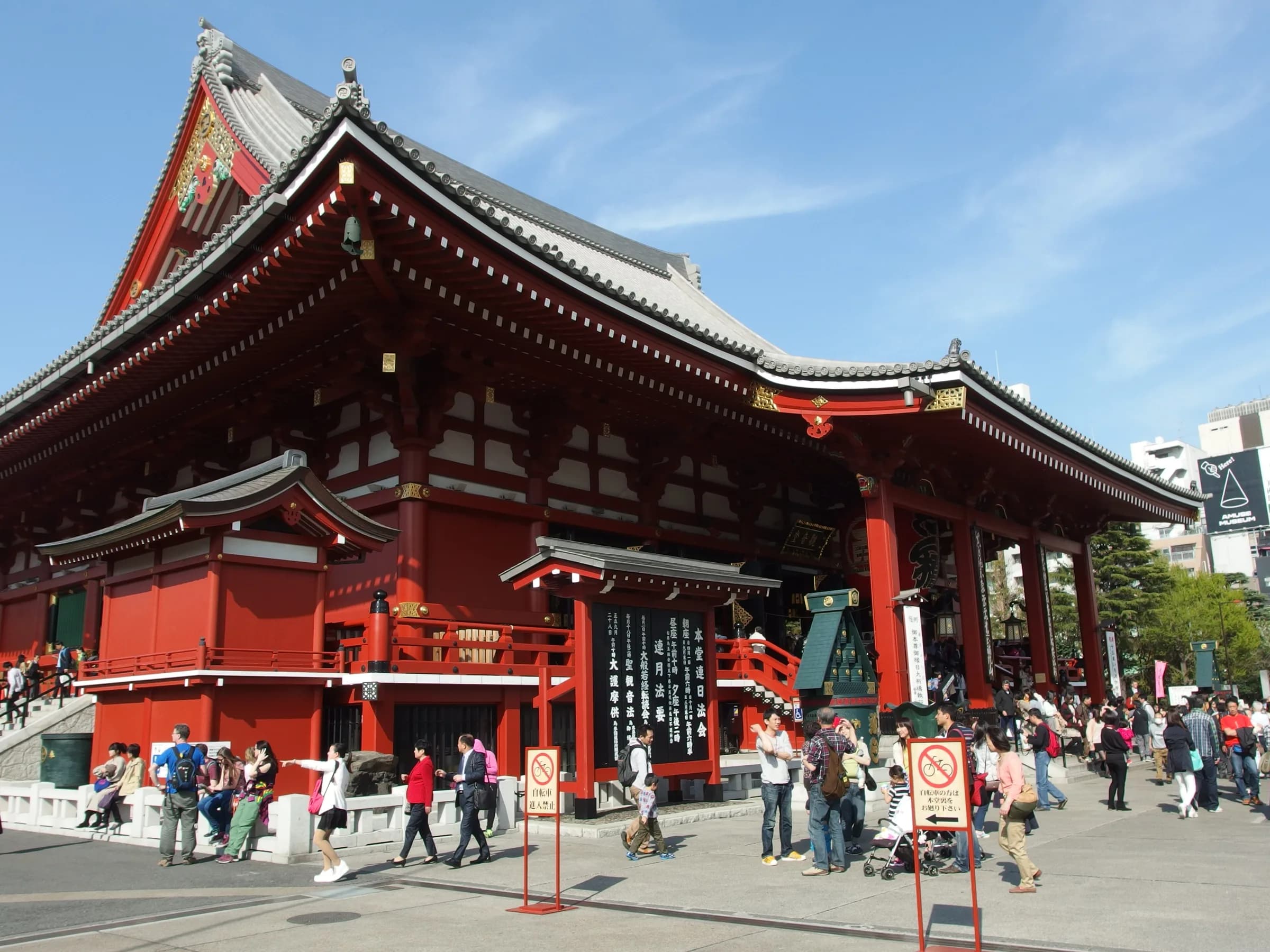
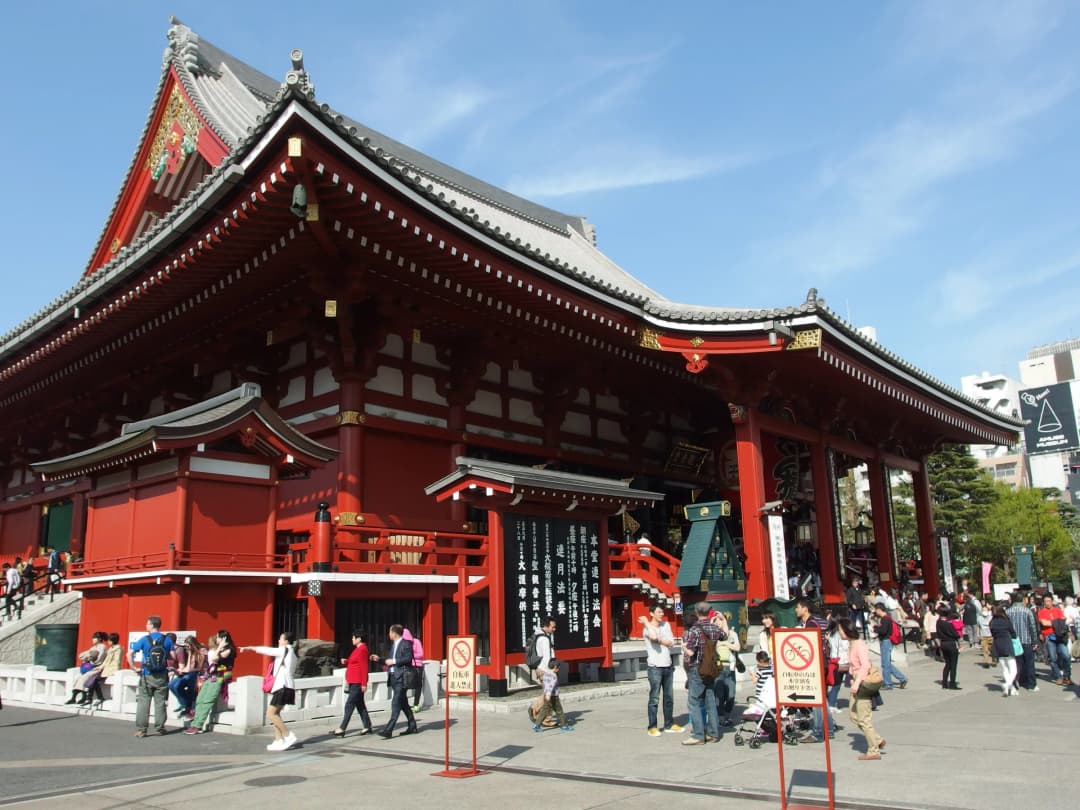
Tokyo
Senso-ji Temple
Tokyo's oldest temple, reached through the lively Nakamise shopping street and its iconic gate.
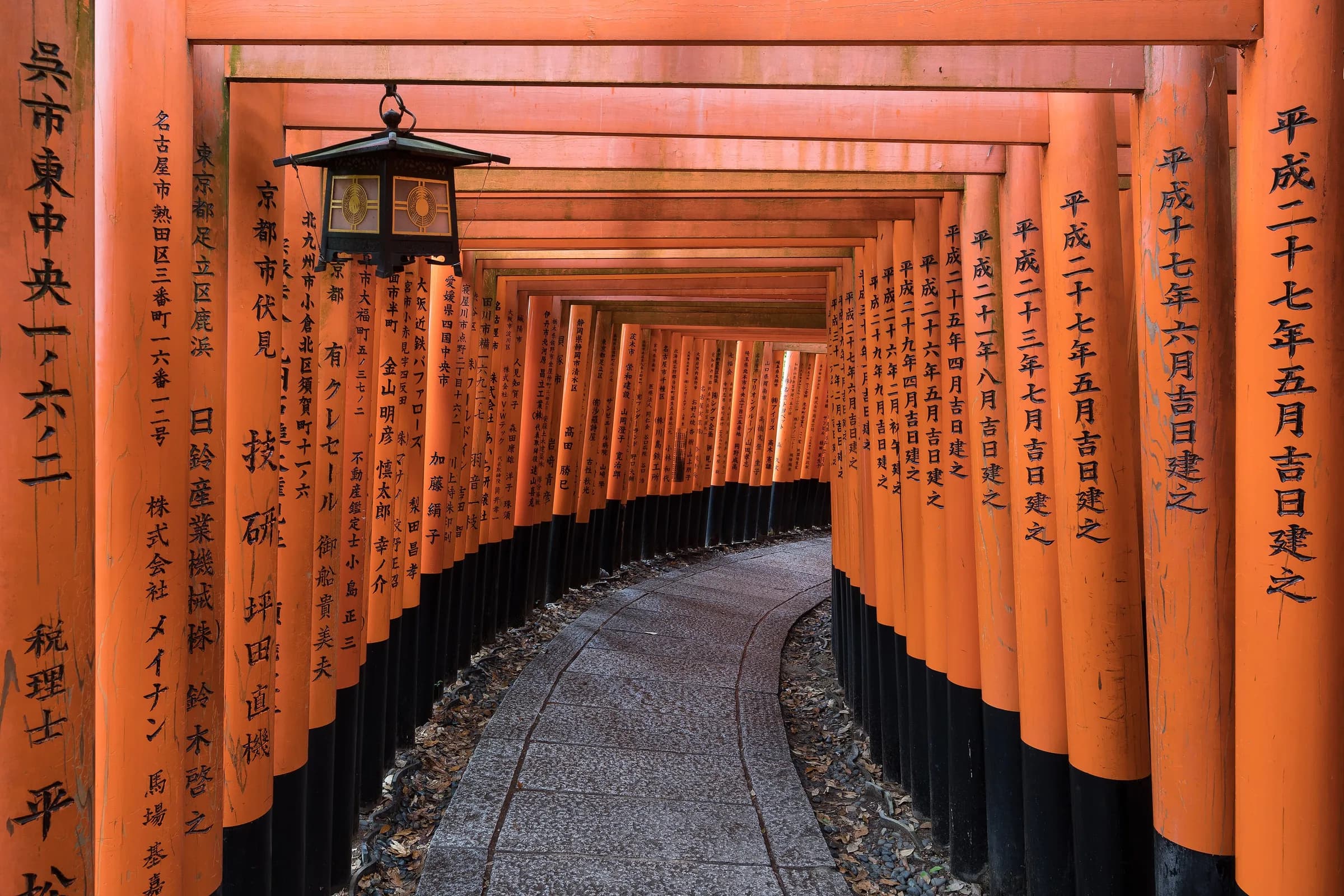
Kyoto
Fushimi Inari Taisha
Thousands of vermilion torii gates climb the forested mountain behind this famous shrine.
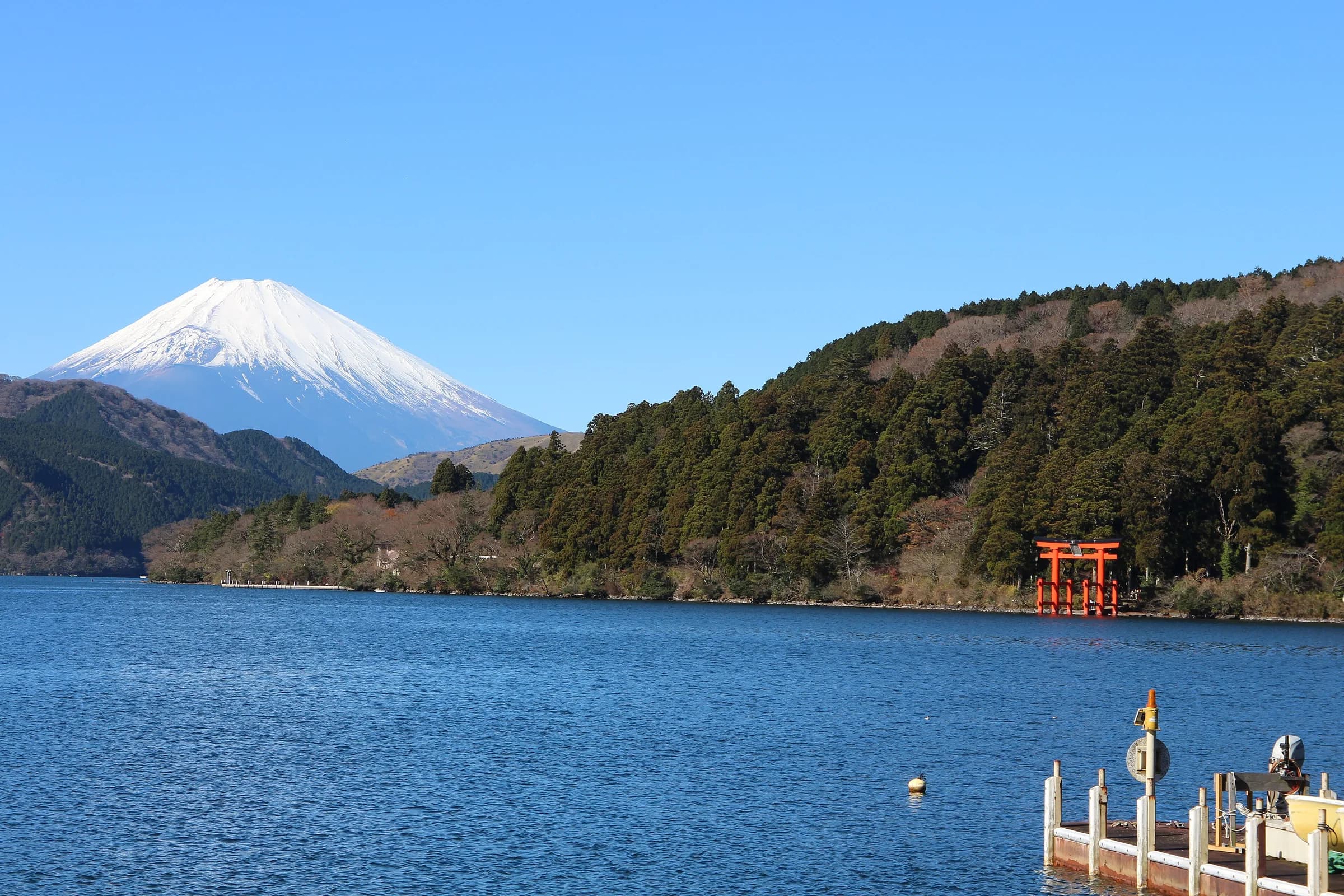
Hakone
Mount Fuji and Hakone
Japan's iconic peak, with hot springs, lake views and easy day trips from Tokyo.
Questions everyone asks about Japan visas
It depends on your passport. Citizens of more than 50 countries can enter visa-free for short stays, some nationalities can apply for an e-visa, and others need a visa from a Japanese embassy or consulate before travel.
It is an official online service for submitting immigration, customs and quarantine information before arrival. It is optional, and paper forms remain available on the flight or at the airport.
Most temporary visitors cannot extend a short stay. A few nationalities, including Germany, Ireland and the United Kingdom, can apply at an immigration bureau in Japan to extend to a total of up to six months.
No. Japan does not offer a general visa on arrival. Anyone who needs a visa must get it before flying.
Overstaying is a criminal offence in Japan. It can lead to detention, fines, deportation and being barred from re-entering the country.
No. Temporary visitors are not allowed to take up paid work, with the narrow exception of short-term study at a language school.
Yes, if you carry cash or other means of payment worth more than 1 million yen, you must declare it to customs on arrival or departure.
Only a limited number of nationalities are currently eligible. Check the official e-visa site for the current list before planning around it.
Now read the one written for your passport
Each guide has the fee for that passport, its maximum stay, the rules that apply only to it, and the application itself.
Russia
Route, fee and documents for this passport
Vietnam
Route, fee and documents for this passport
Sri Lanka
Route, fee and documents for this passport
Saudi Arabia
Route, fee and documents for this passport
Philippines
Route, fee and documents for this passport
Cambodia
Route, fee and documents for this passport
India
Route, fee and documents for this passport
Mongolia
Route, fee and documents for this passport
China
Route, fee and documents for this passport
Every other passport →
Pick your passport for your route, your fee and your documents.
Japan visa for every other passport (198)
- Afghan citizens
- Aland-Islander citizens
- Albanian citizens
- Algerian citizens
- American-Samoan citizens
- Angolan citizens
- Anguillan citizens
- Antiguan citizens
- Aruban citizens
- Ascension-Islander citizens
- Austrian citizens
- Azerbaijani citizens
- Bahraini citizens
- Bangladeshi citizens
- Belarusian citizens
- Belgian citizens
- Belizean citizens
- Beninese citizens
- Bermudian citizens
- Bhutanese citizens
- Bolivian citizens
- Caribbean-Netherlands citizens
- Bosnian citizens
- Botswanan citizens
- Bouvet-Island citizens
- Brazilian citizens
- British-Indian-Ocean-Territory citizens
- Bruneian citizens
- Bulgarian citizens
- Burkinabe citizens
- Burundian citizens
- Cameroonian citizens
- Cape-Verdean citizens
- Caymanian citizens
- Central-African citizens
- Chadian citizens
- Christmas-Islander citizens
- Cocos-Islander citizens
- Colombian citizens
- Comoran citizens
- Congolese citizens
- Cook-Islander citizens
- Ivorian citizens
- Croatian citizens
- Cuban citizens
- Curacaoan citizens
- Cypriot citizens
- Czech citizens
- Danish citizens
- Djiboutian citizens
- Dominica citizens
- DRC citizens
- Ecuadorian citizens
- Egyptian citizens
- Equatoguinean citizens
- Eritrean citizens
- Estonian citizens
- Swazi citizens
- Ethiopian citizens
- Falkland-Islander citizens
- Faroese citizens
- Fijian citizens
- Finnish citizens
- French citizens
- French-Guianese citizens
- French-Polynesian citizens
- French-Southern-Territories citizens
- Gabonese citizens
- Gambian citizens
- Georgian citizens
- German citizens
- Ghanaian citizens
- Gibraltarian citizens
- Greek citizens
- Greenlandic citizens
- Grenadian citizens
- Guadeloupean citizens
- Guamanian citizens
- Guernsey citizens
- Guinean citizens
- Bissau-Guinean citizens
- Guyanese citizens
- Haitian citizens
- Heard-And-Mcdonald-Islands citizens
- Vatican citizens
- Hungarian citizens
- Iranian citizens
- Iraqi citizens
- Irish citizens
- Manx citizens
- Italian citizens
- Jamaican citizens
- Jersey citizens
- Jordanian citizens
- Kazakh citizens
- Kenyan citizens
- I-Kiribati citizens
- Kosovar citizens
- Kuwaiti citizens
- Kyrgyz citizens
- LAO citizens
- Latvian citizens
- Lebanese citizens
- Liberian citizens
- Libyan citizens
- Lithuanian citizens
- Luxembourgish citizens
- Malagasy citizens
- Malawian citizens
- Maldivian citizens
- Malian citizens
- Maltese citizens
- Marshallese citizens
- Martinican citizens
- Mauritanian citizens
- Mayotte citizens
- Micronesian citizens
- Moldovan citizens
- Montenegrin citizens
- Montserratian citizens
- Moroccan citizens
- Mozambican citizens
- Burmese citizens
- Namibian citizens
- Nauruan citizens
- Nepali citizens
- Dutch citizens
- New-Caledonian citizens
- Nicaraguan citizens
- Nigerien citizens
- Nigerian citizens
- Niuean citizens
- Norfolk-Islander citizens
- North-Korean citizens
- Northern-Mariana-Islander citizens
- Omani citizens
- Pakistani citizens
- Palauan citizens
- Palestinian citizens
- Panamanian citizens
- Papua-New-Guinean citizens
- Paraguayan citizens
- Peruvian citizens
- Pitcairn-Islander citizens
- Polish citizens
- Portuguese citizens
- Puerto-Rican citizens
- Reunionese citizens
- Romanian citizens
- Rwandan citizens
- Saint-Barthelemy citizens
- Saint-Helenian citizens
- Kittitian citizens
- Saint-Lucian citizens
- Saint-Martin citizens
- Saint-Pierre-And-Miquelon citizens
- Vincentian citizens
- Samoan citizens
- Santomean citizens
- Senegalese citizens
- Seychellois citizens
- Sierra-Leonean citizens
- Sint-Maarten citizens
- Slovak citizens
- Slovenian citizens
- Solomon-Islander citizens
- Somali citizens
- South-African citizens
- South-Georgia citizens
- South-Sudanese citizens
- Spanish citizens
- Sudanese citizens
- Svalbard citizens
- Swedish citizens
- Syrian citizens
- Tajik citizens
- Tanzanian citizens
- Timorese citizens
- Togolese citizens
- Tokelauan citizens
- Tongan citizens
- Trinidadian citizens
- Turkmen citizens
- Turks-And-Caicos-Islander citizens
- Tuvaluan citizens
- Ugandan citizens
- Ukrainian citizens
- Us-Minor-Outlying-Islands citizens
- Uzbek citizens
- Ni-Vanuatu citizens
- Venezuelan citizens
- British-Virgin-Islander citizens
- Us-Virgin-Islander citizens
- Wallis-And-Futuna citizens
- Sahrawi citizens
- Yemeni citizens
- Zambian citizens
- Zimbabwean citizens