



Japan Visa for Russian Citizens: Requirements and Steps
- Visa required
- Apply up to 90 days before arrival
- Verified
Plusvisa is a private visa application service, not a government agency or embassy. Official government source: Japan eVisa (Ministry of Foreign Affairs), evisa.mofa.go.jp.
Table of contents

Visa-free entry
Not available
Russia is not exempt from the visa requirement

Where to apply
Japanese embassy or consulate
No e-visa route confirmed for Russia

When to apply
Up to 3 months before travel
Recommended at least 2 weeks before travel
One route into Japan
Most travellers
Embassy or consulate visa
Apply at a Japanese embassy or consulate before you travel. Visa types include tourism, business, medical and transit. Documents go in no earlier than three months before the trip.
How long you may stay
Russian citizens cannot use visa-free entry, so the stay is set by the visa you hold. The destination guide's general limits (90, 30 or 15 days) apply to visa-exempt visitors, not to Russian passport holders.

Stay length is on the visa: Your visa sets how long you may stay on each visit. I could not confirm a maximum for Russian applicants, so check the stay length with the embassy before you book.

Multiple entries: A multiple-entry visa needs a separate letter explaining why you need several visits. Each visit still has its own permitted stay.

Extensions: The destination guide says most temporary visitors cannot extend a short stay. Russia is not named among the nationalities that can extend, so do not plan on an extension.

Overstaying: The destination guide says overstaying is a criminal offence in Japan. It can lead to detention, fines, deportation and an entry ban.
Your document checklist
Nine things to have ready before you start your application, as a Russian applicant.

Passport
Valid international passport. Send a clear copy of the photo page with your application.
Passport photos
Two photos, 3.5 x 4.5 cm, taken within the last 6 months, plain background, face fully visible, no frame or retouching.

Visa application form
Two copies, in English or Japanese only, signed and dated.
Copy of Russian internal passport
Copy of the front page and all pages with registration stamps.
Flight reservation
Confirmation of your flights, in Russian or English.
Only for some visa types

Bank statement certificate
Only if Tourist trips, when you pay your own way. Original certificate from a Russian bank, in Russian or English, with a live seal and the bank employee's signature. Printed or online statements are not accepted.Schedule of stay in Japan
Only if Tourist trips. In English or Japanese: entry and exit dates, flight numbers, hotel names, addresses and phone numbers, and a daily plan.Employment certificate
Only if Employed applicants. Original letter with a live seal and signature, showing position and salary, in Russian or English.Invitation letter
Only if Visiting family, business or cultural trips. Original letter from the host in Japan on the embassy form. Copies are accepted because of postal limits.
When should you apply?
Enter your arrival date and we'll work backwards.
Processing
Pick your arrival date
- 1
Apply online
—
Form and uploads, about 30 min
- 2
Pay the fee
—
By card, on the portal
- 3
Processing
See the portal
Official estimate
- 4
Approval emailed
—
Keep a copy on your phone
- 5
Arrive in Japan
—
Show the approval at the border
Documents go in no earlier than three months before the trip. Apply at least 2 weeks before travel. Processing takes at least 4 business days, but allow more time for any resubmission.
Three questions, 20 seconds
Do you hold a Russian passport valid for the whole of your planned stay in Japan?
Is your trip a short tourist, family or business visit, not work or study?
Can you submit your documents in Russia, within three months of your trip?
Result
Answer all three
Three quick checks of the rules that most often catch travellers out, and we'll tell you where you stand.
The application, step by step
Before you apply
- 1
Check the visa route
Russian citizens need a visa before travel. Confirm the current rules with the Japanese embassy in Russia.
- 2
Gather your documents
Collect your passport, two photos, the application form, your internal passport copy, bank certificate and flight reservation. Use the document list on this page.
Bank certificate must be an original with a live seal.
On the official portal
- 3
Fill in the application form
Complete two copies of the visa form in English or Japanese. Sign and date both.
- 4
Submit at the application centre or embassy
Hand in your documents within three months of travel. The application centre accepts payment in roubles, cash or card.

Fees are not refunded.
After you apply
- 5
Wait for the decision
Processing takes at least 4 business days. Allow more time if documents must be resent.
- 6
Travel with your visa
Carry your passport with the visa when you enter Japan. Keep a copy of the visa with your documents.
Official website: evisa.mofa.go.jp (opens in a new tab)
Questions Russian travellers actually ask
No. Russian citizens are not exempt from visas. You need a visa from a Japanese embassy or consulate before you fly, whatever the length or purpose of your trip.
I could not confirm that Russian passport holders can use Japan's e-visa. The official e-visa list could not be read. Check the official e-visa portal before you plan around it.
The application centre accepts documents no earlier than three months before your trip. It recommends applying at least two weeks before travel.
For tourist trips, the application centre asks for an original bank certificate from a Russian bank, with a live seal and signature. Printed or online statements are not accepted. Unemployed applicants and those with other funding must also show balances.
Employed applicants must give an original employment certificate with a live seal, showing position and salary. Students need a sealed certificate from their place of study.
Most temporary visitors cannot extend a short stay in Japan. Russia is not named among the nationalities that can apply to extend, so plan your stay within the length on your visa.
Yes. The application centre accepts a simple written power of attorney with contact details, without notarisation. The applicant must be in Russia when the application is submitted.
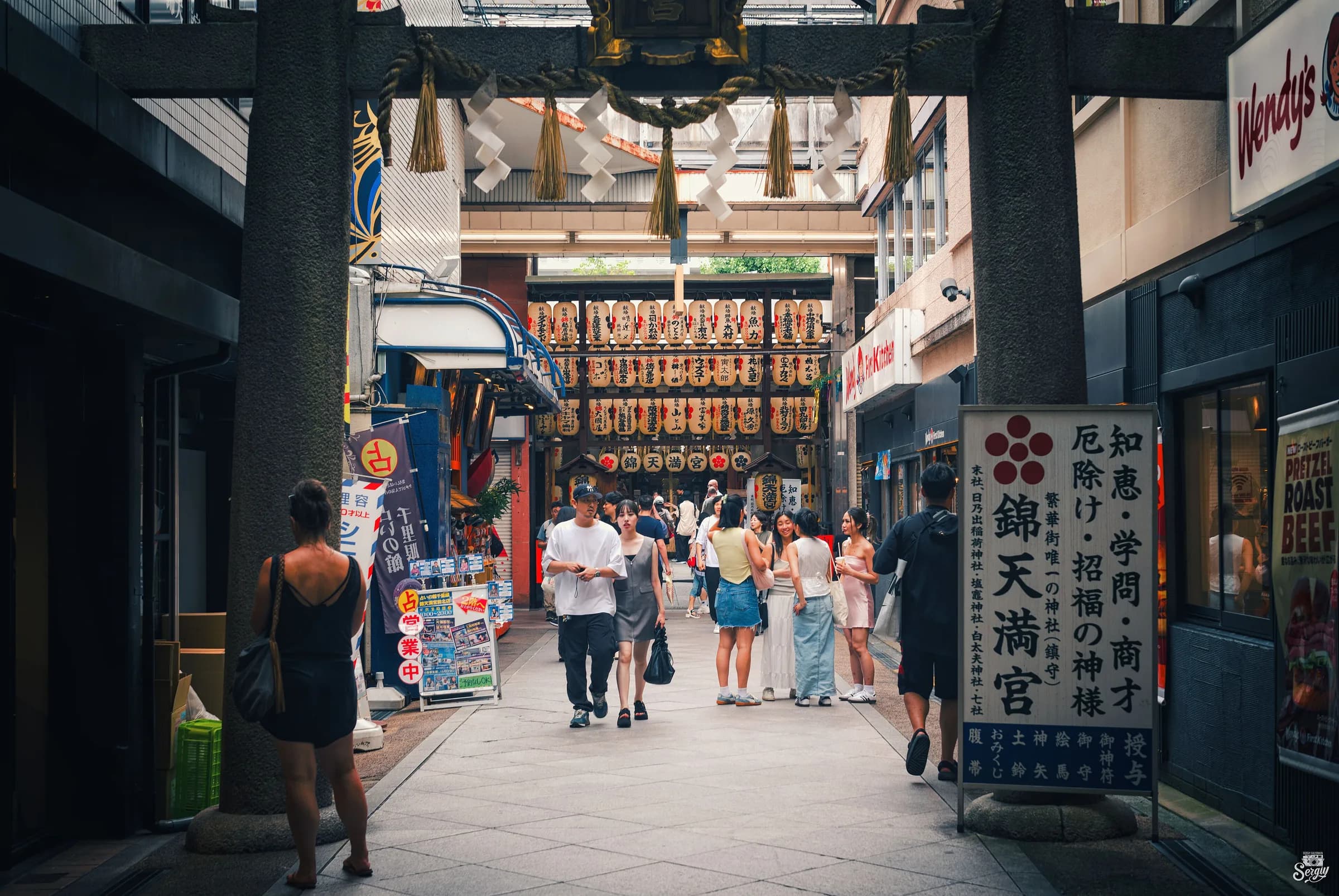
Visa sorted
The things that make the first
48 hours easy, compared with home
Your Russian plug won't fit. Here's what will.
Type A
Two flat pins
Type B
Two flat pins · earthed
Type A
Japan uses type A and B sockets and your plugs are type C and F. A C-to-A adapter works for the whole trip.
Voltage
100 V · 50 Hz
Against 220 V · 50 Hz at home. Check the label on chargers and appliances: anything marked 100–240 V, 50/60 Hz works in both.

Pack: one type A adapter and a small power strip — hotel rooms rarely have more than two sockets.
Japan drives on the left — the opposite of home
Compare traffic side:
Japan · left-hand traffic — the opposite of Russia

Getting around
Trains and IC cards like Suica and Pasmo cover most cities, and the Shinkansen bullet train links major regions quickly. Cars drive on the left.

Health
Tap water is safe to drink and healthcare quality is high, but it is not free for visitors, so travel insurance is strongly recommended.

Customs and etiquette
Remove shoes before entering homes and some restaurants, queue in order on platforms, and avoid eating while walking or on local trains.
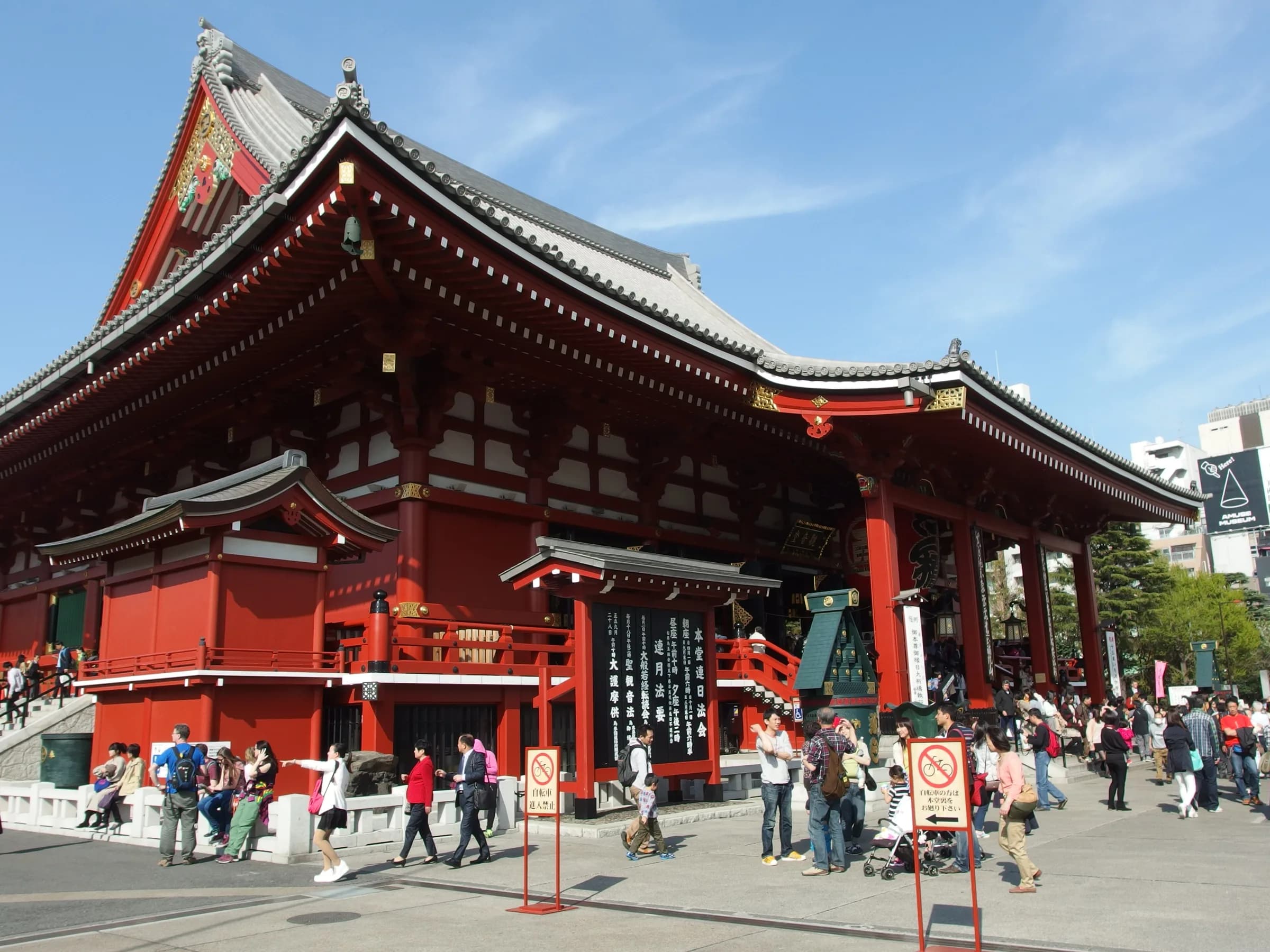
Japanese Yens, cash and cards
Japan uses the Japanese Yen (JPY).
₽1 ≈ ¥1.7 · indicative mid-market rate, possibly a few days old

Carry some cash
Japan is still partly cash-based; many smaller shops, temples and rural businesses do not accept cards.

Use convenience store ATMs
7-Eleven and Japan Post ATMs reliably accept foreign cards and are found in convenience stores nationwide.

Cards and IC cards
Visa and Mastercard are widely accepted in cities, while a Suica or Pasmo IC card is useful for trains, buses and convenience stores.
Weather by month (Tokyo)
- Daytime high
- Grey row = night low
- Best time to go
- Daytime high
- Grey row = night low
- Best time to go
| Month | High, °C | Low, °C | Rain, mm |
|---|---|---|---|
| January | 6.9 | -2.4 | 66 |
| February | 8.4 | -1.6 | 66.7 |
| March · best | 12.4 | 1.4 | 114.7 |
| April · best | 17.5 | 6.5 | 128.7 |
| May · best | 22.1 | 12 | 142 |
| June | 24.9 | 16.6 | 180.6 |
| July | 28.6 | 20.9 | 179.8 |
| August | 29.9 | 21.8 | 154.7 |
| September | 26 | 18.1 | 215.1 |
| October · best | 20.4 | 11.9 | 222 |
| November · best | 15.3 | 5.6 | 97.2 |
| December | 9.7 | 0 | 69.1 |
Monthly averages. Source: NASA POWER climatology, 2001-2020.
March · ideal
The best window runs March, April, May, October and November.
High 12.4°CLow 1.4°CRain 114.7 mm
Sweet spot: Tokyo has hot, humid summers with a rainy season in June and typhoon risk in late summer. Spring (March to May) and autumn (October to November) are mild, with cherry blossoms and autumn leaves. Winters are cool and dry.
One time zone
Moscow
--:--:--
Tokyo
--:--:--
How much to tip, in RUB
Restaurants
Tipping is not expected and can cause confusion.
No tip expected
Taxis
Drivers do not expect a tip.
No tip expected
Hotels
Porters and housekeeping do not expect tips.
No tip expected
Tour guides
A small wrapped gift is sometimes offered instead of cash, but it is not required.
No tip expected
SIM, eSIM or roaming?
Local SIM
Local prepaid SIM
Airport kiosks, electronics shops and convenience stores across Japan. Needs an unlocked phone; some need passport ID to register.
eSIM
RecommendedTravel eSIM
Bought online before departure and installed on an eSIM-compatible phone. Can be activated before landing, with no need to swap a physical SIM.
Roaming
Roaming from home
Activated through your home carrier before you leave. Usually the most expensive way to get data in Japan.