



Japan Visa for Sri Lankan Citizens: Documents and Stay
- Visa required
- Apply about 30 days before arrival
- Verified
Plusvisa is a private visa application service, not a government agency or embassy. Official government source: Japan eVisa (Ministry of Foreign Affairs), evisa.mofa.go.jp.
Table of contents

Visa-free entry
Not available
Sri Lanka is not on Japan's visa-exemption list.

Visa on arrival
Not available
Japan has no general visa on arrival.

Stay per visit
Up to 90 days
The officer sets 15, 30 or 90 days for a single-entry tourist visa.
Two routes into Japan
Most people
Embassy visa (temporary visitor)
Apply for a short-stay visa before you travel. Applications go through the Japan Visa Application Centre (VFS Global) in Colombo, by appointment. Tourism, family visits and short business trips are covered.
Longer stays
Certificate of Eligibility first
Work, study and family stays of more than 90 days need a Certificate of Eligibility from Japan before you apply for the visa.
How long you may stay
Sri Lankan citizens on a tourist visa may stay up to 90 days per visit. The immigration officer at the airport sets the length, which may be 15, 30 or 90 days. The limit applies to each visit, not to a total for the year.

Short-stay visa: A tourist visit allows up to 90 days per visit. Japan's official rules set 90, 30 or 15 days as the usual periods for temporary visitors.

The officer sets the length: The officer at the airport decides whether you get 15, 30 or 90 days. Bring proof of your planned stay, such as your flight and hotel booking.

Extensions: Most temporary visitors cannot extend a short stay. The destination guide says a few nationalities can apply to extend to 6 months. I could not confirm that Sri Lankan citizens are on that list, so plan on no extension.

Paid work: Temporary visitors may not take paid work. The destination guide notes one narrow exception: short-term study at a language school. Check the conditions before you rely on it.

Overstaying: Overstaying is a criminal offence in Japan. It can lead to detention, fines, deportation and a future entry ban.
Your document checklist
Ten things to have ready before you start your application, as a Sri-Lankan applicant.

Passport
Valid passport with at least two blank pages. Bring the bio pages, two copies, and a copy of any alteration page.

Visa application form
One form per applicant, completed in capital letters. Names must match the passport.
Colour photo
45 by 35 mm, white background, taken within the last 6 months.

National ID card
Original and copy. Names must match the passport. An affidavit is needed if your name is spelled differently anywhere.
Birth certificate
Original and copy. Sinhala or Tamil documents need an official English translation by a sworn translator.

Hotel and flight reservations
Hotel booking, or your sponsor's residence certificate if you stay with them. A round-trip flight reservation. Paid tickets are discouraged.
Financial records for the last 3 months
Salary slips, bank statements and balance letters for current and savings accounts, including fixed deposits.
Employment or study letter
Employer letter with start date and approved leave. Self-employed: business registration and company bank statement. Students: school or university letter.
Only for some visa types

Marriage certificate
Only if If married. Original and copy, if married. Same translation rule as the birth certificate.Sponsor letter
Only if If someone sponsors the trip. Authorising letter and 3 months of the sponsor's bank statements, if someone else pays for the trip.
When should you apply?
Enter your arrival date and we'll work backwards.
Processing
Pick your arrival date
- 1
Apply online
—
Form and uploads, about 30 min
- 2
Pay the fee
—
By card, on the portal
- 3
Processing
See the portal
Official estimate
- 4
Approval emailed
—
Keep a copy on your phone
- 5
Arrive in Japan
—
Show the approval at the border
No official earliest or latest date confirmed. Processing is usually 5 working days; apply a month ahead to allow for checks or resubmission.
Three questions, 20 seconds
Is your trip for tourism, a family visit or a short business trip of up to 90 days?
Can you go in person to the Japan Visa Application Centre in Colombo, by appointment?
Are you travelling on an ordinary Sri Lankan passport?
Result
Answer all three
Three quick checks of the rules that most often catch travellers out, and we'll tell you where you stand.
The application, step by step
Before you apply
- 1
Check your visa requirement
Confirm on the official Japanese government site that Sri Lankan citizens need a visa for your trip. Sources I could read say you do.

This official page could not be read while checking, so confirm it before you book.
- 2
Gather your documents
Prepare your passport, photo, national ID, birth certificate, financial records and travel reservations. Translate Sinhala or Tamil papers by a sworn translator.
- 3
Book an appointment
Book an appointment at the Japan Visa Application Centre (VFS Global) in Colombo before you go in person.
On the official portal
- 4
Submit the application in person
Bring the originals and a set of A4 copies to the Colombo centre. Pay the visa fee in cash. Other centre charges may be paid in cash or by card.

Check the current fee and payment rules with the centre before you go.
- 5
Wait for the decision
Usually about 5 working days, longer if the case needs more checks. The embassy may ask for more documents within 3 months.
After you apply
- 6
Collect your passport
The visa sticker is placed in your passport. A single-entry visa must be used within 3 months of issue.
- 7
Present it on arrival
Show your passport with the visa to the immigration officer in Japan. The officer makes the final decision on entry.
Official website: evisa.mofa.go.jp (opens in a new tab)
Questions Sri-Lankan travellers actually ask
The sources I could read say no. Japan's e-visa is not open to Sri Lankan residents as far as they show. Apply at the Japan Visa Application Centre in Colombo. Check the official Japanese government site before you plan around this.
Yes. Sri Lanka is not on Japan's visa-exemption list, and Japan has no visa on arrival. You need a visa for tourism too.
A tourist visit allows up to 90 days per visit. The officer at the airport sets the length, which may be 15, 30 or 90 days. Overstaying is a criminal offence.
Applications go through the Japan Visa Application Centre (VFS Global) in Colombo, by appointment. The embassy itself handles diplomatic and official visas and urgent humanitarian cases.
Not for the same purpose within 6 months, unless your circumstances have changed and the trip is needed for humanitarian reasons. Japan does not give reasons for refusals.
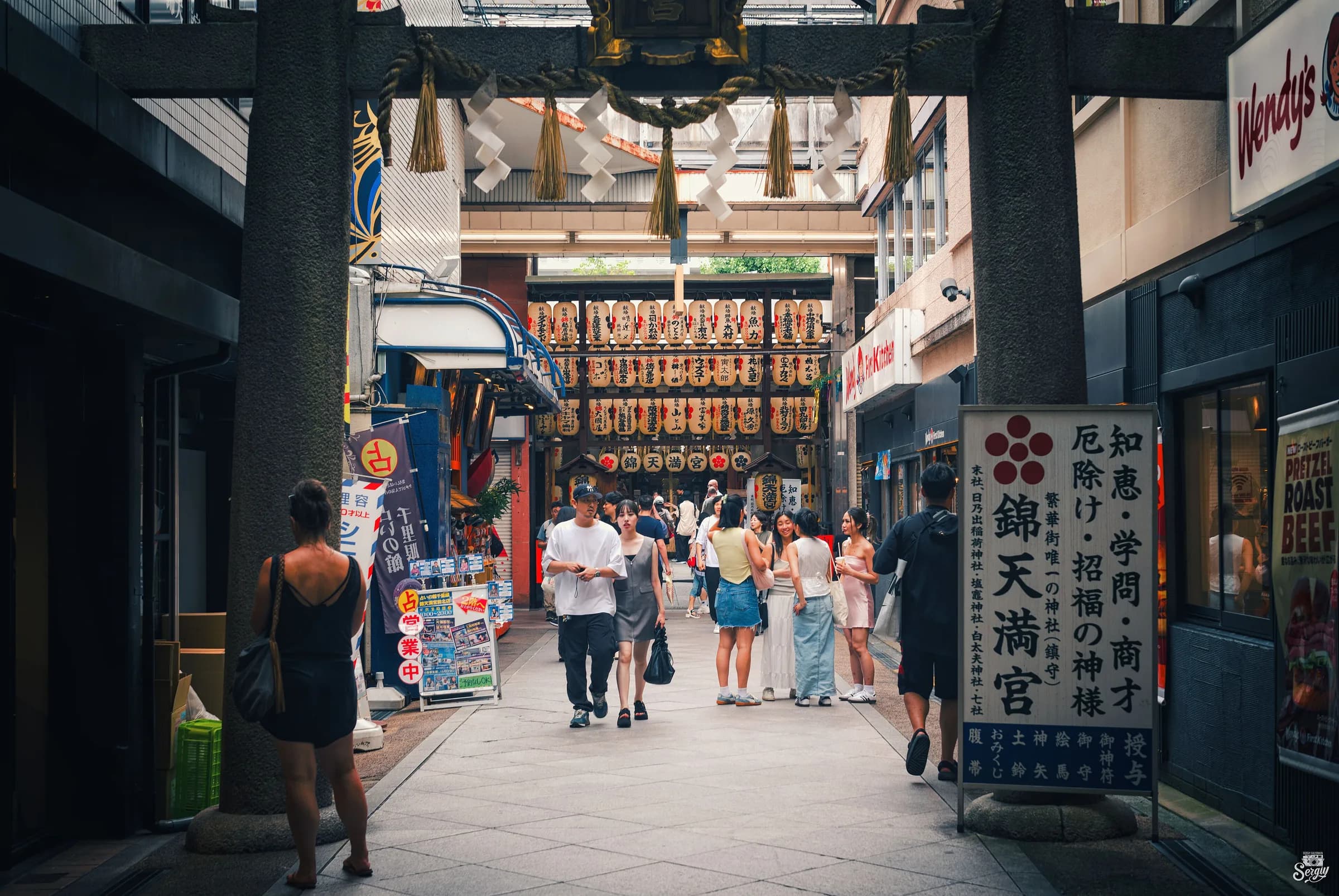
Visa sorted
The things that make the first
48 hours easy, compared with home
Your Sri-Lankan plug won't fit. Here's what will.
Type A
Two flat pins
Type B
Two flat pins · earthed
Type A
Japan uses type A and B sockets and your plugs are type D, G and M. A D-to-A adapter works for the whole trip.
Voltage
100 V · 50 Hz
Against 230 V · 50 Hz at home. Check the label on chargers and appliances: anything marked 100–240 V, 50/60 Hz works in both.

Pack: one type A adapter and a small power strip — hotel rooms rarely have more than two sockets.
Japan drives on the left — just like home
Compare traffic side:
Japan · left-hand traffic — same as Sri Lanka

Getting around
Trains and IC cards like Suica and Pasmo cover most cities, and the Shinkansen bullet train links major regions quickly. Cars drive on the left.

Health
Tap water is safe to drink and healthcare quality is high, but it is not free for visitors, so travel insurance is strongly recommended.

Customs and etiquette
Remove shoes before entering homes and some restaurants, queue in order on platforms, and avoid eating while walking or on local trains.
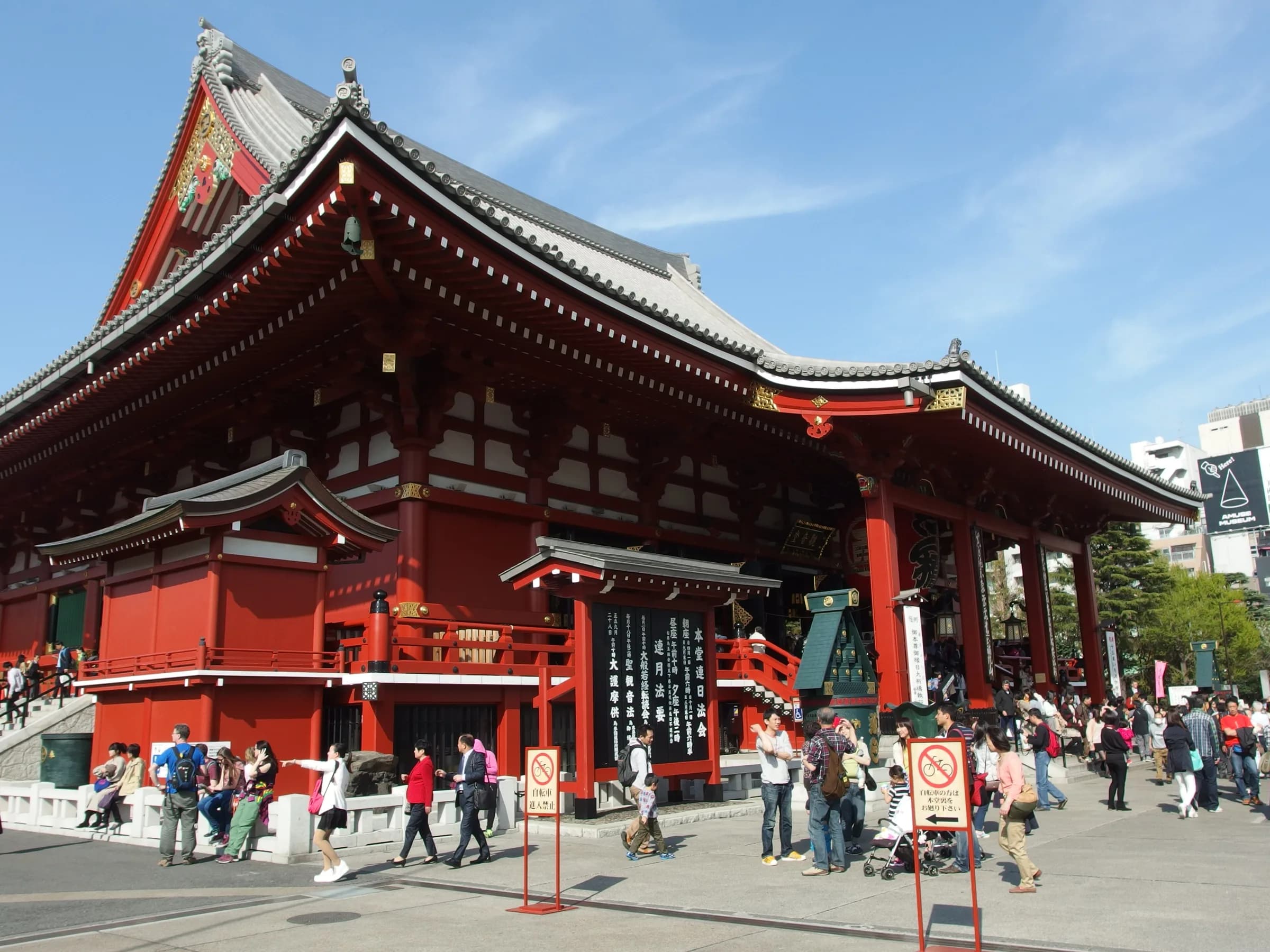
Japanese Yens, cash and cards
Japan uses the Japanese Yen (JPY).
Rs1 ≈ ¥0.515 · indicative mid-market rate, possibly a few days old

Carry some cash
Japan is still partly cash-based; many smaller shops, temples and rural businesses do not accept cards.

Use convenience store ATMs
7-Eleven and Japan Post ATMs reliably accept foreign cards and are found in convenience stores nationwide.

Cards and IC cards
Visa and Mastercard are widely accepted in cities, while a Suica or Pasmo IC card is useful for trains, buses and convenience stores.
Weather by month (Tokyo)
- Daytime high
- Grey row = night low
- Best time to go
- Daytime high
- Grey row = night low
- Best time to go
| Month | High, °C | Low, °C | Rain, mm |
|---|---|---|---|
| January | 6.9 | -2.4 | 66 |
| February | 8.4 | -1.6 | 66.7 |
| March · best | 12.4 | 1.4 | 114.7 |
| April · best | 17.5 | 6.5 | 128.7 |
| May · best | 22.1 | 12 | 142 |
| June | 24.9 | 16.6 | 180.6 |
| July | 28.6 | 20.9 | 179.8 |
| August | 29.9 | 21.8 | 154.7 |
| September | 26 | 18.1 | 215.1 |
| October · best | 20.4 | 11.9 | 222 |
| November · best | 15.3 | 5.6 | 97.2 |
| December | 9.7 | 0 | 69.1 |
Monthly averages. Source: NASA POWER climatology, 2001-2020.
March · ideal
The best window runs March, April, May, October and November.
High 12.4°CLow 1.4°CRain 114.7 mm
Sweet spot: Tokyo has hot, humid summers with a rainy season in June and typhoon risk in late summer. Spring (March to May) and autumn (October to November) are mild, with cherry blossoms and autumn leaves. Winters are cool and dry.
One time zone, a half-hour offset
Sri Jayawardenepura Kotte
--:--:--
Tokyo
--:--:--
How much to tip, in LKR
Restaurants
Tipping is not expected and can cause confusion.
No tip expected
Taxis
Drivers do not expect a tip.
No tip expected
Hotels
Porters and housekeeping do not expect tips.
No tip expected
Tour guides
A small wrapped gift is sometimes offered instead of cash, but it is not required.
No tip expected
SIM, eSIM or roaming?
Local SIM
Local prepaid SIM
Airport kiosks, electronics shops and convenience stores across Japan. Needs an unlocked phone; some need passport ID to register.
eSIM
RecommendedTravel eSIM
Bought online before departure and installed on an eSIM-compatible phone. Can be activated before landing, with no need to swap a physical SIM.
Roaming
Roaming from home
Activated through your home carrier before you leave. Usually the most expensive way to get data in Japan.