


Thailand Visa: Requirements, e-Visa and Entry Rules
Thailand now runs a single electronic visa system that covers almost every passport, used both for visas applied for in advance and for visas on arrival. Citizens of many countries can enter visa-free for a set number of days, a small group can get a visa on arrival, and everyone else applies online before flying. All non-Thai nationals must also file a digital arrival card before entry.
- e-Visa for 246 passports
- Government fee from $41
- Verified
Plusvisa is a private visa application service, not a government agency or embassy. Official government source: Thailand e-Visa (Ministry of Foreign Affairs), thaievisa.go.th.
Do you need a visa for Thailand?
Where a passport falls depends on nationality and purpose of travel. Most travellers either enter visa-free or apply for an e-Visa online.
Which passport will you travel on?
Your route
Pick a passport
We will show the route Thailand puts you on, the government fee for each visa type, and the guide written for your nationality.
The four routes
- Visa-free
Visa exemption
Passports with a visa-exemption agreement with Thailand, including most of the EU, the UK, the US, Australia, Japan, South Korea, most ASEAN states and some South American countries, can enter without a visa.
- Visa on arrival
Visa on arrival
A small group of passports, including Azerbaijan, Belarus and Serbia, can get a short-stay visa on arrival at designated airports and land checkpoints, or use the e-Visa on arrival instead.
- e-Visa eligible
246 passports
Passports that are not visa-exempt, and most that are, can apply online for a tourist or other e-Visa category through the official portal before travelling.
- Embassy visa only
Visa required in advance
Some purposes of travel, such as work, study or long-term stay, need a visa applied for at a Thai embassy or consulate before departure, even where the e-Visa system handles the application.
Government fees by passport
| Passport | E-Visa On Arrival | E-Visa On Arrival (Express) | Tourist | Guide |
|---|---|---|---|---|
| United Kingdom | — | — | $41 | Read guide |
| United States of America | — | — | $41 | Read guide |
| Canada | — | — | $41 | Read guide |
| Australia | — | — | $41 | — |
| Ireland | — | — | $41 | Read guide |
| Germany | — | — | $41 | Read guide |
| Luxembourg | — | — | $41 | Read guide |
| Finland | — | — | $41 | Read guide |
| Denmark | — | — | $41 | Read guide |
| Belgium | — | — | $41 | Read guide |
| Nepal | — | — | $41 | Read guide |
| Iran | — | — | — | Read guide |
| Bangladesh | — | — | $41 | Read guide |
| Tunisia | — | — | $41 | Read guide |
| Sri Lanka | — | — | $41 | Read guide |
| Norway | — | — | $41 | Read guide |
| Netherlands | — | — | $41 | Read guide |
| Namibia | — | — | $41 | Read guide |
| Myanmar | — | — | $41 | Read guide |
| Mexico | $80 | $135 | $41 | Read guide |
| France | — | — | $41 | Read guide |
| Costa Rica | — | — | $41 | Read guide |
| Colombia | — | — | $41 | Read guide |
| Azerbaijan | — | — | $41 | Read guide |
| Albania | — | — | $41 | Read guide |
| Sweden | — | — | $41 | Read guide |
Which Thailand visa exists, and what it allows
| e-Visa | Options | Processing | Usual government fee |
|---|---|---|---|
| E-Visa On ArrivaleVisa · 17 passports |
| 3–5 business days | $80 |
| E-Visa On Arrival (Express)eVisa · 17 passports |
| 1–2 business days | $135 |
| TouristeVisa · 245 passports |
| 5–7 business days | $41 |
How Thailand visa fees work

Set by the Thai government. e-Visa and visa-on-arrival fees are set by the Ministry of Foreign Affairs and the Immigration Bureau, and charged in Thai baht on the official portal.

Fee varies by nationality and residence. The e-Visa fee can differ depending on the applicant's nationality and country of residence, and is usually lower than the equivalent visa on arrival fee.

Standard and express processing. Some categories, such as the e-Visa on arrival, offer a standard and a faster express processing option, each charged at its own rate.

Payment is non-refundable. Once a fee is paid on the official portal it is not refunded, even if the application is later refused or withdrawn.

No separate bank surcharge disclosed. The official portal does not publish any additional card or bank charge on top of the government fee.
What Plusvisa charges
The government fee is passed through at cost. Our service fee is on top, and every passport's page shows the total before you start.
If we make a mistake that leads to a refusal, we refund our fee and re-apply free.
See the total for my passportYour document checklist

Passport biodata page
Clear colour scan or photo of the biodata page. Embassies and official travel advice ask for at least 6 months' validity from the date of entry into Thailand, not just the length of stay.

Passport-style photograph
Recent digital photo on a plain background, uploaded in the format the portal specifies.

Proof of funds
Bank statement or equivalent showing sufficient funds, uploaded online for e-Visa applications or shown at the border for visa on arrival.

Proof of accommodation
Hotel booking or address of stay in Thailand for the length of the trip.

Travel itinerary
Onward or return flight booking showing the planned date of departure from Thailand.
Thailand Digital Arrival Card
Completed online within 72 hours of arrival, separate from the visa itself.
Only for some travellers

Employment or business details
Only if Some visa categories, including work or business visas. Details of occupation and employer, or business documents, entered in the online application form.
Not eligible for any e-Visa
Where an e-Visa is accepted
Visa on arrival and e-Visa on arrival are only issued at designated checkpoints. Other visa types and visa-free entry are accepted at any official border crossing.
- Suvarnabhumi (Bangkok)
- Don Mueang (Bangkok)
- Chiang Mai
- Chiang Rai
- Phuket
- Krabi
- Hat Yai
- Hua Hin
- Samui
- Sukhothai
- Surat Thani
- Trang
- U-Tapao
- Aranyaprathet
- Betong
- Mae Sai
- Chiang Khong
- Chiang Saen
- Nong Khai
- Mukdahan
- Sadao
- Padang Besar
- Satun
- Khlong Yai (Hat Lek)
- Bangkok Harbour
- Samui
- Krabi
- Phuket
- Songkhla Harbour
- Nong Khai Harbour
Choose your port of arrival carefully
The application, step by step
Before you apply
- 1
Check if a visa is needed
Confirm whether your passport is visa-exempt, eligible for visa on arrival, or needs an e-Visa, based on nationality and purpose of travel.
- 2
Create an account on the e-Visa portal
Register with an email address and activate the account through the verification link sent by email.
- 3
Gather documents
Prepare a passport scan, photo, proof of funds, accommodation and travel itinerary in the formats the portal asks for.
On the official portal
- 4
Fill in the application
Enter passport, personal, travel and accommodation details across the portal's application steps.
- 5
Upload supporting documents
Attach the biodata page, photograph and other required documents to the application.
- 6
Pay the visa fee
Submit the application and pay online; payment is not refundable once made.
After you apply
- 7
Wait for a decision
Processing time depends on the visa type and category; the portal shows the application's status while it is reviewed.
- 8
Download the e-Visa
Once approved, download the e-Visa confirmation document from the portal and carry a copy when travelling.
- 9
Complete the arrival card
File the Thailand Digital Arrival Card online within 72 hours of arrival, separately from the visa.
Official website: thaievisa.go.th (opens in a new tab)
One thing to have before you fly
Every foreign national needs a digital arrival form besides any visa.
- 1
Thailand Digital Arrival Card
All non-Thai nationals must complete this online form, covering passport, travel, accommodation and health details, no more than 72 hours before arriving by air, land or sea. Official page (opens in a new tab)
The only official website, and how to check status
This is the only official site for Thai e-Visa applications. Other websites offering to process a Thai visa are private services, not the government.
thaievisa.go.th (opens in a new tab)Thailand e-Visa (Ministry of Foreign Affairs)Checking your status
Sign in to the e-Visa account and use the Check Status tab to see an application grouped by booking number and payment date.
Why Thailand e-Visas get rejected
Almost every refusal is a file problem, not a judgement about you.
Incomplete or unclear documents
A blurry passport scan, an unreadable photo, or a missing document can lead to the application being sent back or refused.
Insufficient proof of funds
Not showing enough funds to cover the stay, in the format and amount the category requires, is a common reason for refusal.

Passport validity too short
Embassy guidance asks for a passport valid at least 6 months from the date of entry, not just for the length of the stay. A passport that falls short of this does not meet the entry requirement.

Mismatched or inconsistent information
Details that do not match across the passport, photo, travel booking and application form can cause a refusal.
Purpose of travel not supported
Applying for the wrong visa category for the actual purpose of the trip, such as tourism documents for a work stay, leads to refusal.

Previous immigration issues
A record of overstay, deportation or other immigration problems in Thailand can result in a refusal.
Sockets and power in Thailand
Type A
Two flat pins
Type B
Two flat pins · earthed
Type C
Two round pins · 2.5 A
Type O
Local standard
Type A
Thailand uses type A, B, C and O sockets. If your own plugs are a different type, one type A adapter covers the whole trip.
Voltage
230 V · 50 Hz
Check the label on chargers and appliances: anything marked 100–240 V, 50/60 Hz works here with only an adapter, no converter.
Pack: a type A adapter unless your own plugs already match, and a small power strip — hotel rooms rarely have more than two sockets.
Thailand drives on the left
Traffic side:
Thailand · left-hand traffic

Getting around
Bangkok has a Skytrain and metro that avoid traffic; elsewhere taxis, tuk-tuks and ride-hailing apps are common. Metered taxis and the BTS/MRT are usually the easiest options for visitors.
Health basics
Tap water is best avoided for drinking; bottled or filtered water is cheap and widely sold. Pharmacies are common for minor ailments, and hospitals in major cities are generally of a good standard.

Etiquette
Dress modestly and remove shoes when visiting temples, and avoid touching anyone's head or pointing your feet at people or Buddha images. The monarchy is treated with deep respect; avoid any disrespectful comments.
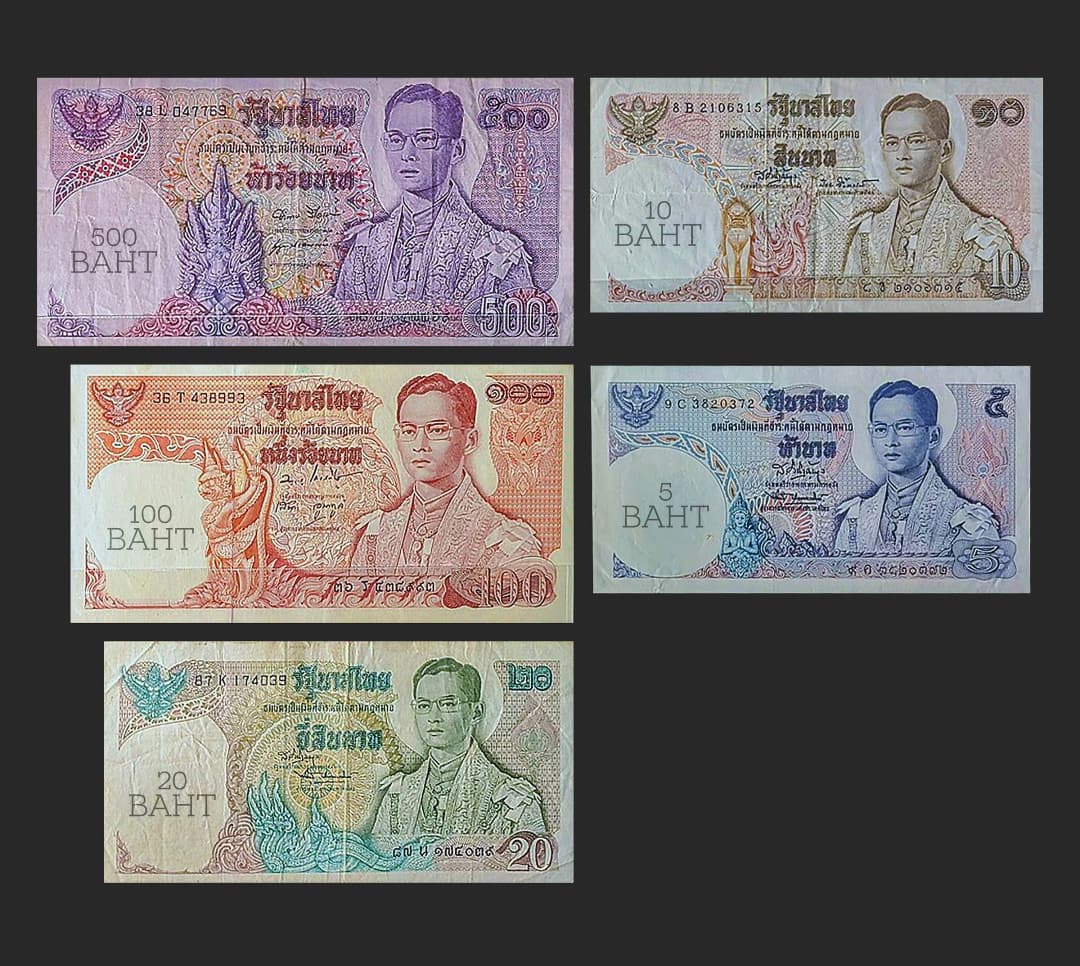
Thai Bahts, cash and cards
Thailand uses the Thai Baht (THB).
$1 ≈ ฿34.5 · indicative mid-market rate, possibly a few days old

Cash is still useful
Street food, markets, small shops and tuk-tuks mostly take cash only. Keep small baht notes and coins on hand for everyday spending.

Cards work in cities
Hotels, malls and larger restaurants in cities and tourist areas accept credit and debit cards, but smaller towns and rural areas rely more on cash.

ATMs are widespread but charge a fee
ATMs are easy to find in cities and tourist areas and usually charge a fixed withdrawal fee on top of any charge from the home bank, so larger, less frequent withdrawals can work out cheaper.
Weather by month (Bangkok)
- Daytime high
- Grey row = night low
- Best time to go
- Daytime high
- Grey row = night low
- Best time to go
| Month | High, °C | Low, °C | Rain, mm |
|---|---|---|---|
| January · best | 32.6 | 19.9 | 16.4 |
| February · best | 35.3 | 22.4 | 13.6 |
| March | 36.1 | 24.3 | 47.4 |
| April | 35.9 | 25.5 | 75.3 |
| May | 33.5 | 25.5 | 163.7 |
| June | 31.9 | 24.9 | 165 |
| July | 31.4 | 24.2 | 168.6 |
| August | 31.2 | 24 | 181.4 |
| September | 30.3 | 24.1 | 278.1 |
| October | 30.3 | 23.6 | 203.1 |
| November · best | 30.3 | 21.5 | 38.7 |
| December · best | 30.6 | 19.3 | 9.6 |
Monthly averages. Source: NASA POWER climatology, 2001-2020.
January · ideal
The best window runs January, February, November and December.
High 32.6°CLow 19.9°CRain 16.4 mm
Sweet spot: Bangkok is warm all year. November to February is the coolest and driest period and the busiest tourist season. March to May is hot and dry, June to August brings the start of the monsoon, and September to October is the rainiest period.
Tipping in Thailand
Restaurant without service charge
Left on the table
฿20–฿40
$0.58–$1.16
Restaurant with service charge
A service charge on the bill usually replaces a tip
No tip expected
Massage or spa
Handed directly to the therapist
฿50–฿200
$1.45–$5.80
Metered taxi
Rounded up from the fare
฿10–฿20
$0.29–$0.58
Tuk-tuk
Fare is agreed in advance
No tip expected
Hotel bellboy or housekeeping
Per bag or per day
฿20–฿50
$0.58–$1.45
Private tour guide, full day
Per person
฿200–฿500
$5.80–$14.50
SIM, eSIM or roaming?
Local SIM
RecommendedLocal SIM card
Convenience stores, SIM counters at airports, and mobile operator shops Tourist SIM packages from Thai operators cover data for a set number of days.
eSIM
Travel eSIM
Purchased online before the trip and installed on an eSIM-compatible phone Useful for landing with data already active, without finding a shop.
Roaming
Roaming from home
Activated through the traveller's home mobile provider Usually the most expensive option, but needs no setup on arrival.
If it's your first time: three you shouldn't skip
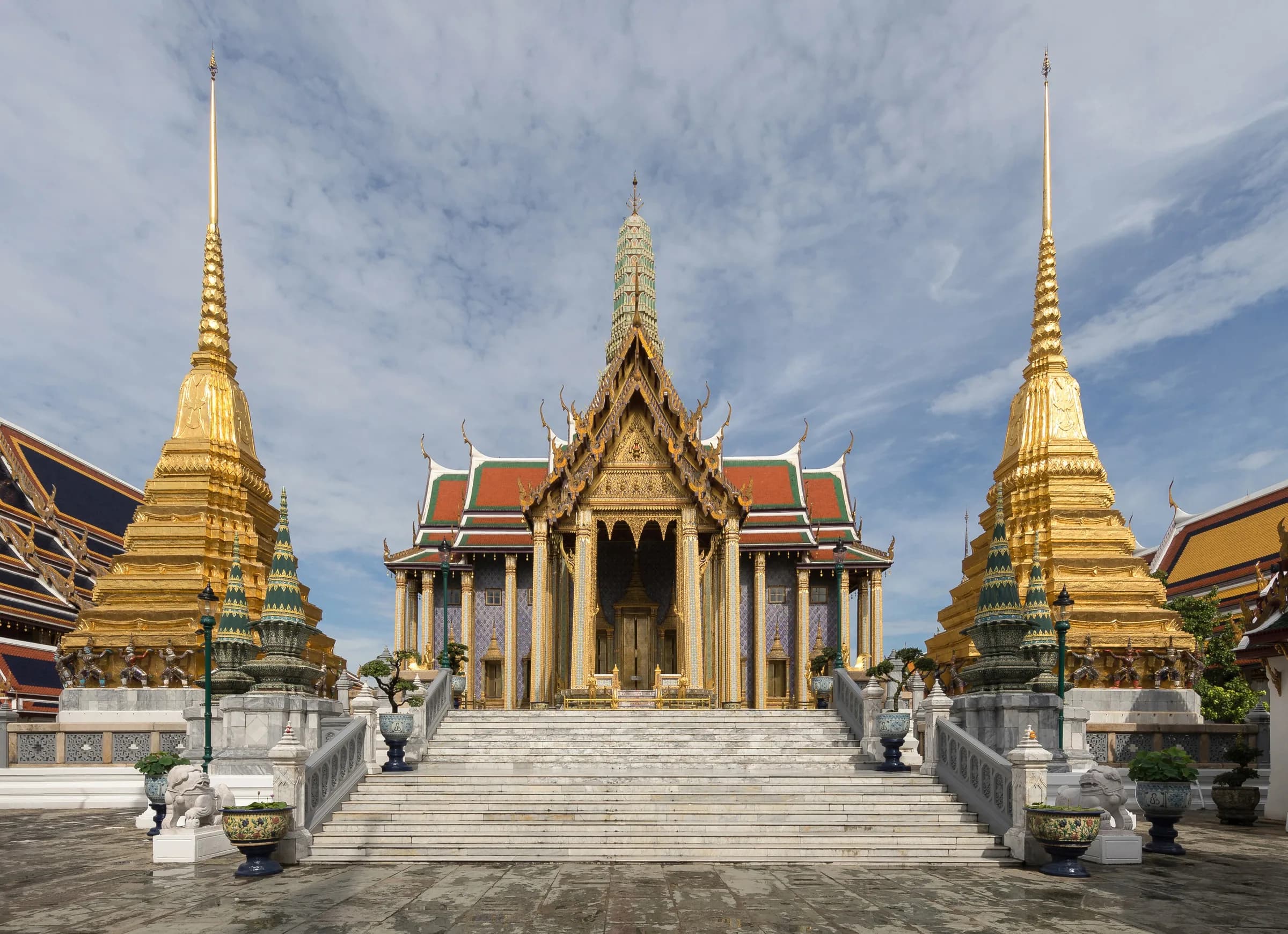
Bangkok
Grand Palace and Wat Phra Kaew
The former royal residence and the temple of the Emerald Buddha, the most sacred image in Thailand.
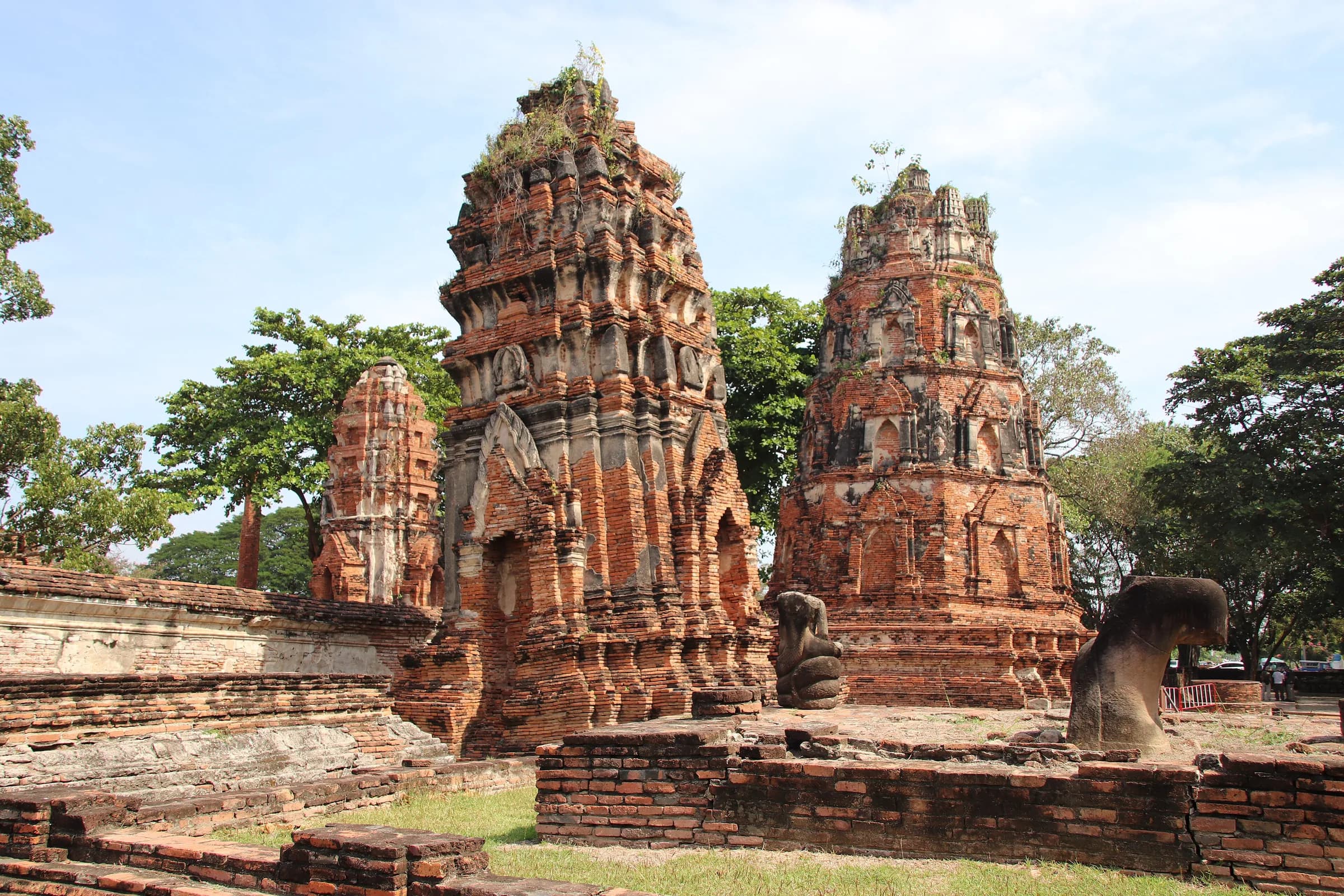
Ayutthaya
Ayutthaya Historical Park
Ruins of the former Siamese capital, a UNESCO World Heritage Site a short trip from Bangkok.
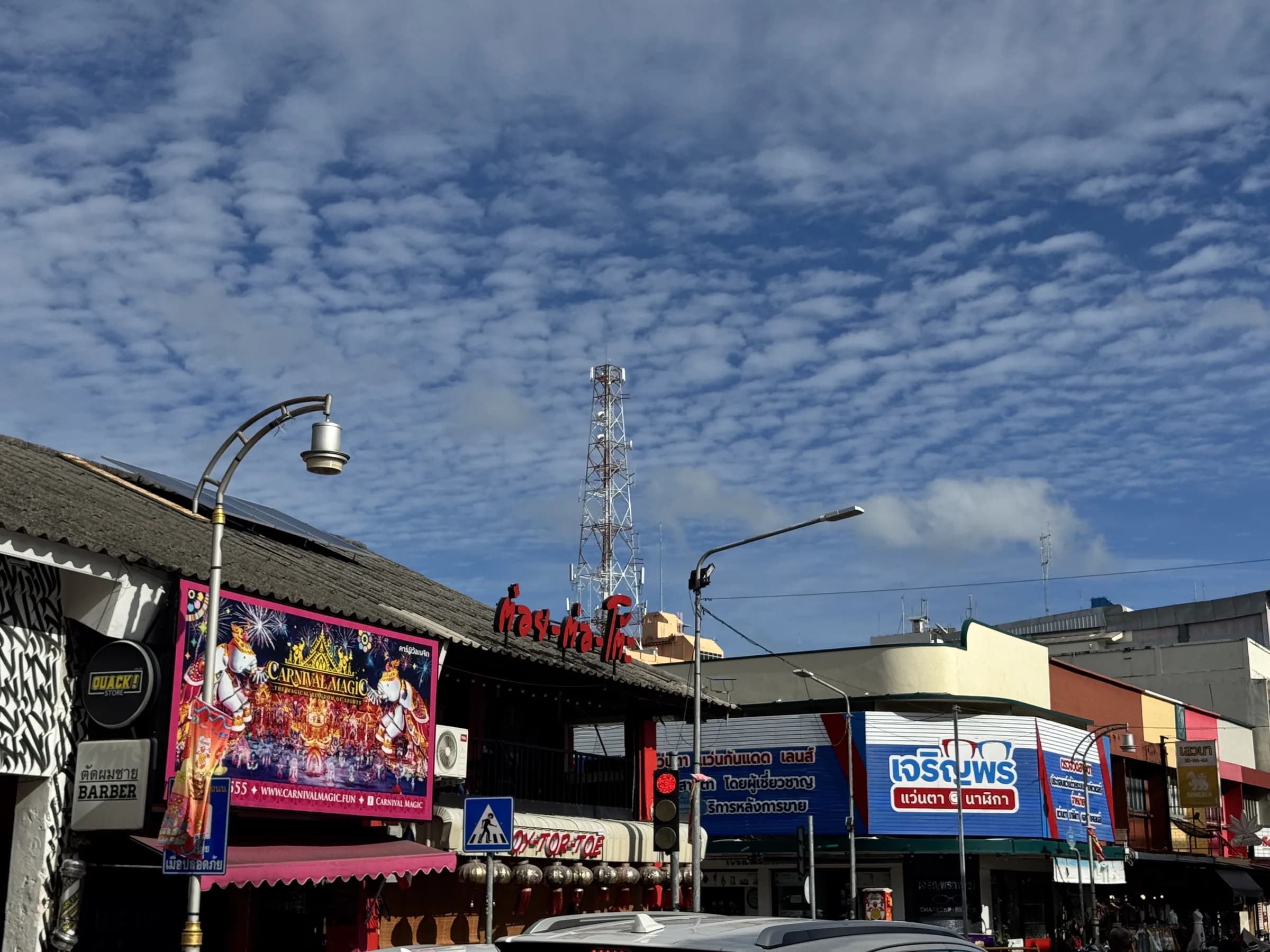
Phuket
Old Town and beaches
Phuket's old town has Sino-Portuguese architecture, with some of Thailand's best-known beaches nearby.
Questions everyone asks about Thailand visas
It depends on your passport. Many nationalities can enter visa-free for a set number of days, a few can get a visa on arrival, and others need to apply for an e-Visa online before travelling.
It is an online form every non-Thai national must complete before entering Thailand by air, land or sea. It replaced the paper TM6 form in 2025 and must be filed within 72 hours of arrival.
Only through the official e-Visa website run by Thailand's Ministry of Foreign Affairs. Other sites that offer to process a Thai visa are private services, not the government.
Extensions are handled by Thai immigration offices inside the country, not through the e-Visa portal, and are granted at their discretion.
No. It is a separate arrival form required of every foreign visitor, regardless of whether they also need a visa.
Apply with enough time before your trip for processing, since decision times vary by visa type and can take several working days.
You need your passport details, travel and accommodation information in Thailand, and a health declaration, submitted online no more than 72 hours before arrival.
Each traveller, including children, needs their own arrival card submission and, if required, their own visa application.
Now read the one written for your passport
Each guide has the fee for that passport, its maximum stay, the rules that apply only to it, and the application itself.
Luxembourg
Government fee from $41
Finland
Government fee from $41
Denmark
Government fee from $41
Belgium
Government fee from $41
Germany
Government fee from $41
Canada
Government fee from $41
Nepal
Government fee from $41
Iran
Route, fee and documents for this passport
Bangladesh
Government fee from $41
United States
Government fee from $41
United Kingdom
Government fee from $41
Tunisia
Government fee from $41
Sri Lanka
Government fee from $41
Norway
Government fee from $41
Netherlands
Government fee from $41
Namibia
Government fee from $41
Myanmar
Government fee from $41
Mexico
Government fee from $41
Ireland
Government fee from $41
France
Government fee from $41
Costa Rica
Government fee from $41
Colombia
Government fee from $41
Azerbaijan
Government fee from $41
Albania
Government fee from $41
Sweden
Government fee from $41
Every other passport →
Pick your passport for your route, your fee and your documents.
Thailand visa for every other passport (222)
- Afghan citizens
- Aland-Islander citizens
- Algerian citizens
- American-Samoan citizens
- Andorran citizens
- Angolan citizens
- Anguillan citizens
- Antiguan citizens
- Argentinian citizens
- Aruban citizens
- Australian citizens
- Austrian citizens
- Bahamian citizens
- Bahraini citizens
- Barbadian citizens
- Belarusian citizens
- Belizean citizens
- Beninese citizens
- Bermudian citizens
- Bhutanese citizens
- Bolivian citizens
- Caribbean-Netherlands citizens
- Bosnian citizens
- Botswanan citizens
- Bouvet-Island citizens
- Brazilian citizens
- British-Indian-Ocean-Territory citizens
- Bruneian citizens
- Bulgarian citizens
- Burkinabe citizens
- Burundian citizens
- Cambodian citizens
- Cameroonian citizens
- Cape-Verdean citizens
- Caymanian citizens
- Central-African citizens
- Chadian citizens
- Chilean citizens
- Chinese citizens
- Christmas-Islander citizens
- Cocos-Islander citizens
- Comoran citizens
- Congolese citizens
- Cook-Islander citizens
- Ivorian citizens
- Croatian citizens
- Cuban citizens
- Curacaoan citizens
- Cypriot citizens
- Czech citizens
- Djiboutian citizens
- Dominica citizens
- Dominican citizens
- DRC citizens
- Ecuadorian citizens
- Egyptian citizens
- Salvadoran citizens
- Equatoguinean citizens
- Eritrean citizens
- Estonian citizens
- Swazi citizens
- Ethiopian citizens
- Falkland-Islander citizens
- Faroese citizens
- Fijian citizens
- French-Guianese citizens
- French-Polynesian citizens
- French-Southern-Territories citizens
- Gabonese citizens
- Gambian citizens
- Georgian citizens
- Ghanaian citizens
- Gibraltarian citizens
- Greek citizens
- Greenlandic citizens
- Grenadian citizens
- Guadeloupean citizens
- Guamanian citizens
- Guatemalan citizens
- Guernsey citizens
- Guinean citizens
- Bissau-Guinean citizens
- Guyanese citizens
- Haitian citizens
- Heard-And-Mcdonald-Islands citizens
- Vatican citizens
- Honduran citizens
- Hong-Kong citizens
- Hungarian citizens
- Icelandic citizens
- Indian citizens
- Indonesian citizens
- Iraqi citizens
- Manx citizens
- Israeli citizens
- Italian citizens
- Jamaican citizens
- Japanese citizens
- Jersey citizens
- Jordanian citizens
- Kazakh citizens
- Kenyan citizens
- I-Kiribati citizens
- Kosovar citizens
- Kuwaiti citizens
- Kyrgyz citizens
- LAO citizens
- Latvian citizens
- Lebanese citizens
- Basotho citizens
- Liberian citizens
- Libyan citizens
- Liechtensteiner citizens
- Lithuanian citizens
- Macanese citizens
- Malagasy citizens
- Malawian citizens
- Malaysian citizens
- Maldivian citizens
- Malian citizens
- Maltese citizens
- Marshallese citizens
- Martinican citizens
- Mauritanian citizens
- Mauritian citizens
- Mayotte citizens
- Micronesian citizens
- Moldovan citizens
- Monegasque citizens
- Mongolian citizens
- Montenegrin citizens
- Montserratian citizens
- Moroccan citizens
- Mozambican citizens
- Nauruan citizens
- New-Caledonian citizens
- New-Zealand citizens
- Nicaraguan citizens
- Nigerien citizens
- Nigerian citizens
- Niuean citizens
- Norfolk-Islander citizens
- North-Korean citizens
- Macedonian citizens
- Northern-Mariana-Islander citizens
- Omani citizens
- Pakistani citizens
- Palauan citizens
- Palestinian citizens
- Panamanian citizens
- Papua-New-Guinean citizens
- Paraguayan citizens
- Peruvian citizens
- Filipino citizens
- Pitcairn-Islander citizens
- Polish citizens
- Portuguese citizens
- Puerto-Rican citizens
- Qatari citizens
- Reunionese citizens
- Romanian citizens
- Russian citizens
- Rwandan citizens
- Saint-Barthelemy citizens
- Saint-Helenian citizens
- Kittitian citizens
- Saint-Lucian citizens
- Saint-Martin citizens
- Saint-Pierre-And-Miquelon citizens
- Vincentian citizens
- Samoan citizens
- Sammarinese citizens
- Santomean citizens
- Saudi citizens
- Senegalese citizens
- Serbian citizens
- Seychellois citizens
- Sierra-Leonean citizens
- Singaporean citizens
- Sint-Maarten citizens
- Slovak citizens
- Slovenian citizens
- Solomon-Islander citizens
- Somali citizens
- South-African citizens
- South-Georgia citizens
- South-Korean citizens
- South-Sudanese citizens
- Spanish citizens
- Sudanese citizens
- Surinamese citizens
- Svalbard citizens
- Swiss citizens
- Syrian citizens
- Taiwanese citizens
- Tajik citizens
- Tanzanian citizens
- Timorese citizens
- Togolese citizens
- Tokelauan citizens
- Tongan citizens
- Trinidadian citizens
- Turkish citizens
- Turkmen citizens
- Turks-And-Caicos-Islander citizens
- Tuvaluan citizens
- Ugandan citizens
- Ukrainian citizens
- Emirati citizens
- Us-Minor-Outlying-Islands citizens
- Uruguayan citizens
- Uzbek citizens
- Ni-Vanuatu citizens
- Venezuelan citizens
- Vietnamese citizens
- British-Virgin-Islander citizens
- Us-Virgin-Islander citizens
- Wallis-And-Futuna citizens
- Sahrawi citizens
- Yemeni citizens
- Zambian citizens
- Zimbabwean citizens