

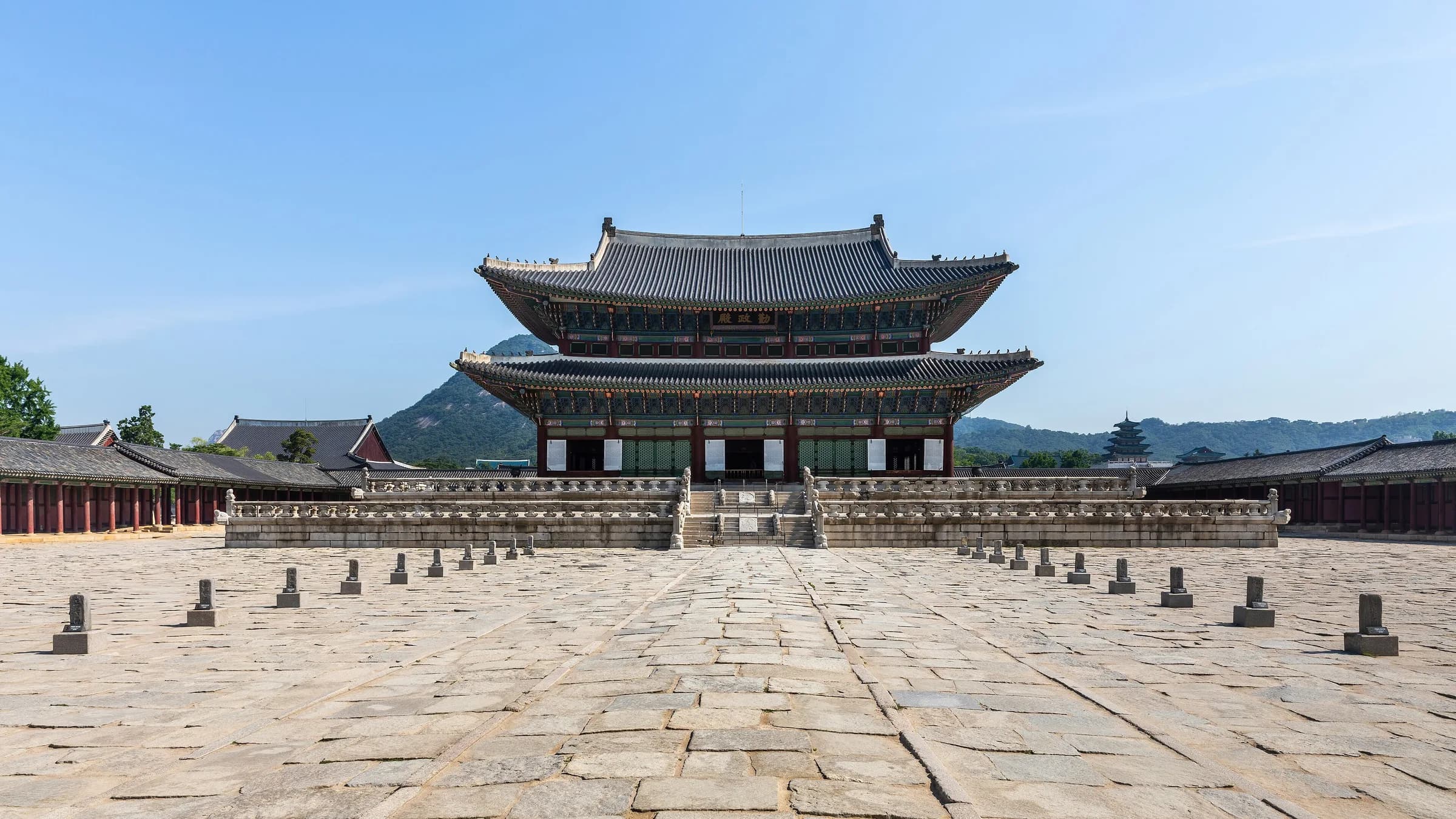

South Korea Visa for Filipinos: Rules and How to Apply
- Visa required
- Apply about 30 days before arrival
- Verified
Plusvisa is a private visa application service, not a government agency or embassy. Official government source: K-ETA (Korea Electronic Travel Authorization), k-eta.go.kr.
Table of contents

Route
Embassy visa (C-3-9)
Short-term tourist visa

Stay per visit
Up to 90 days
Tourist visa limit

Passport
Valid 6 months
Embassy practice, not a K-ETA rule
One route into South Korea
Most people
Short-term tourist visa (C-3-9)
For ordinary tourist trips of 90 days or less. Apply at a Korean embassy or accredited visa centre before you fly. Philippine passports are not on the K-ETA list, so K-ETA is not an option.
How long you may stay
Philippine passport holders need a visa before travel. The C-3-9 tourist visa covers stays of 90 days or less per visit. The K-ETA 90-day rule does not apply, because Philippine passports cannot use K-ETA.

Tourist visa (C-3-9): Stays of 90 days or less for ordinary tourism. The visa sets the stay limit, and an immigration officer makes the final entry decision at the border.

Stay is per visit: The 90-day limit applies to each visit. It is not a total for the year. Check the dates your visa allows before you book.

Extensions: A short-term stay can be extended by applying at a local immigration office before it expires. Approval is not automatic.

Overstaying: Overstaying breaches Korea's Immigration Control Act. It can lead to fines, removal from the country and a ban on returning.
What the 90 days does not mean: It is not a right to stay 90 days every time you enter. Each new entry needs a valid visa or other entry basis.
Your document checklist
Five things to have ready before you start your application, as a Filipino applicant.

Passport
Original passport with at least 6 months validity remaining, with at least one blank page, and a clear copy of the bio-data page.
Passport-style photo
Recent photo taken against a plain background, pasted on the visa application form. Check the embassy's photo size before printing.

Visa application form
Signed by hand, not by e-signature, with all fields completed.

Travel details
Flight and accommodation plans. Applicants are generally told not to book tickets before the visa is approved.
Only for some visa types

Proof of financial means
Only if Where the embassy asks for it. Recent bank statements or payslips showing you can pay for the trip. The exact list is set by the embassy handling your application.
When should you apply?
Enter your arrival date and we'll work backwards.
Processing
Pick your arrival date
- 1
Apply online
—
Form and uploads, about 30 min
- 2
Pay the fee
—
By card, on the portal
- 3
Processing
See the portal
Official estimate
- 4
Approval emailed
—
Keep a copy on your phone
- 5
Arrive in South Korea
—
Show the approval at the border
No earliest or latest application limit found on the Korean Embassy in Manila's pages. Processing is about 14 working days, so apply about 30 days before you fly to leave room for delays.
Three questions, 20 seconds
Do you hold an ordinary Philippine passport, not a diplomatic or official one?
Is your trip a tourist visit of 90 days or less?
Have you never been refused entry, deported or overstayed in Korea?
Result
Answer all three
Three quick checks of the rules that most often catch travellers out, and we'll tell you where you stand.
The application, step by step
Before you apply
- 1
Check the visa type
Philippine passports are not on the K-ETA list. Confirm the visa type, the C-3-9 short-term tourist visa, with the Korean embassy in Manila.

Check the embassy's current page before you book.
- 2
Gather your documents
Prepare a valid passport, a passport-style photo, a hand-signed visa form and any proof of funds the embassy asks for.
Check photo size and document list against the embassy checklist.
On the official portal
- 3
Submit at the embassy or its accredited centre
Regular visas are applied for at the Korean embassy or an accredited visa application centre, not online through K-ETA. Use the official Korea Visa Portal, visa.go.kr, to find the visa types and forms.

The portal is for information and checking decisions. Confirm the current submission route with the embassy.
After you apply
- 4
Check the decision
The embassy notifies you when your visa decision is ready. You can then check the decision on the Korea Visa Portal.
- 5
Carry your visa for travel
Keep the visa in your passport. The immigration officer makes the final entry decision on arrival.
Official website: k-eta.go.kr (opens in a new tab)
Questions Filipino travellers actually ask
No. The Philippines is not on the official K-ETA eligible list. Filipino passport holders need a visa from a Korean embassy for a tourist trip.
The C-3-9 short-term tourist visa covers stays of 90 days or less. Your visa sets the limit for each visit.
The visa is applied for at a Korean embassy or an accredited visa application centre. The official Korea Visa Portal, visa.go.kr, is where you check the visa process and decisions.
The embassy may ask for bank statements or payslips. The exact list depends on the embassy handling your application, so check its current checklist.
A short-term stay can be extended by applying at a local immigration office before it expires. Approval is not automatic.
Overstaying breaches Korea's Immigration Control Act. It can lead to fines, removal from the country and a ban on returning.
Visa sorted
The things that make the first
48 hours easy, compared with home
Your Filipino plug fits. Here's what to expect.
Type C
Two round pins · 2.5 A
Type F
Two round pins · 16 A
Type C
Type C is used both at home and in South Korea, so your own plugs fit — though you may meet the other types too.
Voltage
220 V · 60 Hz
Same as the Philippines — phones, laptops and shavers work with only an adapter, no converter.

Pack: nothing special — your type C plugs go straight in. A small power strip is still handy where hotel rooms have one socket.
South Korea drives on the right — just like home
Compare traffic side:
South Korea · right-hand traffic — same as Philippines

Getting around
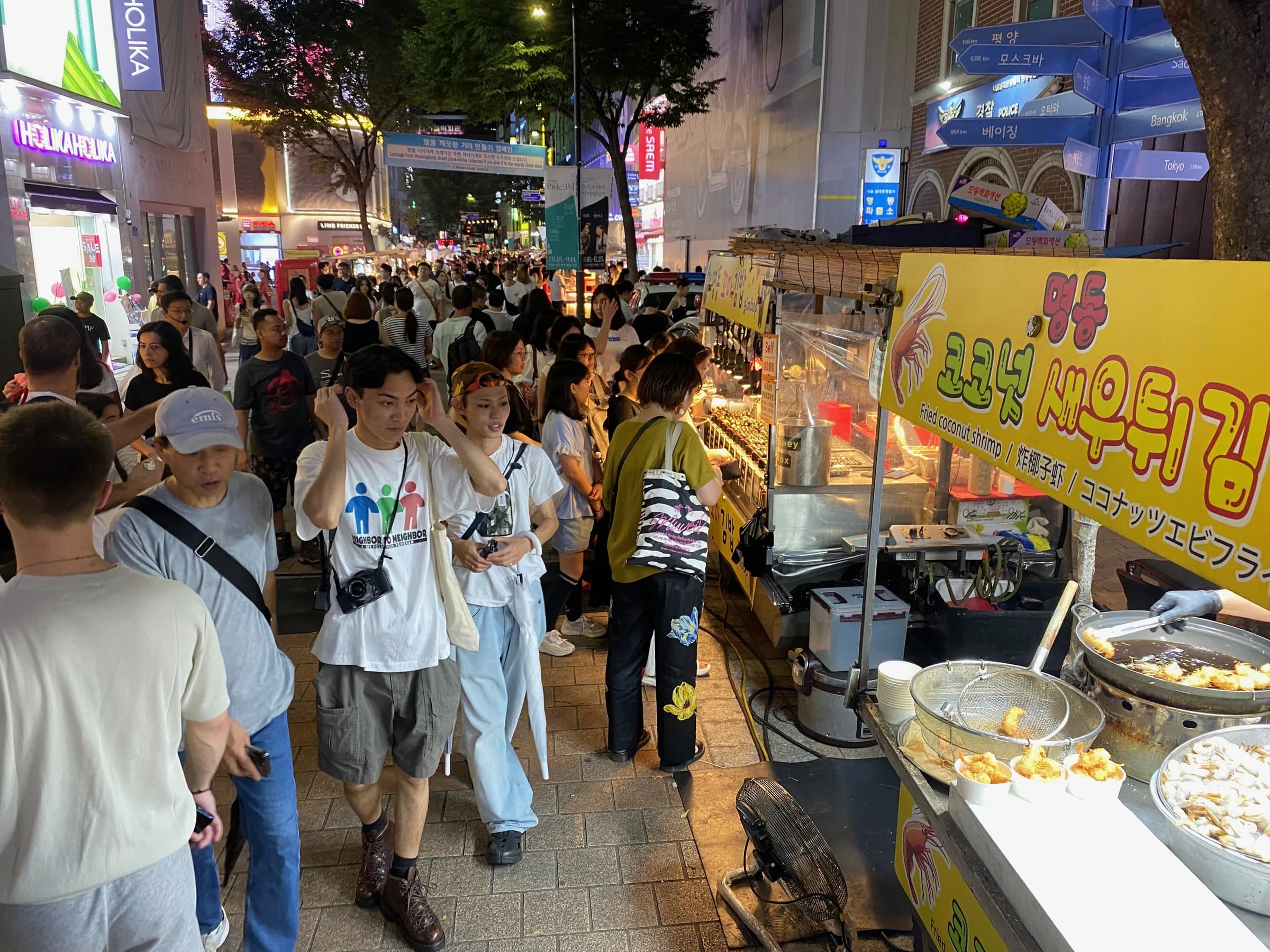
Seoul and Busan have extensive, easy-to-use metro systems with English signage. A rechargeable T-money card works on subways, buses and even some taxis nationwide, and high-speed KTX trains connect major cities quickly.

Health
Tap water is generally safe, and pharmacies and clinics are widely available in cities. Travel insurance is recommended, as public healthcare for visitors is paid at the point of use.

Etiquette
Use both hands when giving or receiving items such as money or business cards, remove shoes when entering homes and some restaurants, and avoid pouring your own drink when dining with others.
South Korean Wons, cash and cards
South Korea uses the South Korean Won (KRW).

Cards are widely accepted
Credit and debit cards are accepted in almost all shops, restaurants and on public transport in cities, so carrying large amounts of cash is rarely necessary.

ATMs are easy to find
ATMs are common in convenience stores, banks and subway stations, but not all accept foreign cards; look for ones marked Global or with a Visa/Mastercard/Plus logo.

Keep some cash for small purchases
Traditional markets, small street food stalls and some rural areas still prefer cash, so keeping a small amount of Korean won is useful.
Weather by month (Seoul)
- Daytime high
- Grey row = night low
- Best time to go
- Daytime high
- Grey row = night low
- Best time to go
| Month | High, °C | Low, °C | Rain, mm |
|---|---|---|---|
| January | 0.5 | -7.1 | 19.8 |
| February | 3.2 | -5 | 30.5 |
| March | 8.5 | -1.2 | 37.2 |
| April · best | 15.1 | 4.5 | 72 |
| May · best | 21.1 | 10.6 | 83.7 |
| June | 25.4 | 16.3 | 116.1 |
| July | 27.3 | 20.7 | 360.5 |
| August | 28.2 | 21.6 | 260.4 |
| September · best | 24.3 | 16.4 | 137.7 |
| October · best | 18.4 | 9.5 | 53.3 |
| November | 10.5 | 2.5 | 46.8 |
| December | 2.5 | -4.6 | 22 |
Monthly averages. Source: NASA POWER climatology, 2001-2020.
April · ideal
The best window runs April, May, September and October.
High 15.1°CLow 4.5°CRain 72 mm
Sweet spot: Seoul has four distinct seasons. Spring (April-May) and autumn (September-October) are mild and dry, with cherry blossoms in spring and colourful foliage in autumn. Summer (June-August) is hot and humid with a monsoon season, while winter (December-February) is cold and dry with occasional snow.
One time zone
Manila
--:--:--
Seoul
--:--:--
How much to tip, in PHP
Restaurants
Not customary and sometimes refused; service charge may already be included.
No tip expected
Taxis
Fares are metered; rounding up is not expected.
No tip expected
Hotel porters/housekeeping
Not a local custom, but small change is not offensive at hotels.
No tip expected
Tour guides
Not traditionally expected, though some may accept a voluntary tip.
No tip expected
SIM, eSIM or roaming?
Local SIM
Local prepaid SIM
≈ ₩30,000
Telecom counters at Incheon and Gimpo airports, or carrier stores in the city Needs a passport to register; data-only or voice-and-data plans are available.
eSIM
RecommendedTravel eSIM
≈ US$20
Bought online before departure and installed on an eSIM-compatible phone Convenient since it can be activated before landing, with no physical swap needed.
Roaming
Roaming from home
Activated through the traveller's home mobile provider before departure Usually the most expensive option; check the home provider's Korea roaming rates first.