


South Korea Visa: K-ETA, e-Visa and Entry Rules
Most passports can enter South Korea for a short stay after getting the online K-ETA travel authorisation instead of a visa. Some nationalities are currently exempt from K-ETA altogether, while passports without a visa waiver must apply for a regular visa at a Korean embassy or consulate before travel. A K-ETA is not a visa: entry is still decided by an immigration officer on arrival.
- e-Visa for 112 passports
- Government fee from $13
- Verified
Plusvisa is a private visa application service, not a government agency or embassy. Official government source: K-ETA (Korea Electronic Travel Authorization), k-eta.go.kr.
Do you need a visa for South Korea?
Which route applies depends only on the traveller's passport.
Which passport will you travel on?
Your route
Pick a passport
We will show the route South Korea puts you on, the government fee for each visa type, and the guide written for your nationality.
The three routes
- e-Visa eligible
112 passports
Passports from most of Europe, the Americas, Oceania and parts of Asia and the Middle East apply online for a K-ETA travel authorisation before flying, instead of visiting an embassy.
- Visa-free
Temporarily exempt from K-ETA
A group of otherwise K-ETA eligible passports, including Canada, is currently exempt from K-ETA under a temporary measure. They still enter visa-free but fill in an arrival card, unless they choose to get a K-ETA anyway.
- Embassy visa only
Embassy visa required
Passports with no visa waiver agreement and not on the K-ETA list must apply for a regular visa, such as the short-term tourism visa, at a Korean embassy or consulate before travelling.
Government fees by passport
| Passport | Tourist E-visa | Guide |
|---|---|---|
| United Kingdom | $13 | — |
| United States of America | $13 | — |
| Canada | $13 | Read guide |
| Australia | $13 | Read guide |
| Ireland | $13 | — |
| Germany | $13 | Read guide |
| Philippines | — | Read guide |
| Qatar | $13 | Read guide |
| Oman | $13 | Read guide |
| Kuwait | Not listed | Read guide |
| Brazil | $13 | Read guide |
| Portugal | $13 | Read guide |
| Taiwan | $13 | Read guide |
| Singapore | $13 | Read guide |
| Japan | $13 | Read guide |
| Russia | $13 | Read guide |
| United Arab Emirates | $13 | Read guide |
| Turkey | $13 | Read guide |
| Thailand | $13 | Read guide |
| Switzerland | $13 | Read guide |
| Saudi Arabia | Not listed | Read guide |
| Romania | $13 | Read guide |
| Peru | Not listed | Read guide |
| Mexico | $13 | Read guide |
| Malaysia | $13 | Read guide |
| Kazakhstan | $13 | Read guide |
| Israel | $13 | Read guide |
| Hungary | $13 | Read guide |
| Greece | $13 | Read guide |
| Czech Republic | $13 | Read guide |
| Colombia | $13 | Read guide |
| Chile | $13 | Read guide |
| Argentina | $13 | Read guide |
Which South Korea visa exists, and what it allows
| e-Visa | Options | Processing | Usual government fee |
|---|---|---|---|
| Tourist E-visaeVisa · 112 passports |
| 24–72 hours | $139 passports pay a different fee |
How South Korea visa fees work

K-ETA fee is fixed. The K-ETA application fee is set by the Korea Immigration Service in Korean won and is the same for every eligible passport. An online payment charge may be added at checkout.

Embassy visa fees vary by nationality. Regular visa fees are set per country of application, often on a reciprocal basis, and some nationalities pay no fee or a reduced fee for certain visa types.

Fees are non-refundable. Both the K-ETA fee and embassy visa fees are non-refundable even if the application is denied or the trip is cancelled.

No official express service. K-ETA applications are processed in the order received with no paid expedited option. Some embassies also state they offer no urgent or express visa service.
What Plusvisa charges
The government fee is passed through at cost. Our service fee is on top, and every passport's page shows the total before you start.
If we make a mistake that leads to a refusal, we refund our fee and re-apply free.
See the total for my passportYour document checklist

Passport
Original passport with at least 6 months validity remaining, with at least one blank page, and a clear copy of the bio-data page.

Passport-style photo
Recent digital or printed photo taken against a plain background, used for the K-ETA application or pasted on the visa application form.

Travel details
Flight and accommodation plans; applicants are generally told not to book tickets before a visa is approved.
Only for some travellers

K-ETA application
Only if K-ETA eligible passports only. Completed online at the official K-ETA website with passport details, travel plans and a declaration of health and criminal history.Visa application form
Only if Embassy visa applicants only. Signed by hand, not by e-signature, with all fields completed, for applicants who need a regular visa.Proof of financial means
Only if Embassy visa applicants, where requested. Recent bank statements or payslips showing the applicant can support the trip; exact documents vary by the embassy handling the application.
Not eligible for any e-Visa
The application, step by step
Before you apply
- 1
Check which route applies
Confirm whether your passport needs a K-ETA, is currently exempt, or needs a regular visa from an embassy.
- 2
Gather documents
Prepare a valid passport, a digital photo and, for an embassy visa, the application form and supporting documents the embassy asks for.
On the official portal
- 3
Apply for K-ETA online
Create or continue an application on the official K-ETA website or app, enter passport and travel details, and pay the fee by card.
- 4
Or submit a visa application at the embassy
Passports that need a regular visa submit the form and documents in person or through an accredited visa application centre for their country.
After you apply
- 5
Receive the decision
K-ETA decisions usually arrive by email within 72 hours; embassies notify applicants when a visa decision is ready for collection.
- 6
Keep proof for travel
Carry the K-ETA confirmation or visa in the passport. Final entry is always decided by an immigration officer on arrival.
Official website: k-eta.go.kr (opens in a new tab)
Three things to have before you fly
Besides a visa or K-ETA, most visitors must complete these before or on arrival.
- 1
e-Arrival Card
Most foreign nationals complete an arrival card. It can be submitted online from 72 hours before arrival until it would otherwise be handed in on paper. K-ETA holders, registered foreigners and crew are exempt. Official page (opens in a new tab)
- 2
Customs declaration
Travellers carrying goods to declare fill in a customs form, on paper or through the Korea Customs Declaration app, before baggage claim. Official page (opens in a new tab)
- 3
Q-Code health declaration
Travellers arriving from areas designated as quarantine inspection required areas must complete a Q-Code online before arrival and show the QR code at the border. Official page (opens in a new tab)
The only official website, and how to check status
K-ETA.go.kr is the only official site for the travel authorisation, run by the Korea Immigration Service. Regular visas are applied for at an embassy or accredited centre. Other sites charging extra fees for K-ETA or visas are private services, not the government.
k-eta.go.kr (opens in a new tab)K-ETA (Korea Electronic Travel Authorization)Checking your status
K-ETA applicants check their result on the K-ETA website using their application details. Regular visa applicants can check a decision on the Korea Visa Portal (visa.go.kr) once the embassy confirms it is ready.
Why South Korea e-Visas get rejected
Almost every refusal is a file problem, not a judgement about you.
False or inaccurate information
Giving incorrect or inconsistent details on a K-ETA or visa application leads to refusal and can bring further entry restrictions.
Incomplete documents
Missing signatures, blurred copies or missing supporting letters are common reasons embassies give for refusing a regular visa.

Insufficient proof of funds or ties
Embassies may refuse a visa if bank records or employment proof do not convincingly support the stated trip and the applicant's return home.

Previous immigration violations
A past overstay, deportation or entry ban in South Korea is grounds for refusing a new K-ETA or visa.
Criminal record or security concerns
Applicants with a relevant criminal record or flagged in security checks can be refused under immigration law.

Passport or eligibility problems
An invalid, soon-to-expire or damaged passport, or applying from a passport that is not actually eligible for the route chosen, results in refusal.
Sockets and power in South Korea
Type C
Two round pins · 2.5 A
Type F
Two round pins · 16 A
Type C
South Korea uses type C and F sockets. If your own plugs are a different type, one type C adapter covers the whole trip.
Voltage
220 V · 60 Hz
Check the label on chargers and appliances: anything marked 100–240 V, 50/60 Hz works here with only an adapter, no converter.

Pack: a type C adapter unless your own plugs already match, and a small power strip — hotel rooms rarely have more than two sockets.
South Korea drives on the right
Traffic side:
South Korea · right-hand traffic

Getting around
Seoul and Busan have extensive, easy-to-use metro systems with English signage. A rechargeable T-money card works on subways, buses and even some taxis nationwide, and high-speed KTX trains connect major cities quickly.
Health
Tap water is generally safe, and pharmacies and clinics are widely available in cities. Travel insurance is recommended, as public healthcare for visitors is paid at the point of use.

Etiquette
Use both hands when giving or receiving items such as money or business cards, remove shoes when entering homes and some restaurants, and avoid pouring your own drink when dining with others.
South Korean Wons, cash and cards
South Korea uses the South Korean Won (KRW).

Cards are widely accepted
Credit and debit cards are accepted in almost all shops, restaurants and on public transport in cities, so carrying large amounts of cash is rarely necessary.

ATMs are easy to find
ATMs are common in convenience stores, banks and subway stations, but not all accept foreign cards; look for ones marked Global or with a Visa/Mastercard/Plus logo.

Keep some cash for small purchases
Traditional markets, small street food stalls and some rural areas still prefer cash, so keeping a small amount of Korean won is useful.
Weather by month (Seoul)
- Daytime high
- Grey row = night low
- Best time to go
- Daytime high
- Grey row = night low
- Best time to go
| Month | High, °C | Low, °C | Rain, mm |
|---|---|---|---|
| January | 0.5 | -7.1 | 19.8 |
| February | 3.2 | -5 | 30.5 |
| March | 8.5 | -1.2 | 37.2 |
| April · best | 15.1 | 4.5 | 72 |
| May · best | 21.1 | 10.6 | 83.7 |
| June | 25.4 | 16.3 | 116.1 |
| July | 27.3 | 20.7 | 360.5 |
| August | 28.2 | 21.6 | 260.4 |
| September · best | 24.3 | 16.4 | 137.7 |
| October · best | 18.4 | 9.5 | 53.3 |
| November | 10.5 | 2.5 | 46.8 |
| December | 2.5 | -4.6 | 22 |
Monthly averages. Source: NASA POWER climatology, 2001-2020.
April · ideal
The best window runs April, May, September and October.
High 15.1°CLow 4.5°CRain 72 mm
Sweet spot: Seoul has four distinct seasons. Spring (April-May) and autumn (September-October) are mild and dry, with cherry blossoms in spring and colourful foliage in autumn. Summer (June-August) is hot and humid with a monsoon season, while winter (December-February) is cold and dry with occasional snow.
Tipping in South Korea
Restaurants
Not customary and sometimes refused; service charge may already be included.
No tip expected
Taxis
Fares are metered; rounding up is not expected.
No tip expected
Hotel porters/housekeeping
Not a local custom, but small change is not offensive at hotels.
No tip expected
Tour guides
Not traditionally expected, though some may accept a voluntary tip.
No tip expected
SIM, eSIM or roaming?
Local SIM
Local prepaid SIM
≈ ₩30,000
Telecom counters at Incheon and Gimpo airports, or carrier stores in the city Needs a passport to register; data-only or voice-and-data plans are available.
eSIM
RecommendedTravel eSIM
≈ $20
Bought online before departure and installed on an eSIM-compatible phone Convenient since it can be activated before landing, with no physical swap needed.
Roaming
Roaming from home
Activated through the traveller's home mobile provider before departure Usually the most expensive option; check the home provider's Korea roaming rates first.
If it's your first time: three you shouldn't skip
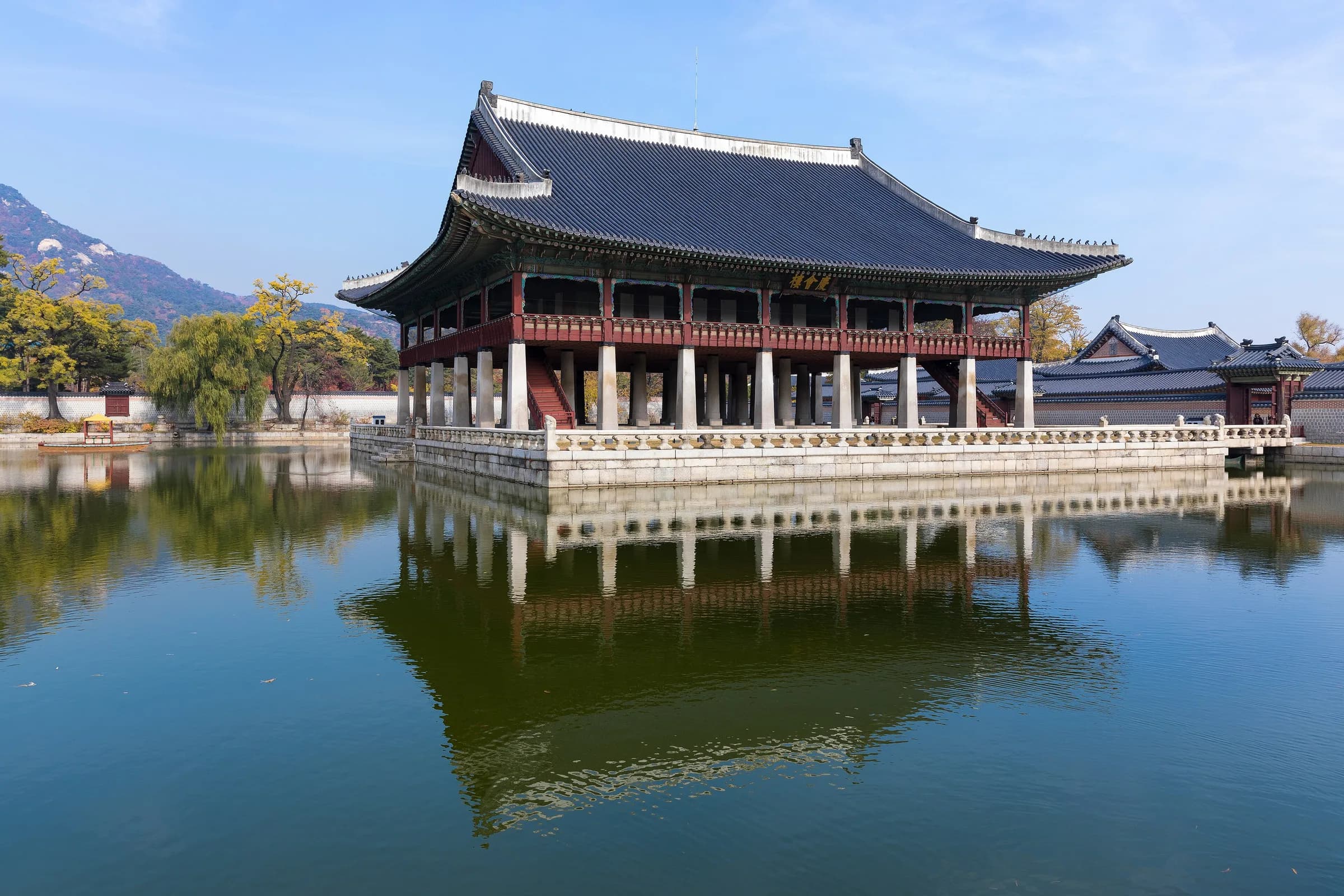
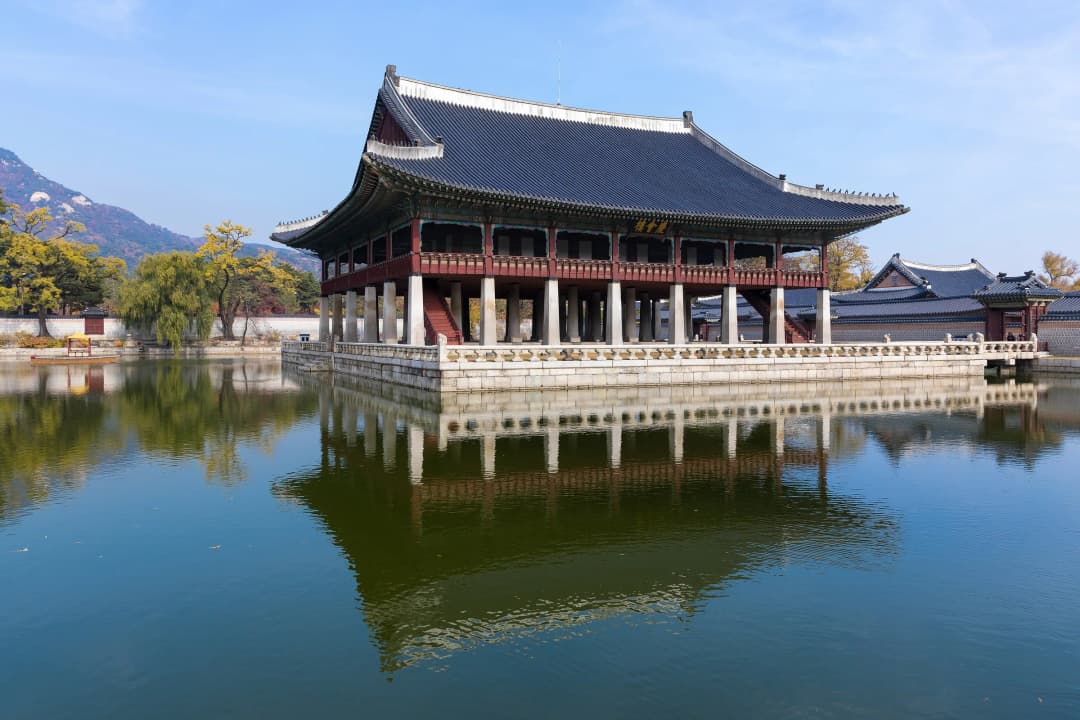
Seoul
Gyeongbokgung Palace
The grandest of Seoul's five Joseon-era palaces, with a changing-of-the-guard ceremony and the Bukchon Hanok Village nearby.

Jeju
Jeju Island
A volcanic island with beaches, waterfalls and the UNESCO-listed Hallasan National Park, reached by short domestic flight or ferry.
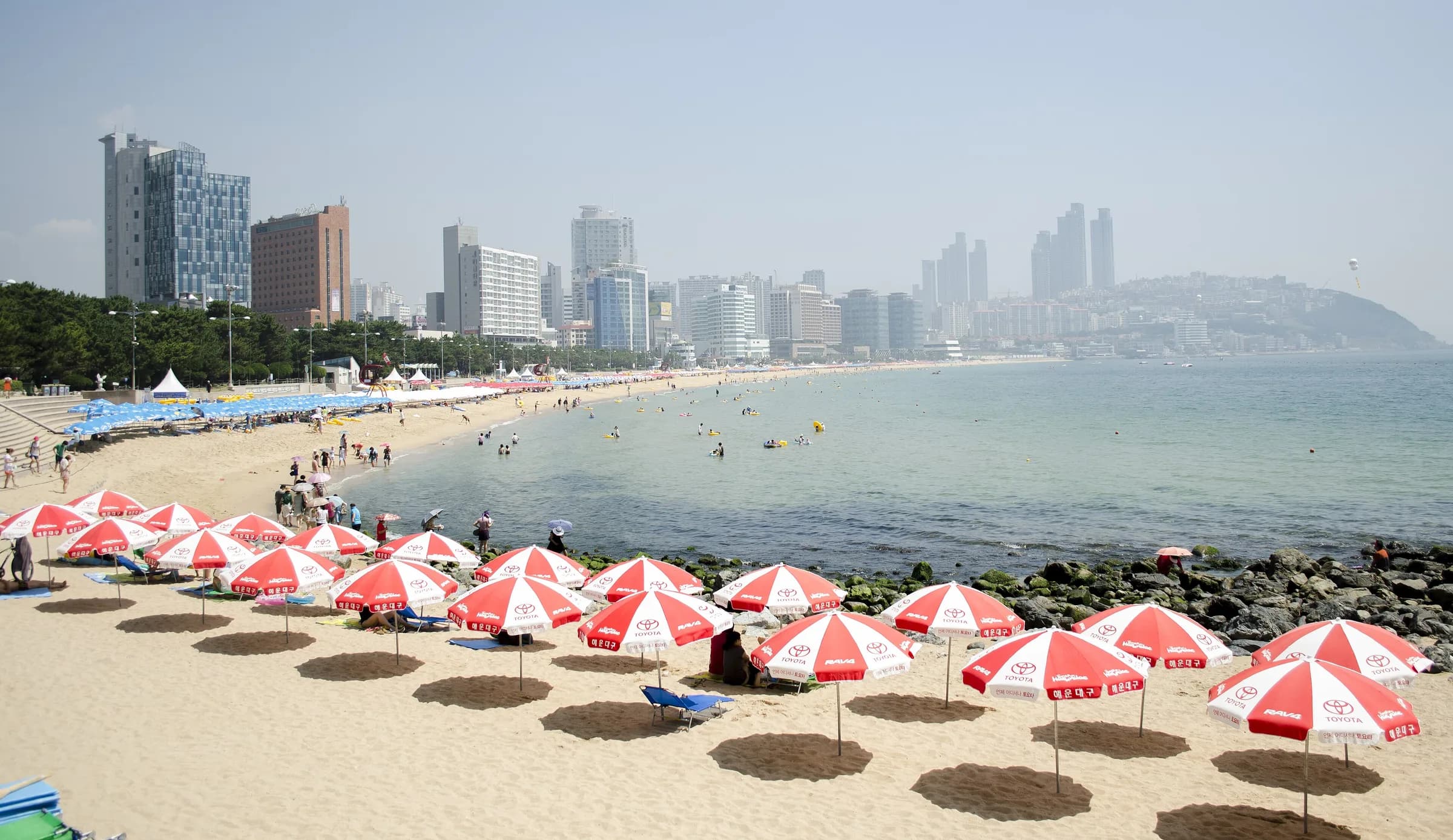
Busan
Haeundae Beach and Gamcheon Culture Village
Korea's second city pairs a lively beach district with a colourful hillside village of murals and small galleries.
Questions everyone asks about South Korea visas
It depends on your passport. Many nationalities can apply online for a K-ETA travel authorisation instead of a visa, some are currently exempt from K-ETA, and others must apply for a regular visa at a Korean embassy or consulate.
No. K-ETA is a travel authorisation that lets eligible passports board a flight or ship to Korea without a visa, but an immigration officer still makes the final entry decision at the border.
The Korea Immigration Service says assessment is usually completed within 72 hours, though it can take longer at busy times, so it should not be left until the last moment.
The visa-free or K-ETA stay period is set per nationality and is commonly up to 90 days per entry, though some passports have shorter or longer limits.
Most foreign nationals must submit an arrival card, which can be done online as the e-Arrival Card before landing. K-ETA holders and registered residents are exempt.
A short-term stay can be extended by applying at a local immigration office before it expires, though approval is not automatic.
Overstaying breaches Korea's Immigration Control Act and can lead to fines, removal from the country and a ban on returning.
The only official site is www.k-eta.go.kr. Other sites charging extra for the same service are private businesses, not the government.
Now read the one written for your passport
Each guide has the fee for that passport, its maximum stay, the rules that apply only to it, and the application itself.
Philippines
Route, fee and documents for this passport
Germany
Government fee from $13
Australia
Government fee from $13
Qatar
Government fee from $13
Oman
Government fee from $13
Kuwait
Route, fee and documents for this passport
Brazil
Government fee from $13
Portugal
Government fee from $13
Taiwan
Government fee from $13
Singapore
Government fee from $13
Japan
Government fee from $13
Canada
Government fee from $13
Russia
Government fee from $13
United Arab Emirates
Government fee from $13
Türkiye
Government fee from $13
Thailand
Government fee from $13
Switzerland
Government fee from $13
Saudi Arabia
Route, fee and documents for this passport
Romania
Government fee from $13
Peru
Route, fee and documents for this passport
Mexico
Government fee from $13
Malaysia
Government fee from $13
Kazakhstan
Government fee from $13
Israel
Government fee from $13
Hungary
Government fee from $13
Greece
Government fee from $13
Czechia
Government fee from $13
Colombia
Government fee from $13
Chile
Government fee from $13
Argentina
Government fee from $13
Every other passport →
Pick your passport for your route, your fee and your documents.
South Korea visa for every other passport (83)
- Albanian citizens
- Andorran citizens
- Antiguan citizens
- Austrian citizens
- Bahamian citizens
- Bahraini citizens
- Barbadian citizens
- Belgian citizens
- Bosnian citizens
- Botswanan citizens
- Bruneian citizens
- Bulgarian citizens
- Costa-Rican citizens
- Croatian citizens
- Cypriot citizens
- Danish citizens
- Dominica citizens
- Dominican citizens
- Ecuadorian citizens
- Salvadoran citizens
- Estonian citizens
- Swazi citizens
- Fijian citizens
- Finnish citizens
- French citizens
- Grenadian citizens
- Guamanian citizens
- Guatemalan citizens
- Guyanese citizens
- Haitian citizens
- Vatican citizens
- Honduran citizens
- Hong-Kong citizens
- Icelandic citizens
- Irish citizens
- Italian citizens
- Jamaican citizens
- I-Kiribati citizens
- Latvian citizens
- Basotho citizens
- Liechtensteiner citizens
- Lithuanian citizens
- Luxembourgish citizens
- Macanese citizens
- Maltese citizens
- Marshallese citizens
- Mauritian citizens
- Micronesian citizens
- Monegasque citizens
- Montenegrin citizens
- Moroccan citizens
- Nauruan citizens
- Dutch citizens
- New-Caledonian citizens
- New-Zealand citizens
- Nicaraguan citizens
- Norwegian citizens
- Palauan citizens
- Panamanian citizens
- Paraguayan citizens
- Polish citizens
- Kittitian citizens
- Saint-Lucian citizens
- Vincentian citizens
- Samoan citizens
- Sammarinese citizens
- Serbian citizens
- Seychellois citizens
- Slovak citizens
- Slovenian citizens
- Solomon-Islander citizens
- South-African citizens
- Spanish citizens
- Surinamese citizens
- Swedish citizens
- Tongan citizens
- Trinidadian citizens
- Tunisian citizens
- Tuvaluan citizens
- UK citizens
- US citizens
- Uruguayan citizens
- Venezuelan citizens