


DR Congo Visa for UK Citizens: Requirements and How to Apply
- Visa required
- Apply up to 90 days before arrival
- Verified
Plusvisa is a private visa application service, not a government agency or embassy. Official government source: EVISA RDC, evisa.gouv.cd.
Table of contents

Passport
Valid 6 months beyond departure
UK advice counts the 6 months from arrival

Yellow fever
Certificate required for entry
Vaccinate at least 10 days before arrival

Processing
Allow 2 to 3 weeks
Some cases are referred to Kinshasa and take longer
Two routes into DR Congo
Most people
Embassy visa
Apply to the DRC Embassy in London before you travel, in person or by post. Use the embassy's own instructions and bring the documents listed.
Longer stays
Long-term visa
For a long stay, apply for a long-term visa. It needs a consular certificate from the British Embassy in DRC.
How long you may stay
UK citizens are not on the visa-free or visa-on-arrival lists for DR Congo. Your stay is set by the visa you hold, so check its dates and entries.

Embassy visas: Embassy visas state their own validity, commonly one to six months. Check the dates printed on your visa before you travel.

The 90-day rule does not apply: Visa-free stays of up to 90 days are for citizens of Burundi, the Republic of the Congo, Kenya, Rwanda, Tanzania, Uganda and Zimbabwe. This does not cover UK citizens.

Extensions: No general extension process is described for embassy visas. Ask the DGM or the issuing embassy before your visa ends. Visas on arrival can be extended inside DRC through the DGM.

Overstaying: No fixed overstay penalty is published. If you stay past your visa, regularise your status with the DGM before you leave the country.
Long stays: If you plan a considerable stay, apply for a long-term visa. You will need a consular certificate from the British Embassy in DRC.
Your document checklist
Nine things to have ready before you start your application, as a UK applicant.

Passport bio page
Valid 6 months beyond your departure date, with two blank pages side by side. Signed and undamaged.
Passport-style photo
Recent colour photo, 2 x 2 inches, taken in the last 6 months, plain background.

Visa application form
Completed, dated and signed in blue or black ink. Print it if the embassy asks for a paper form.

Invitation letter or hotel booking
Notarised invitation from a host, or a hotel booking with trip details. An invitation stamped by the Ministry of Foreign Affairs in Kinshasa can speed up referred cases.

Yellow fever vaccination certificate
International certificate with name, date of birth and sex as in your passport. Vaccine at least 10 days before arrival.
Flight itinerary
Booking showing arrival and departure dates. It need not be a paid ticket for an embassy application.
Payment by money order or certified cheque
Embassies generally want a money order, cashier's cheque or certified cheque. Accepted methods vary by post, so ask the London embassy. Fees are not refunded once submitted.
Only for some visa types

Company letter
Only if Business travellers only. Company letterhead, signed by a representative, stating the purpose of the trip and contact details.Consular certificate
Only if Long-term visa only. Issued by the British Embassy in DRC. Needed to apply for or renew a long-term visa.
When should you apply?
Enter your arrival date and we'll work backwards.
Processing
Pick your arrival date
- 1
Apply online
—
Form and uploads, about 30 min
- 2
Pay the fee
—
By card, on the portal
- 3
Processing
See the portal
Official estimate
- 4
Approval emailed
—
Keep a copy on your phone
- 5
Arrive in DR Congo
—
Show the approval at the border
UK advice allows 2 to 3 weeks. Six weeks leaves room for a referral to Kinshasa and a resubmission. No latest date is set; the 2-day figure in the destination guide is a processing time.
Four questions, 20 seconds
Does your British passport have at least 6 months left after your planned departure from DR Congo?
Will you have a yellow fever vaccination certificate at least 10 days before you arrive?
Can you apply to the DRC Embassy in London, in person or by post?
Is your trip a short tourist, business or transit visit?
Result
Answer all four
Four quick checks of the rules that most often catch travellers out, and we'll tell you where you stand.
The application, step by step
Before you apply
- 1
Check your passport
Your passport needs 6 months beyond your departure date and two blank pages. If it is too short, renew it before you apply.
- 2
Get the yellow fever vaccine
Get vaccinated at least 10 days before arrival. Keep the signed, stamped certificate with your passport.
- 3
Confirm the process with the embassy
Check the current steps with the DRC Embassy in London, 281 Gray's Inn Road, London WC1X 8QF. Ask which visa you need for your trip.

Allow at least 2 to 3 weeks for processing.
On the official portal
- 4
Fill in the visa form
Complete the embassy's visa form online. Sign and date it in blue or black ink. Print it if the embassy asks for a paper copy.
- 5
Pay the way the embassy accepts
Embassies generally want a money order, cashier's cheque or certified cheque. Ask which methods the London post accepts. Fees are not refunded once submitted.
- 6
Submit your application
Hand in the printed form and documents in person or by post, following the embassy's own instructions.
After you apply
- 7
Collect your visa
Once the embassy returns your passport, check the name, dates and entries on the visa before you travel.
- 8
Carry your documents
Carry your passport, visa and yellow fever certificate. Keep the departure tax receipts. Immigration may check them again on departure or at checkpoints.

FCDO lists a departure tax on international flights, paid at check-in.
Official website: evisa.gouv.cd (opens in a new tab)
Questions UK travellers actually ask
Yes. UK government advice says you must have a visa to visit DR Congo. Apply through the DRC Embassy in the UK before you travel.
No e-visa is operating for UK citizens. Visa on arrival is for Mauritian citizens, and the airport visa is for travellers from countries with no nearby Congolese embassy. The UK has an embassy in London, so ask the embassy which route applies to you.
Apply at the DRC Embassy in London, 281 Gray's Inn Road, London WC1X 8QF. Check the embassy's site for its current visa process.
UK government advice says to allow 2 to 3 weeks. Some applications are referred to Kinshasa, which takes longer. A letter of invitation stamped by the Ministry of Foreign Affairs in Kinshasa can speed up that process.
Yes. You need an international yellow fever certificate to enter DRC. Get the vaccine at least 10 days before arrival and carry the certificate with your passport. UK advice also mentions polio in some circumstances.
Yes. UK government advice says there is a departure tax on international flights and on domestic flights. You pay it when you check in. Keep the official receipts and hand the originals over on request.
No general extension process is described for embassy visas. Ask the DGM or the issuing embassy before your visa ends.
UK government advice says a Rwandan or Ugandan stamp may cause some difficulties on arrival but should not stop you entering DRC. Regular crossings without regularised residency may cause problems.
The UK advises against all travel to parts of DRC, and against all but essential travel to other parts. Check the current FCDO advice for the areas you plan to visit before you book.
Yes. UK government advice says British citizens must carry a valid British passport or a certificate of entitlement when returning to the UK.
Visa sorted
The things that make the first
48 hours easy, compared with home
Your UK plug won't fit. Here's what will.
Type C
Two round pins · 2.5 A

Type D
Three round pins · 5 A
Type E
Two round pins · 16 A
Type C
DR Congo uses type C, D and E sockets and your plugs are type G. A G-to-C adapter works for the whole trip.
Voltage
220 V · 50 Hz
Against 230 V · 50 Hz at home. Check the label on chargers and appliances: anything marked 100–240 V, 50/60 Hz works in both.

Pack: one type C adapter and a small power strip — hotel rooms rarely have more than two sockets.
DR Congo drives on the right — the opposite of home
Compare traffic side:
DR Congo · right-hand traffic — the opposite of United Kingdom

Getting around
Public transport and shared taxis are considered unreliable and unsafe. Official travel advice recommends a hired car with driver or pre-arranged airport transfers, and avoiding travel after dark.

Health preparation
Yellow fever vaccination is required for entry. Hepatitis A and B vaccination is recommended, malaria precautions are advised, and travellers should check for other health notices before the trip.

Safety awareness
Several provinces, especially North and South Kivu, see active conflict and official advisories warn against all travel there. Stay informed on the local security situation and follow curfews even in Kinshasa.
Congolese Francs, cash and cards
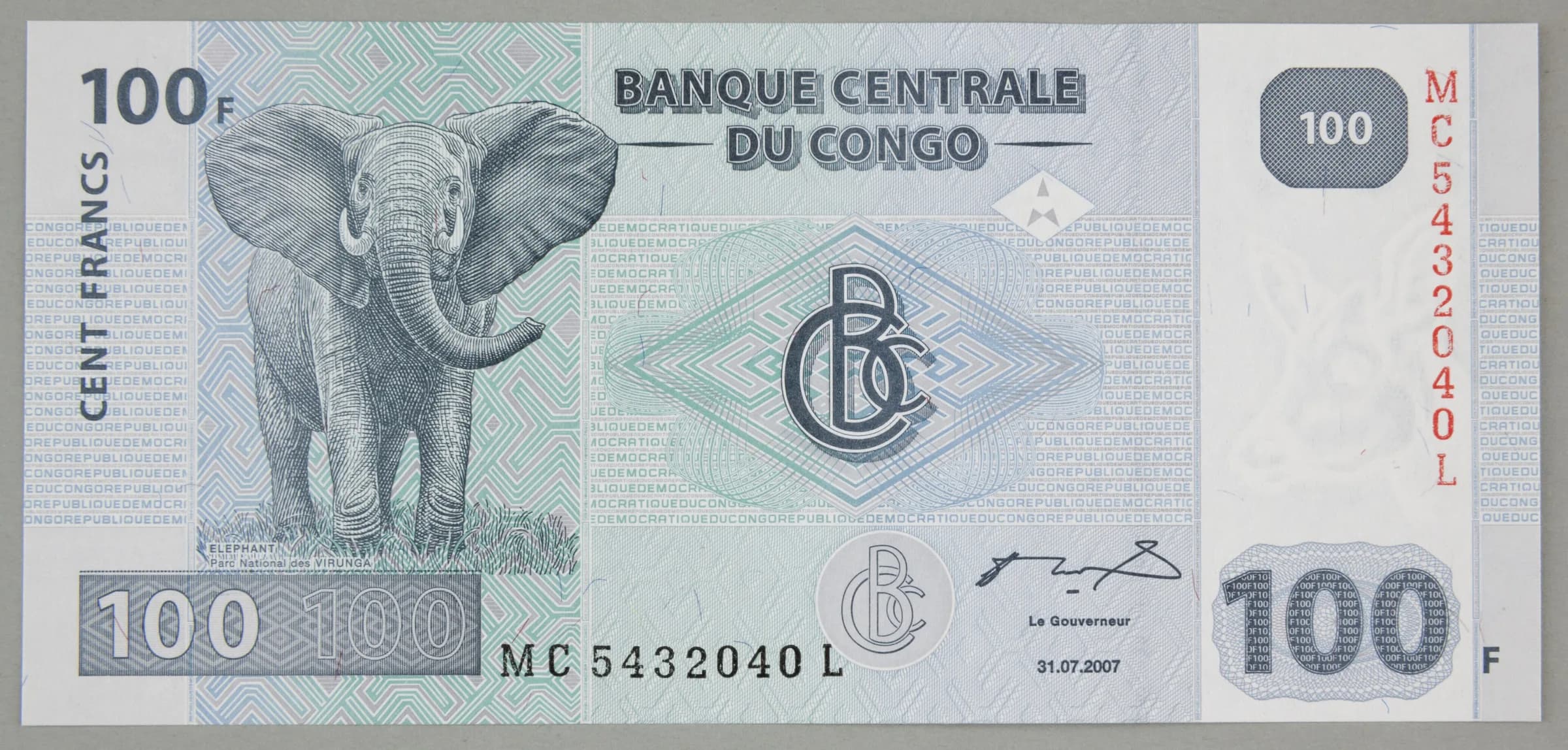
DR Congo uses the Congolese Franc (CDF).

US dollars are widely used
Many hotels, flights and larger purchases are priced in US dollars alongside the Congolese franc. Carrying some small, clean US dollar notes is useful.

Cards have limited use
Card payments are mostly limited to a few hotels and businesses in Kinshasa. Do not rely on card payments elsewhere in the country.

ATMs are limited and risky
ATMs are scarce outside the capital, and official travel advice warns of theft around cash machines. Withdraw and carry cash carefully and avoid displaying it in public.
Weather by month (Kinshasa)
- Daytime high
- Grey row = night low
- Best time to go
- Daytime high
- Grey row = night low
- Best time to go
| Month | High, °C | Low, °C | Rain, mm |
|---|---|---|---|
| January | 28.8 | 21.5 | 165.5 |
| February | 29.2 | 21.7 | 165 |
| March | 29.2 | 21.8 | 206.5 |
| April | 29 | 21.9 | 206.7 |
| May | 28.9 | 21.4 | 148.8 |
| June · best | 28.8 | 19.2 | 13.5 |
| July · best | 29 | 18.4 | 3.4 |
| August · best | 30 | 19.5 | 13 |
| September · best | 30.6 | 21.2 | 56.7 |
| October | 29.6 | 21.7 | 175.5 |
| November | 28.4 | 21.5 | 278.4 |
| December | 28.3 | 21.4 | 248.9 |
Monthly averages. Source: NASA POWER climatology, 2001-2020.
June · ideal
The best window runs June, July, August and September.
High 28.8°CLow 19.2°CRain 13.5 mm
Sweet spot: Kinshasa has a tropical climate with a long wet season and a cooler, drier season from around June to September. The drier months bring less rain and lower humidity, making them the more comfortable time to visit.
2 time zones
London
--:--:--
Kinshasa
--:--:--
DR Congo has 2 time zones; the clock shows Kinshasa.
How much to tip, in GBP
CDF 2,000
Restaurant bill
Only where a service charge is not already added; check the bill first.
5–10%
on a CDF 2,000 bill: CDF 100
Hotel porter
Per bag, in Congolese francs or a small USD equivalent.
CDF 1,000–CDF 3,000
Tour or trekking guide
Per day; more for specialised park or gorilla-trekking guides.
CDF 5,000–CDF 15,000
Taxi or driver
Rounding up the fare is appreciated but not expected.
No tip expected
SIM, eSIM or roaming?
Local SIM
RecommendedLocal SIM card
Airport kiosks or operator shops in Kinshasa (Vodacom, Orange, Airtel) Needs passport registration; coverage is strongest in cities and patchy elsewhere.
eSIM
Travel eSIM
International eSIM providers, bought online before departure Convenient for arrival connectivity, but confirm the provider covers DR Congo's networks.
Roaming
Roaming from home
Activate through your home operator before travel Usually the most expensive option; check rates, since coverage can be patchy outside cities.