eVisa
Tourist
Entry
Single entry
Validity
- Processing
- 4–5 business days
- Government fee
- £11 (€12)


United Kingdom
Djibouti

Yes.
British citizens need a visa to enter Djibouti. For a tourist or business trip, apply for the eVisa online before you fly.
eVisa
Entry
Single entry
Validity
eVisa
Entry
Single entry
Validity
Plusvisa is a private visa application service, not a government agency or embassy. Official government source: Djibouti eVisa portal, evisa.gouv.dj.

Passport
Valid 6 months after arrival
Counted from the date you arrive.

Usual route
eVisa, applied for online
Apply before you fly. Processing time is not published.

Entry points
Ambouli airport or any border
The eVisa is not tied to one airport.
Most people
Apply online at the official Djibouti eVisa portal before you travel. Use it for tourism or business. The visa is sent by email once approved.
Other purposes
For work, study or other purposes the eVisa does not cover, contact the Djibouti Embassy in the UK and apply at a Djiboutian embassy or consulate before you travel.
| e-Visa | Validity | Processing | Government fee |
|---|---|---|---|
Business trip eVisa | Stay up to 14 days Single entry | 4–5 business days | €12 ≈ £11 |
Business trip eVisa | Stay up to 90 days Single entry | 4–5 business days | €23 ≈ £20 |
Tourist eVisa | Stay up to 14 days Single entry | 4–5 business days | €12 ≈ £11 |
Tourist eVisa | Stay up to 90 days Single entry | 4–5 business days | €23 ≈ £20 |
The government fee is the government's own charge, never refundable.
The length of stay is set by the visa you are granted. The official portal does not publish a fixed number of days for the eVisa.
Business trip: 14 days per visit.
Arrive 1 March
10 of 14 days
1 Mar – 10 Mar: 10 of the 14 days this visa allows in one visit.

eVisa stay: The stay allowed is set by the eVisa granted. Check the dates on your approved eVisa before you travel.

Embassy visa stay: For other purposes, the stay depends on the visa the embassy grants. Ask the embassy before you travel.

Extensions: The official portal does not publish extension rules. If you want to stay longer, contact the immigration authorities in Djibouti before your permitted stay ends.

Overstaying: Official penalties for overstaying are not published. Do not assume there is no penalty. Leave before your permitted stay ends.
Proof of leaving: You must show evidence of onward or return travel. Border officials may ask for it.
Five things to have ready before you start your application, as a UK applicant.

Full British passport, valid at least 6 months after your arrival date in Djibouti. It must be in good condition.
A recent, clear photo of your face, in the format the eVisa portal asks for. Blurry or cropped photos are often rejected.
A clear colour scan or photo of the personal details page. Details must match your passport exactly.

A return or onward flight ticket. Border officials may ask to see it.
Only for some visa types

Yellow fever vaccination certificate
Processing takes 4–5 business days. Enter your arrival date and we'll work backwards.
Processing
Pick your arrival date
Apply online
—
Form and uploads, about 30 min
Pay the fee
—
By card, on the portal
Processing
4–5 business days
Official estimate
Approval emailed
—
Keep a copy on your phone
Arrive in Djibouti
—
Show the approval at the border
The official sources do not publish how early you can apply or how long processing takes. Applying at least a week before you fly leaves room to fix a rejected document.
Is your trip for tourism or business?
Will your passport be valid for at least 6 months after your arrival date?
Do you have a return or onward ticket?
If you come from or transit through a yellow fever risk country, do you have a vaccination certificate?
Result
Answer all four
Four quick checks of the rules that most often catch travellers out, and we'll tell you where you stand.
Before you apply
Check your passport
Your British passport must be valid for at least 6 months after your arrival date in Djibouti. Renew it first if it is not.
Check the yellow fever rule
You need a yellow fever certificate if you arrive from, or transit more than 12 hours through, a risk country. Get the vaccine and carry the certificate.
Gather your files
Have a digital passport photo, a scan of your passport bio page and proof of onward or return travel ready.
On the official portal
Open the official eVisa portal
Go to the official Djibouti eVisa website and create an applicant account.

Use only the official site.
Enter your details
Enter your passport and travel details exactly as they appear in your passport. Upload your photo and passport scan.
Pay the fee online
Pay the government fee on the portal's payment page to submit the application. The portal does not publish which payment methods it accepts.
After you apply
Receive your eVisa
The approved eVisa is sent to the email address you used on the application.
Carry copies with you
Show your eVisa with your passport at check-in and on arrival in Djibouti. Keep your proof of onward travel too.
Official website: evisa.gouv.dj (opens in a new tab)
Yes. UK government advice says you must have a visa to enter Djibouti. For a tourist or business trip, apply for the eVisa online before you fly.
Do not plan on it. The Djiboutian government lists visa on arrival only for diplomatic, official and service passports. UK advice says a tourist visa can be bought on arrival, paid in cash in US dollars, but airlines decide and this is not guaranteed. Apply for the eVisa before you fly.
Its expiry date must be at least 6 months after the date you arrive in Djibouti. UK government advice says you will be denied entry if you do not have a valid travel document. Renew your passport first if it does not meet this rule.
Yes. The eVisa is not tied to one airport. It can be used at Ambouli International Airport or at any other official border crossing into Djibouti.
Only if you arrive from a country with a risk of yellow fever transmission, or you have transited more than 12 hours through one. Travellers aged 1 or over need the certificate in that case. Check TravelHealthPro's Djibouti guide before you travel to confirm the rule for your route.
No. The eVisa covers tourism and business visits only. For other purposes, such as study or work, contact the Djibouti Embassy in the UK and apply for a visa from a Djiboutian embassy or consulate before you travel.
Show your approved eVisa and your passport. You must have evidence of your onward journey, and border officials may ask to see a return or onward flight ticket.
Visa sorted
The things that make the first
48 hours easy, compared with home
Type C
Two round pins · 2.5 A
Type E
Two round pins · 16 A
Type C
Djibouti uses type C and E sockets and your plugs are type G. A G-to-C adapter works for the whole trip.
Voltage
220 V · 50 Hz
Against 230 V · 50 Hz at home. Check the label on chargers and appliances: anything marked 100–240 V, 50/60 Hz works in both.

Pack: one type C adapter and a small power strip — hotel rooms rarely have more than two sockets.
Compare traffic side:
Djibouti · right-hand traffic — the opposite of United Kingdom

Getting around
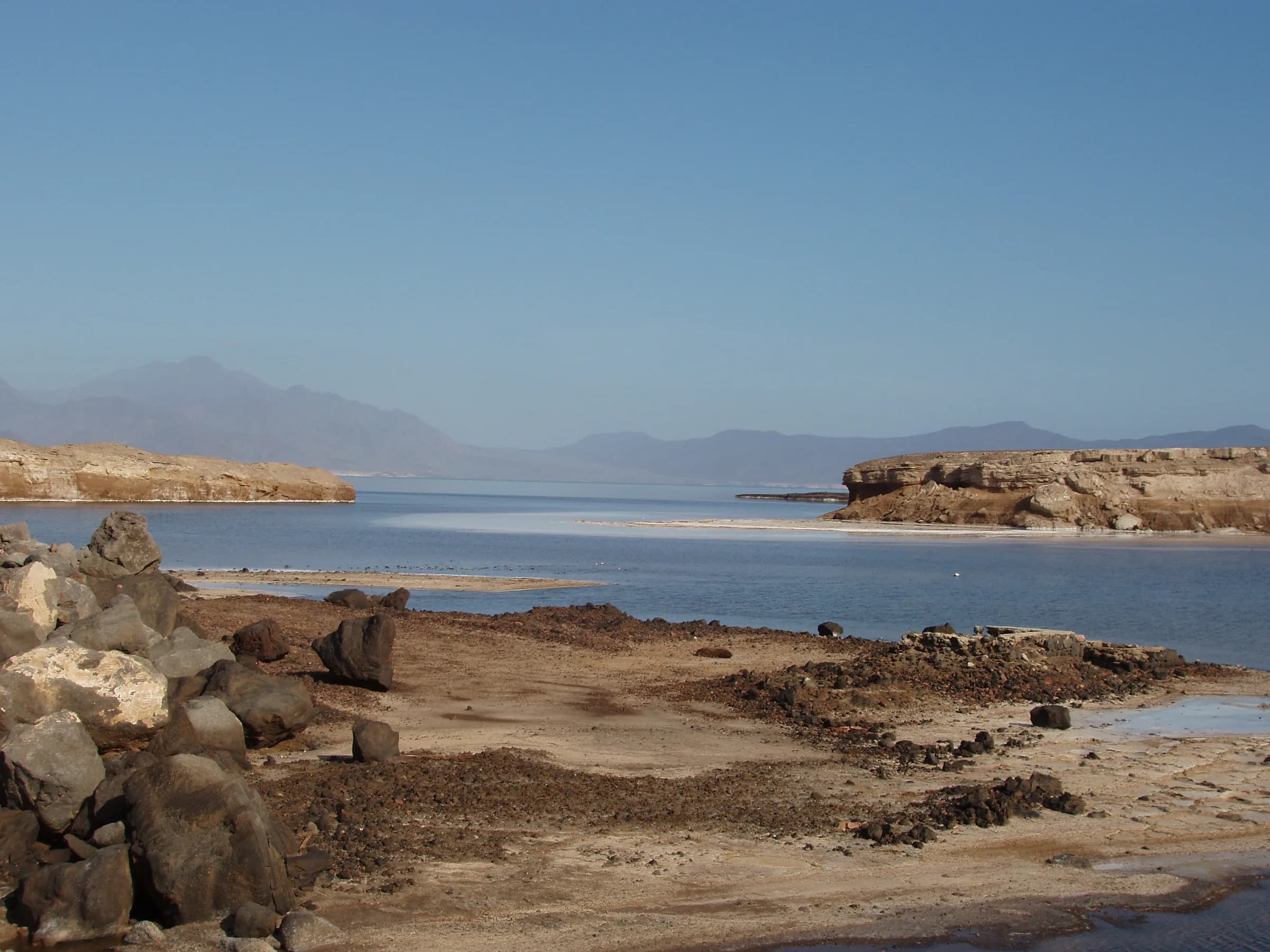
Public transport is limited. Taxis are the main way to get around the capital, and a 4x4 with a driver is the usual way to reach Lake Assal, Lake Abbe and other sites outside the city.

Health and heat
Djibouti is extremely hot for much of the year. Drink plenty of water, plan outdoor activities for early morning or late afternoon, and check recommended vaccinations before you travel.

Dress and etiquette
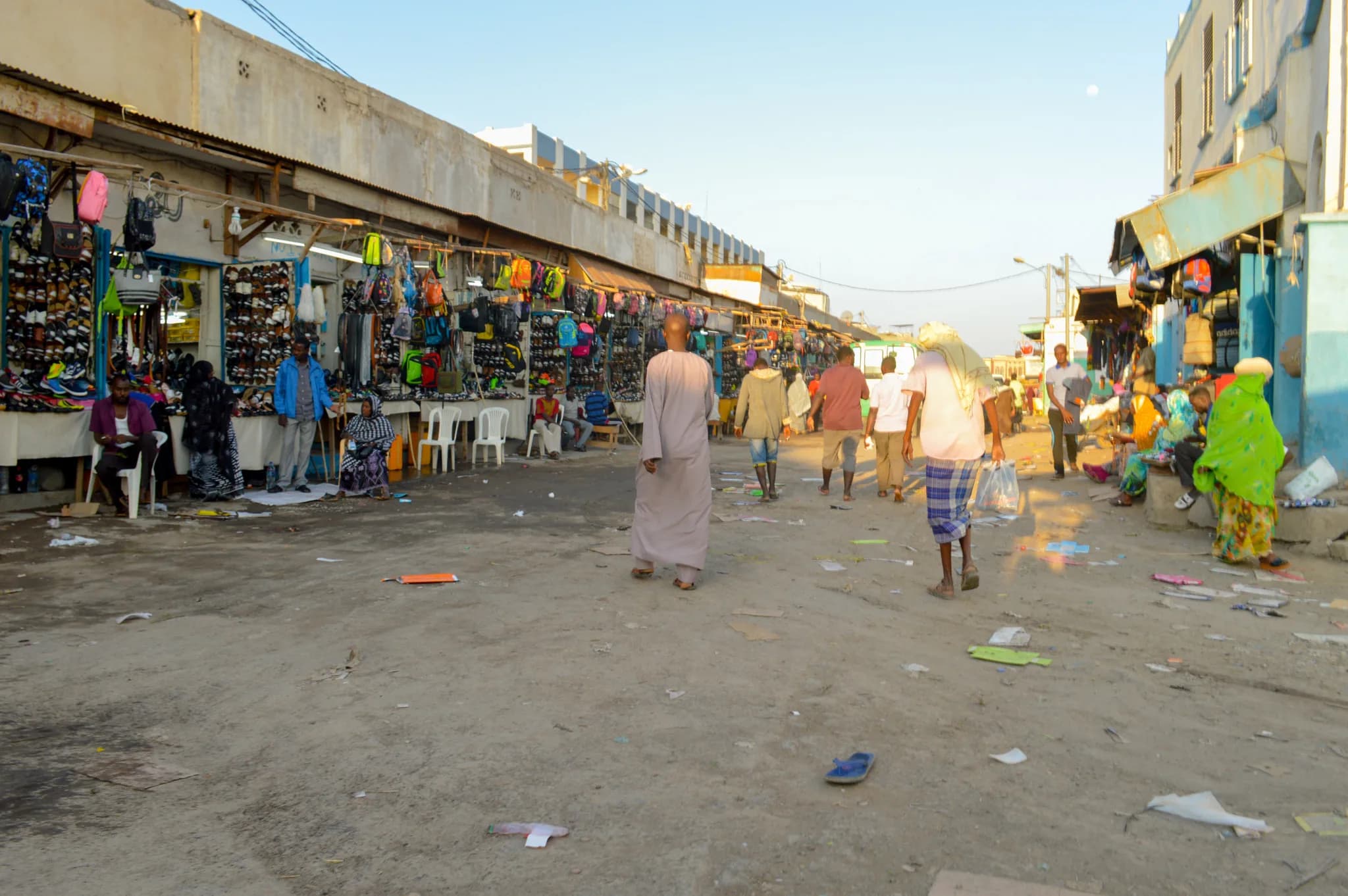
Djibouti is a Muslim-majority country. Dress modestly, especially outside tourist resorts, and be respectful during Ramadan, when some restaurants close in daylight hours.
Djibouti uses the Djiboutian Franc (DJF).

US dollars are widely used
The Djiboutian franc is pegged to the US dollar, and dollars are accepted alongside francs in many hotels, restaurants and shops.

ATMs are limited
ATMs are mainly found in Djibouti City. Do not rely on finding one outside the capital, and carry enough cash for trips to Lake Assal or other remote areas.

Carry small notes
Smaller shops, markets and taxis often cannot break large notes, so keep a mix of small denominations in francs and dollars.
| Month | High, °C | Low, °C | Rain, mm |
|---|---|---|---|
| January · best | 27.4 | 21.3 | 5.6 |
| February · best | 28 | 21.6 | 5.9 |
| March · best | 29.8 | 22.8 | 19.5 |
| April | 31.7 | 24.9 | 50.7 |
| May | 35.1 | 27.3 | 27.3 |
| June | 39 | 29.6 | 7.2 |
| July | 38.5 | 30.2 | 16.7 |
| August | 38 | 29.8 | 26.7 |
| September | 36.9 | 28.9 | 31.2 |
| October | 32.5 | 25.5 | 21.1 |
| November · best | 29.9 | 23.5 | 9.6 |
| December · best | 28 | 21.9 | 14 |
Monthly averages. Source: NASA POWER climatology, 2001-2020.
January · ideal
The best window runs January, February, March, November and December.
High 27.4°CLow 21.3°CRain 5.6 mm
Sweet spot: Djibouti City has a hot desert climate. November to March is the mildest period and the best time to visit. Summer, from around June to August, is extremely hot and best avoided for outdoor activities.
London
--:--:--
Djibouti
--:--:--
DJF 2,000
Restaurant bill
Check if a service charge is already included.
5–10%
on a DJF 2,000 bill: DJF 100
Hotel porter
Per bag.
DJF 100–DJF 200
Tour guide or driver
Per day, more for multi-day excursions.
DJF 1,000–DJF 3,000
Taxi
Rounding up the fare is appreciated but not expected.
No tip expected
Local SIM
Djibouti Telecom shops in Djibouti City, with your passport for registration Usually the cheapest option for a longer stay, but needs an unlocked phone and passport registration.
eSIM
RecommendedInternational eSIM providers, bought online before departure Convenient to set up before you fly, no physical SIM swap needed.
Roaming
Activate through your home mobile operator Usually the most expensive option for data in Djibouti; check your provider's rates first.
