

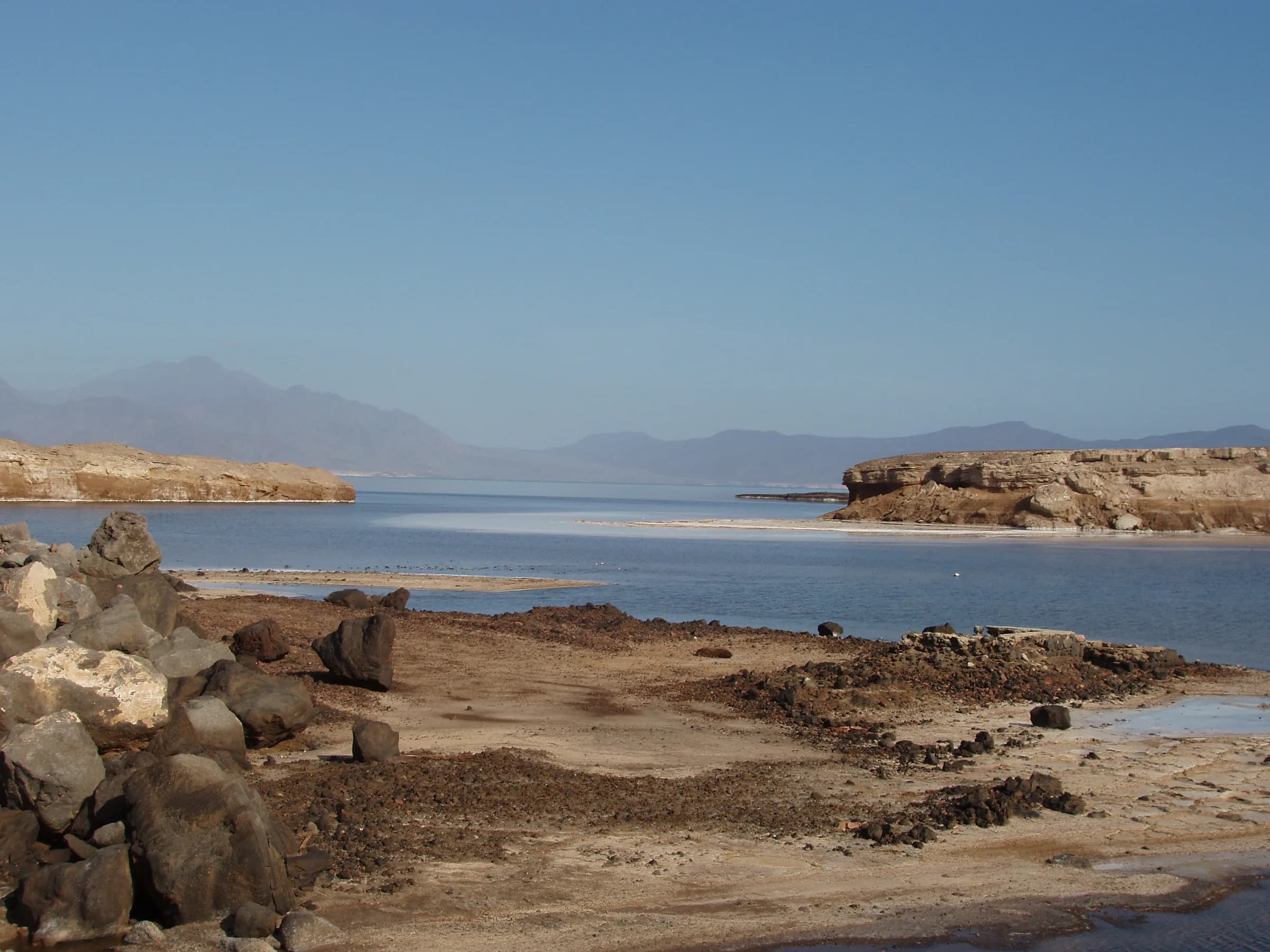
Djibouti Visa: Requirements, e-Visa and Entry Rules
Almost every passport can apply for a Djibouti eVisa online before travel, for tourism or business. A small number of nationalities, including Singapore and India, enter visa free, and diplomatic, official or service passport holders can get a visa on arrival. Everyone else, or anyone needing a visa for other purposes, applies through a Djiboutian embassy or consulate.
- e-Visa for 247 passports
- Government fee from €12
- Verified
Plusvisa is a private visa application service, not a government agency or embassy. Official government source: Djibouti eVisa portal, evisa.gouv.dj.
Do you need a visa for Djibouti?
Most passports fall into the e-visa group. A short list of countries are visa free, and visa on arrival is limited to diplomatic, official and service passports.
Which passport will you travel on?
Your route
Pick a passport
We will show the route Djibouti puts you on, the government fee for each visa type, and the guide written for your nationality.
The four routes
- e-Visa eligible
247 passports
Most nationalities can apply online for tourism or business before flying to Djibouti. This is the route the Djiboutian government recommends.
- Visa on arrival
Visa on arrival
The Djiboutian government lists this only for holders of diplomatic, official and service passports. Some airlines allow other travellers to buy a visa on arrival in cash US dollars, but this is not guaranteed and depends on the airline.
- Visa-free
Visa exempt
Ordinary passport holders from Singapore, Benin, China (when endorsed for public affairs), Egypt, Kenya, India, Libya, Morocco, Russia and Turkey, plus Hong Kong passport holders, can enter without a visa for a set number of days.
- Embassy visa only
Embassy visa
Travellers who are not visa exempt and cannot or do not want to use the eVisa, or who are travelling for a purpose other than tourism or business, apply at a Djiboutian embassy or consulate before travel.
Government fees by passport
| Passport | Business trip | Tourist | Guide |
|---|---|---|---|
| United Kingdom | €12 | €12 | Read guide |
| United States of America | €12 | €12 | — |
| Canada | €12 | €12 | — |
| Australia | €12 | €12 | — |
| Ireland | €12 | €12 | — |
| Germany | €12 | €12 | Read guide |
| Italy | €12 | €12 | Read guide |
Which Djibouti visa exists, and what it allows
| e-Visa | Options | Processing | Usual government fee |
|---|---|---|---|
| Business tripeVisa · 247 passports |
| 4–5 business days | €121 passport pays a different fee |
| TouristeVisa · 247 passports |
| 4–5 business days | €121 passport pays a different fee |
How Djibouti visa fees work

Set by the government, in US dollars. The eVisa fee and the cash visa-on-arrival fee are both set by the Djiboutian government and charged in US dollars, even though the local currency is the Djiboutian franc.

Visa on arrival is cash only. Where a visa on arrival is possible, it must be paid in cash in US dollars at the border. Cards are not accepted at the border.

No published seasonal rates. The official sources reviewed do not mention seasonal pricing or reciprocal fees that vary by nationality for the eVisa.

No confirmed express fee. No official express or priority processing fee is published for the Djibouti eVisa.

Refunds not published. The official eVisa portal does not publish a refund policy. Treat the fee as non-refundable unless the portal states otherwise at the time of payment.
What Plusvisa charges
The government fee is passed through at cost. Our service fee is on top, and every passport's page shows the total before you start.
If we make a mistake that leads to a refusal, we refund our fee and re-apply free.
See the total for my passportYour document checklist

Passport
Must be valid for at least 6 months after the date of arrival in Djibouti, and in good condition.

Digital passport-style photo
A recent, clear photo of the applicant's face, uploaded in the format the eVisa portal requests.

Scan of passport bio page
A clear colour scan or photo of the personal details page of the passport.

Evidence of onward or return travel
Proof such as a return or onward flight ticket, as border officials may ask to see this.

Yellow fever vaccination certificate
Required only for travellers arriving from, or who have transited more than 12 hours through, a country with a risk of yellow fever transmission.
Not eligible for any e-Visa
The application, step by step
Before you apply
- 1
Check your passport and documents
Make sure your passport is valid for at least 6 months after your arrival date and gather a digital photo, a scan of your passport bio page and proof of onward travel.
- 2
Check if you need a yellow fever certificate
If you are arriving from, or have transited more than 12 hours through, a country with yellow fever risk, get the vaccination and carry the certificate.
On the official portal
- 3
Create an account on the eVisa portal
Go to the official Djibouti eVisa website and register an applicant account.
- 4
Complete the application form
Enter your passport and travel details and upload the required documents and photo.
- 5
Pay the fee online
Pay the government fee through the portal's payment page to submit the application.
After you apply
- 6
Receive the eVisa by email
The approved eVisa is sent to the email address used on the application.
- 7
Carry a printed or digital copy
Bring a copy of the eVisa with your passport to show at check-in and on arrival in Djibouti.
Official website: evisa.gouv.dj (opens in a new tab)
Two things to have before you fly
Besides the visa itself, check these before you fly.
- 1
Yellow fever certificate
Required for travellers aged 1 or over arriving from, or who have transited more than 12 hours through, a country with yellow fever risk. Official page (opens in a new tab)
- 2
Proof of onward or return travel
Border officials may ask to see evidence that you will leave Djibouti, such as a return or onward flight ticket.
The only official website, and how to check status
This is the only official website for the Djibouti eVisa. Other websites offering to arrange a Djibouti visa are private services, not the government.
Why Djibouti e-Visas get rejected
Almost every refusal is a file problem, not a judgement about you.
Passport not valid long enough
Djibouti requires a passport valid for at least 6 months after arrival. Applications with less validity are refused.
Poor quality photo or scan
Blurry, cropped or otherwise non-compliant photos and document scans can cause an application to be rejected.

Incomplete or mismatched information
Details that do not match the passport, or missing fields, can lead to refusal.

No proof of onward travel
Not being able to show evidence of leaving Djibouti can cause problems at the border even with an approved eVisa.
Wrong visa purpose
The eVisa is for tourism or business only. Applying for it for another purpose, such as work or study, can be refused.
Sockets and power in Djibouti
Type C
Two round pins · 2.5 A
Type E
Two round pins · 16 A
Type C
Djibouti uses type C and E sockets. If your own plugs are a different type, one type C adapter covers the whole trip.
Voltage
220 V · 50 Hz
Check the label on chargers and appliances: anything marked 100–240 V, 50/60 Hz works here with only an adapter, no converter.
Pack: a type C adapter unless your own plugs already match, and a small power strip — hotel rooms rarely have more than two sockets.
Djibouti drives on the right
Traffic side:
Djibouti · right-hand traffic

Getting around
Public transport is limited. Taxis are the main way to get around the capital, and a 4x4 with a driver is the usual way to reach Lake Assal, Lake Abbe and other sites outside the city.

Health and heat
Djibouti is extremely hot for much of the year. Drink plenty of water, plan outdoor activities for early morning or late afternoon, and check recommended vaccinations before you travel.

Dress and etiquette
Djibouti is a Muslim-majority country. Dress modestly, especially outside tourist resorts, and be respectful during Ramadan, when some restaurants close in daylight hours.
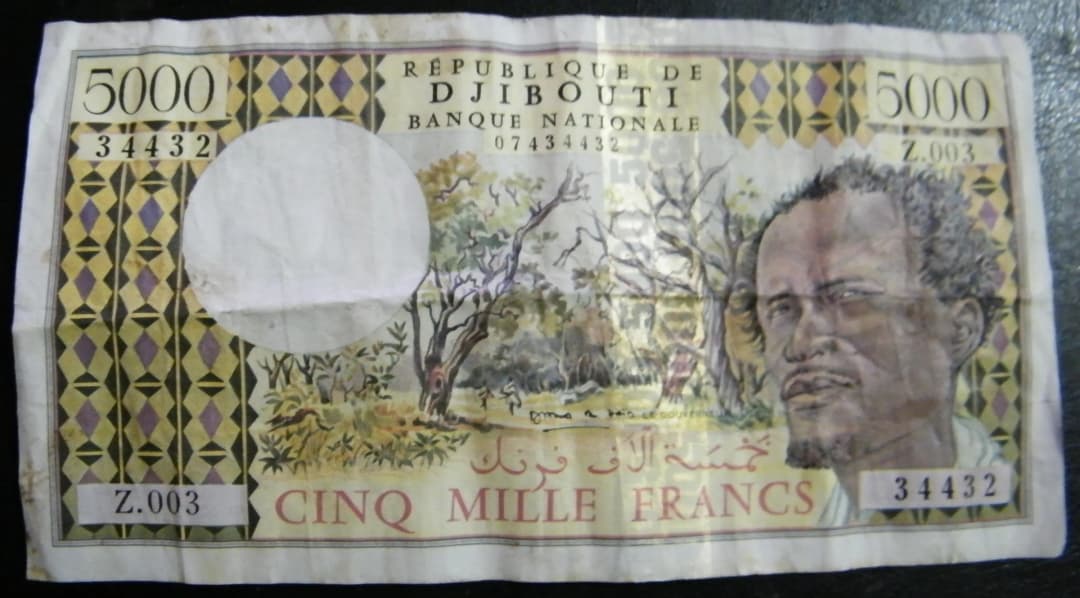
Djiboutian Francs, cash and cards
Djibouti uses the Djiboutian Franc (DJF).

US dollars are widely used
The Djiboutian franc is pegged to the US dollar, and dollars are accepted alongside francs in many hotels, restaurants and shops.

ATMs are limited
ATMs are mainly found in Djibouti City. Do not rely on finding one outside the capital, and carry enough cash for trips to Lake Assal or other remote areas.

Carry small notes
Smaller shops, markets and taxis often cannot break large notes, so keep a mix of small denominations in francs and dollars.
Weather by month (Djibouti)
- Daytime high
- Grey row = night low
- Best time to go
- Daytime high
- Grey row = night low
- Best time to go
| Month | High, °C | Low, °C | Rain, mm |
|---|---|---|---|
| January · best | 27.4 | 21.3 | 5.6 |
| February · best | 28 | 21.6 | 5.9 |
| March · best | 29.8 | 22.8 | 19.5 |
| April | 31.7 | 24.9 | 50.7 |
| May | 35.1 | 27.3 | 27.3 |
| June | 39 | 29.6 | 7.2 |
| July | 38.5 | 30.2 | 16.7 |
| August | 38 | 29.8 | 26.7 |
| September | 36.9 | 28.9 | 31.2 |
| October | 32.5 | 25.5 | 21.1 |
| November · best | 29.9 | 23.5 | 9.6 |
| December · best | 28 | 21.9 | 14 |
Monthly averages. Source: NASA POWER climatology, 2001-2020.
January · ideal
The best window runs January, February, March, November and December.
High 27.4°CLow 21.3°CRain 5.6 mm
Sweet spot: Djibouti City has a hot desert climate. November to March is the mildest period and the best time to visit. Summer, from around June to August, is extremely hot and best avoided for outdoor activities.
Tipping in Djibouti
DJF 2,000
Restaurant bill
Check if a service charge is already included.
5–10%
on a DJF 2,000 bill: DJF 100
Hotel porter
Per bag.
DJF 100–DJF 200
Tour guide or driver
Per day, more for multi-day excursions.
DJF 1,000–DJF 3,000
Taxi
Rounding up the fare is appreciated but not expected.
No tip expected
SIM, eSIM or roaming?
Local SIM
Local SIM card
Djibouti Telecom shops in Djibouti City, with your passport for registration Usually the cheapest option for a longer stay, but needs an unlocked phone and passport registration.
eSIM
RecommendedTravel eSIM
International eSIM providers, bought online before departure Convenient to set up before you fly, no physical SIM swap needed.
Roaming
Roaming from your home provider
Activate through your home mobile operator Usually the most expensive option for data in Djibouti; check your provider's rates first.
If it's your first time: three you shouldn't skip
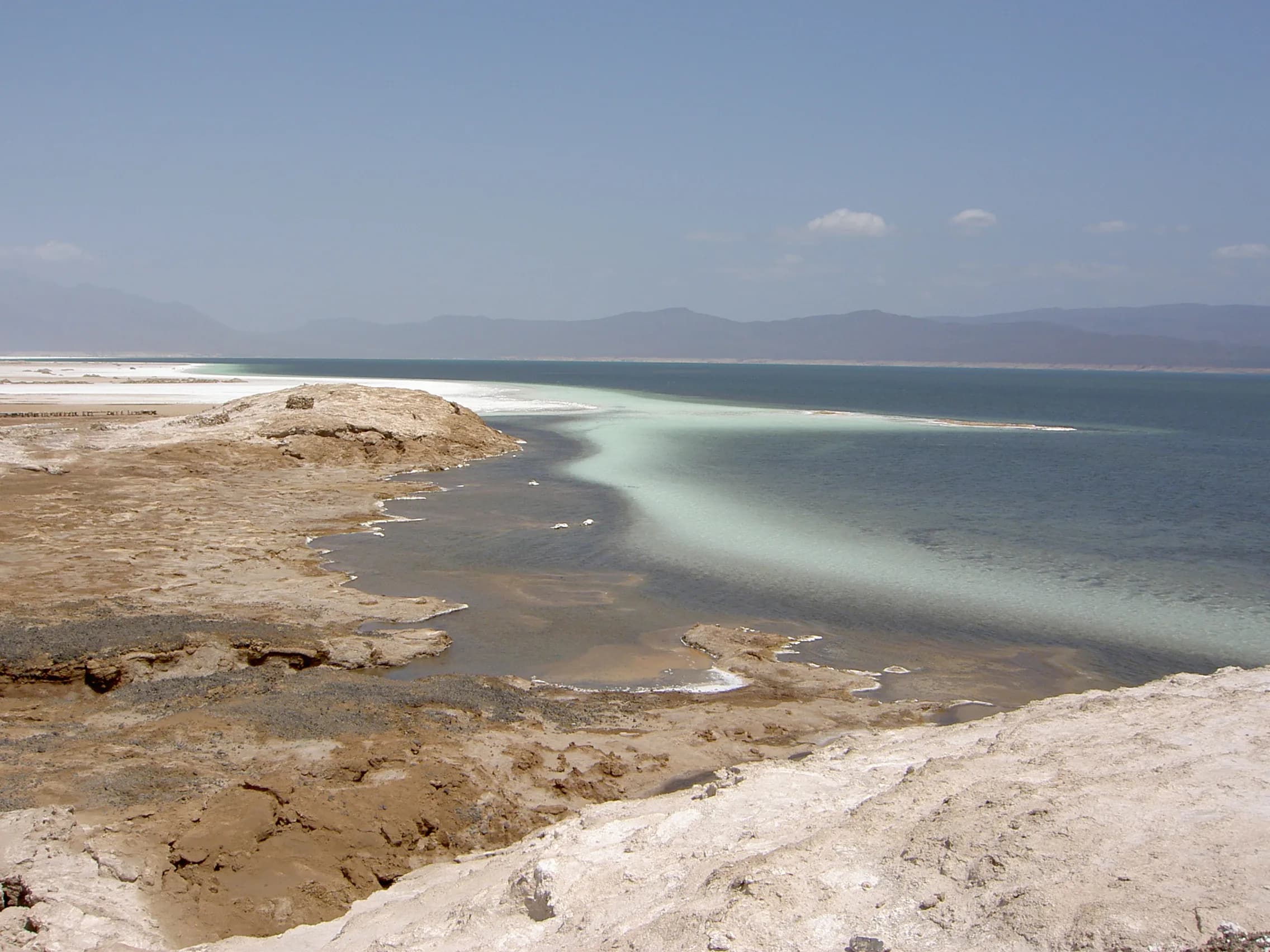
Dikhil region
Lake Assal
One of the saltiest lakes on Earth, in a volcanic basin below sea level, among the lowest points in Africa.
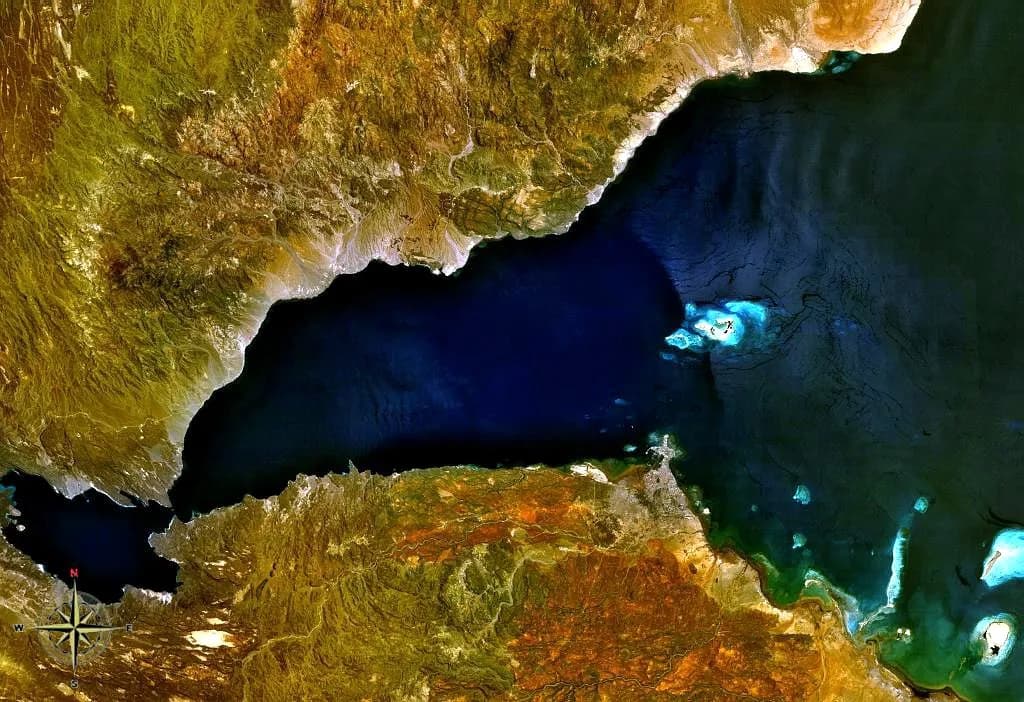
Tadjoura
Gulf of Tadjoura
Calm waters known for snorkelling, diving and seasonal whale shark watching.
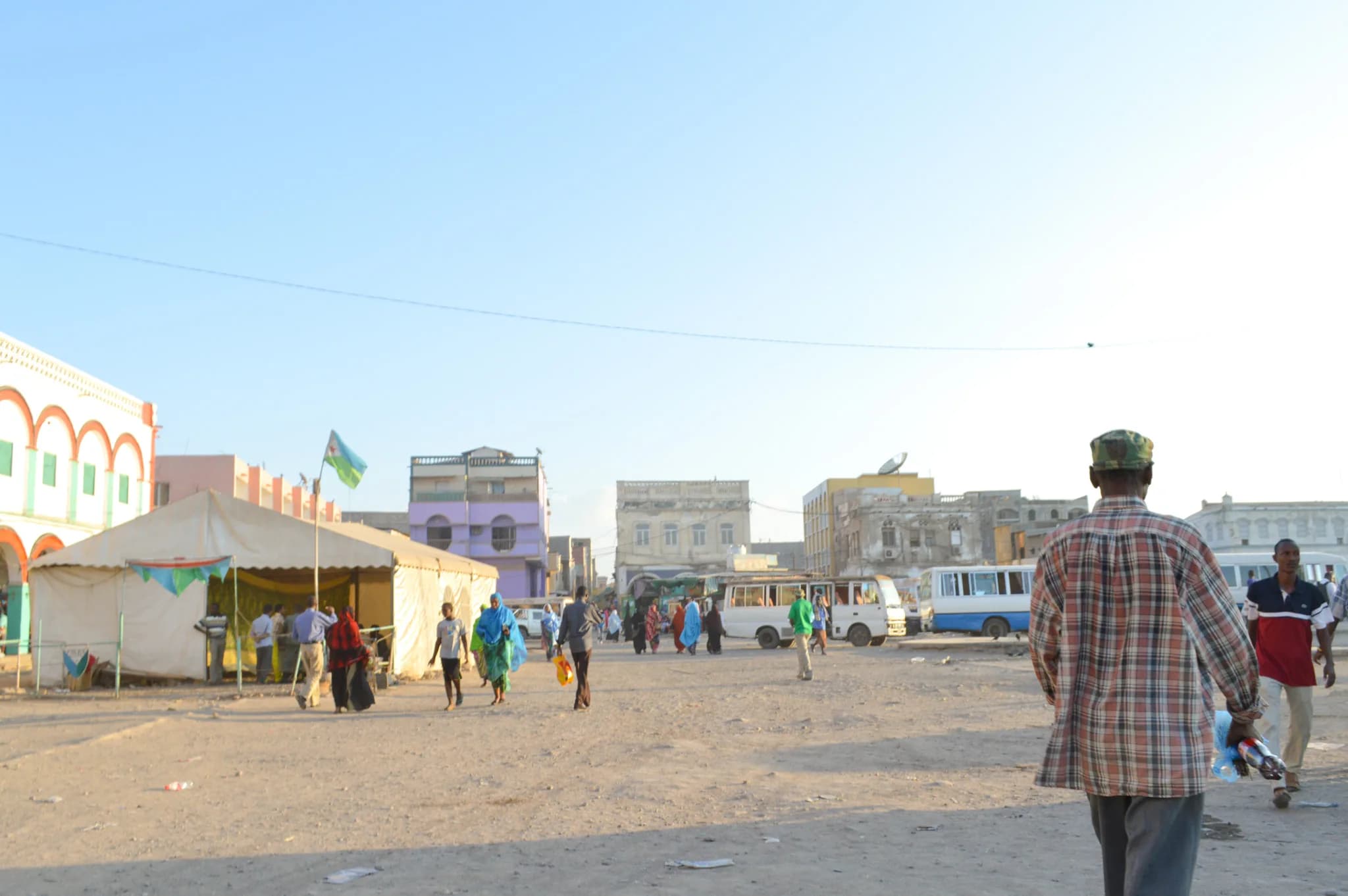
Djibouti
Djibouti City
The capital's markets, waterfront and National Museum give a first taste of local life and history.
Questions everyone asks about Djibouti visas
Almost everyone does, either as an eVisa, a visa on arrival, or a visa from a Djiboutian embassy. A short list of nationalities can enter visa free for a limited number of days.
The Djiboutian government lists visa on arrival only for diplomatic, official and service passport holders. Other travellers should not assume they can get one and should apply for an eVisa before flying.
An approved eVisa can be used at Ambouli International Airport or at any other official border crossing into Djibouti.
Your passport must be valid for at least 6 months after the date you arrive in Djibouti.
Only if you are arriving from, or have transited more than 12 hours through, a country with a risk of yellow fever transmission.
The Djiboutian franc is the local currency, but US dollars are widely accepted. Visa on arrival, where available, must be paid in cash in US dollars.
Some governments advise against travel to the Djibouti-Eritrea border area. Check your own government's travel advice before planning a route near that border.
Now read the one written for your passport
Each guide has the fee for that passport, its maximum stay, the rules that apply only to it, and the application itself.
United Kingdom
Government fee from €12
Italy
Government fee from €12
Germany
Government fee from €12
Every other passport →
Pick your passport for your route, your fee and your documents.
Djibouti visa for every other passport (244)
- Afghan citizens
- Aland-Islander citizens
- Albanian citizens
- Algerian citizens
- American-Samoan citizens
- Andorran citizens
- Angolan citizens
- Anguillan citizens
- Antiguan citizens
- Argentinian citizens
- Aruban citizens
- Australian citizens
- Austrian citizens
- Azerbaijani citizens
- Bahamian citizens
- Bahraini citizens
- Bangladeshi citizens
- Barbadian citizens
- Belarusian citizens
- Belgian citizens
- Belizean citizens
- Beninese citizens
- Bermudian citizens
- Bhutanese citizens
- Bolivian citizens
- Caribbean-Netherlands citizens
- Bosnian citizens
- Botswanan citizens
- Bouvet-Island citizens
- Brazilian citizens
- British-Indian-Ocean-Territory citizens
- Bruneian citizens
- Bulgarian citizens
- Burkinabe citizens
- Burundian citizens
- Cambodian citizens
- Cameroonian citizens
- Canadian citizens
- Cape-Verdean citizens
- Caymanian citizens
- Central-African citizens
- Chadian citizens
- Chilean citizens
- Chinese citizens
- Christmas-Islander citizens
- Cocos-Islander citizens
- Colombian citizens
- Comoran citizens
- Congolese citizens
- Cook-Islander citizens
- Costa-Rican citizens
- Ivorian citizens
- Croatian citizens
- Cuban citizens
- Curacaoan citizens
- Cypriot citizens
- Czech citizens
- Danish citizens
- Dominica citizens
- Dominican citizens
- DRC citizens
- Ecuadorian citizens
- Egyptian citizens
- Salvadoran citizens
- Equatoguinean citizens
- Eritrean citizens
- Estonian citizens
- Swazi citizens
- Ethiopian citizens
- Falkland-Islander citizens
- Faroese citizens
- Fijian citizens
- Finnish citizens
- French citizens
- French-Guianese citizens
- French-Polynesian citizens
- French-Southern-Territories citizens
- Gabonese citizens
- Gambian citizens
- Georgian citizens
- Ghanaian citizens
- Gibraltarian citizens
- Greek citizens
- Greenlandic citizens
- Grenadian citizens
- Guadeloupean citizens
- Guamanian citizens
- Guatemalan citizens
- Guernsey citizens
- Guinean citizens
- Bissau-Guinean citizens
- Guyanese citizens
- Haitian citizens
- Heard-And-Mcdonald-Islands citizens
- Vatican citizens
- Honduran citizens
- Hong-Kong citizens
- Hungarian citizens
- Icelandic citizens
- Indian citizens
- Indonesian citizens
- Iranian citizens
- Iraqi citizens
- Irish citizens
- Manx citizens
- Israeli citizens
- Jamaican citizens
- Japanese citizens
- Jersey citizens
- Jordanian citizens
- Kazakh citizens
- Kenyan citizens
- I-Kiribati citizens
- Kosovar citizens
- Kuwaiti citizens
- Kyrgyz citizens
- LAO citizens
- Latvian citizens
- Lebanese citizens
- Basotho citizens
- Liberian citizens
- Libyan citizens
- Liechtensteiner citizens
- Lithuanian citizens
- Luxembourgish citizens
- Macanese citizens
- Malagasy citizens
- Malawian citizens
- Malaysian citizens
- Maldivian citizens
- Malian citizens
- Maltese citizens
- Marshallese citizens
- Martinican citizens
- Mauritanian citizens
- Mauritian citizens
- Mayotte citizens
- Mexican citizens
- Micronesian citizens
- Moldovan citizens
- Monegasque citizens
- Mongolian citizens
- Montenegrin citizens
- Montserratian citizens
- Moroccan citizens
- Mozambican citizens
- Burmese citizens
- Namibian citizens
- Nauruan citizens
- Nepali citizens
- Dutch citizens
- New-Caledonian citizens
- New-Zealand citizens
- Nicaraguan citizens
- Nigerien citizens
- Nigerian citizens
- Niuean citizens
- Norfolk-Islander citizens
- North-Korean citizens
- Macedonian citizens
- Northern-Mariana-Islander citizens
- Norwegian citizens
- Omani citizens
- Pakistani citizens
- Palauan citizens
- Palestinian citizens
- Panamanian citizens
- Papua-New-Guinean citizens
- Paraguayan citizens
- Peruvian citizens
- Filipino citizens
- Pitcairn-Islander citizens
- Polish citizens
- Portuguese citizens
- Puerto-Rican citizens
- Qatari citizens
- Reunionese citizens
- Romanian citizens
- Russian citizens
- Rwandan citizens
- Saint-Barthelemy citizens
- Saint-Helenian citizens
- Kittitian citizens
- Saint-Lucian citizens
- Saint-Martin citizens
- Saint-Pierre-And-Miquelon citizens
- Vincentian citizens
- Samoan citizens
- Sammarinese citizens
- Santomean citizens
- Saudi citizens
- Senegalese citizens
- Serbian citizens
- Seychellois citizens
- Sierra-Leonean citizens
- Singaporean citizens
- Sint-Maarten citizens
- Slovak citizens
- Slovenian citizens
- Solomon-Islander citizens
- Somali citizens
- South-African citizens
- South-Georgia citizens
- South-Korean citizens
- South-Sudanese citizens
- Spanish citizens
- Sri-Lankan citizens
- Sudanese citizens
- Surinamese citizens
- Svalbard citizens
- Swedish citizens
- Swiss citizens
- Syrian citizens
- Taiwanese citizens
- Tajik citizens
- Tanzanian citizens
- Thai citizens
- Timorese citizens
- Togolese citizens
- Tokelauan citizens
- Tongan citizens
- Trinidadian citizens
- Tunisian citizens
- Turkish citizens
- Turkmen citizens
- Turks-And-Caicos-Islander citizens
- Tuvaluan citizens
- Ugandan citizens
- Ukrainian citizens
- Emirati citizens
- Us-Minor-Outlying-Islands citizens
- US citizens
- Uruguayan citizens
- Uzbek citizens
- Ni-Vanuatu citizens
- Venezuelan citizens
- Vietnamese citizens
- British-Virgin-Islander citizens
- Us-Virgin-Islander citizens
- Wallis-And-Futuna citizens
- Sahrawi citizens
- Yemeni citizens
- Zambian citizens
- Zimbabwean citizens