

eVisa
Tourist E-visa
Entry
Validity
90 days
- Processing
- 8–10 business days
- Total cost
- £43 (US$54)

No, British citizens do not need a visa for stays in Vietnam of up to 45 days for tourism or business.
eVisa
Entry
Validity
90 days
eVisa
Entry
Validity
90 days
 Pre-checked
Reviewed
Expert check before submission


8–10 business days
Processing time


 +21k
+21k21K
Satisfied customers
 Available now
24/7
Expert human assistance
Plusvisa is a private visa application service, not a government agency or embassy. Official government source: National Portal on Immigration (Vietnam e-Visa System), evisa.xuatnhapcanh.gov.vn.

Passport validity
6+ months, 2 blank pages
GOV.UK advice; also must be undamaged or you may be refused entry or exit.

Visa-free stay
Up to 45 days
Confirmed by the entry/exit stamp given at the border, not your booking.

Longer stays
e-Visa gives 90 days
Multiple entry, applied for online before you fly.
Three routes into Vietnam
Most British citizens
British citizens can enter Vietnam for tourism or business without any visa, for up to 45 days, under the exemption extended in August 2023. You get an entry and exit stamp at the border with no application needed beforehand.
Longer or planned-ahead trips
If you plan to stay over 45 days, want multiple entries, or want approval confirmed before flying, apply for Vietnam's e-visa online. It gives 90 days and multiple entry, through the official immigration portal.
Work, study or other purposes
Trips the e-visa and visa-free rules do not cover, such as long-term work or study, need a visa arranged through the Vietnamese Embassy in London before you travel.
The UK issues several types of passport. Vietnam's rules mainly address the full 'British citizen' passport; other types should not assume the same visa-free entry.
British Citizen passport
Visa-free & e-Visa eligibleCovered by the 45-day visa exemption for tourism and business, and can also apply for the e-visa for longer or multiple-entry trips.
British National (Overseas) and other British passports
Check before you travelUK government guidance on the 45-day exemption is written for full British citizen passports. Other British nationalities are not confirmed for visa-free entry; check with the Vietnamese Embassy in London or apply for the e-visa instead.
| visa | Validity | Processing | Government fee | All-in with Plusvisa* |
|---|---|---|---|---|
Tourist E-visa eVisa | 90 days Single entry | 8–10 business days | US$25 ≈ £20 | ≈ £43 |
Tourist E-visa eVisa | 90 days Multiple entry | 8–10 business days | US$50 ≈ £40 | ≈ £71 |
Business trip E-visa eVisa | 90 days Single entry | 8–10 business days | US$25 ≈ £20 | ≈ £43 |
Business trip E-visa eVisa | 90 days Multiple entry | 8–10 business days | US$50 ≈ £40 | ≈ £71 |
* The government fee is the government's own charge, never refundable. All-in adds Plusvisa's service fee, per traveller; it is refunded if we cause a refusal.
British citizens get 45 days visa-free per entry for tourism or business, and the e-visa allows up to 90 days with single or multiple entry. Neither route allows work or study in Vietnam.
Tourist E-visa: 90 days per visit.
Arrive 1 March
63 of 90 days
1 Mar – 2 May: 63 of the 90 days this visa allows in one visit.

45-day exemption is per entry: It covers tourism and business only. Your entry stamp shows the exact date you must leave by; check it before you leave the border counter, since it will not be changed afterwards.

e-Visa: up to 90 days: Choose single or multiple entry when you apply. You must enter and exit through the same official gate you named on your application.

No extensions from visa-free stays: You generally cannot extend a visa-free stay from inside Vietnam. Leave and re-enter, or arrange another visa in advance, if you need longer.

Overstaying has consequences: Overstaying can mean fines, being stopped from leaving until you pay, deportation, or a ban on future visits.
Same passport in and out: Vietnam requires you to enter and exit using the same passport, even if you hold more than one valid travel document.
Five things to have ready before you start your application, as a UK applicant.

Colour scan of your passport photo page. UK government advice recommends at least 2 blank pages and 6+ months' validity from your entry date, more than the portal's stated minimum of one blank page.

Straight-on photo, no glasses, plain background. The official e-visa portal limits this file to under 50KB, smaller than most phone photos, so resize before you upload.

The e-visa fee is charged in US dollars on the immigration portal. Most UK debit and credit cards work if they allow payments abroad in a foreign currency.
Only for some visa types

Pre-arrival declaration QR code
Proof of onward travel and accommodation
Processing takes 8–10 business days. Enter your arrival date and we'll work backwards.
Processing
Pick your arrival date
Apply online
—
Form and uploads, about 30 min
Pay the fee
—
By card, on the portal
Processing
8–10 business days
Official estimate
Approval emailed
—
Keep a copy on your phone
Arrive in Vietnam
—
Show the approval at the border
No published limit on how early or late to apply. Processing is usually 3 working days, longer around Vietnamese holidays, so leave time to fix and resubmit if queried.
Are you travelling for tourism, business or another purpose the e-visa covers?
Will your passport stay valid for at least 6 months after you arrive, with blank pages free?
Will you enter and exit through one of the official e-visa airports, land or sea gates?
Do you plan to stay 90 days or less on this trip?
Result
Answer all four
Four quick checks of the rules that most often catch travellers out, and we'll tell you where you stand.
Before you apply
Decide if you need to apply at all
Check whether your trip fits inside the 45-day visa exemption for British citizens. If it does, you can travel on your passport alone, with no application needed.
Renew your passport if needed
Vietnam wants 6 months' validity and blank pages left after your entry date. Renew now if you are close to either limit.
Pick your entry and exit point
If you are applying for an e-visa, choose one of the official airports, land crossings or seaports. You cannot change it after you apply.
On the official portal
Apply on the National Portal on Immigration
Upload your passport scan and portrait photo, and enter your UK passport details exactly as they appear on the page.
Pay the government fee by card
Pay online in US dollars with a debit or credit card that allows payments abroad. You will get a registration code by email.
Wait for the standard review
Processing usually takes 3 working days. Do not submit a second application while the first is pending, as this can confuse or delay the review.
After you apply
Check your result and print the e-visa
Enter your registration code, email and date of birth on the lookup page, then print the approved e-visa to carry with your passport.
Complete the pre-arrival declaration
All non-Vietnamese passport holders flying in must fill this in online, up to 3 days before or on arrival, and show the QR code at immigration.
Check your entry stamp
Whichever route you use, check the exit date stamped in your passport at the border matches what you expect, before you leave the counter.
No. British citizens can enter Vietnam without a visa for up to 45 days for tourism or business, under the exemption extended in August 2023.
Up to 45 days from the date stamped in your passport at the border. Check this date before you leave passport control, since it will not be changed afterwards.
Generally no. If you want longer than 45 days, apply for an e-visa or another visa type before your visa-free period ends, or leave and re-enter the country.
UK government advice on the 45-day exemption is written for full British citizen passports. If you hold a British National (Overseas) or other British nationality passport, check with the Vietnamese Embassy in London before assuming free entry.
UK government advice recommends at least 2 blank pages, more than the one page some visa guidance mentions. Carry the extra pages to be safe.
Yes, but if you land on an international flight and then take a domestic one from Hanoi or Ho Chi Minh City, you still have to clear immigration and enter Vietnam first.
British nationals have been refused entry or exit over passport damage. Check your passport is in good condition before you travel.
Yes. All non-Vietnamese passport holders arriving by air must complete a pre-arrival declaration online and show the resulting QR code to immigration.

Visa sorted
The things that make the first
48 hours easy, compared with home
Type A
Two flat pins
Type C
Two round pins · 2.5 A
Type F
Two round pins · 16 A
Type A
Vietnam uses type A, C and F sockets and your plugs are type G. A G-to-A adapter works for the whole trip.
Voltage
220 V · 50 Hz
Against 230 V · 50 Hz at home. Check the label on chargers and appliances: anything marked 100–240 V, 50/60 Hz works in both.

Pack: one type A adapter and a small power strip — hotel rooms rarely have more than two sockets.
Compare traffic side:
Vietnam · right-hand traffic — the opposite of United Kingdom

Getting around
Cities are dense with motorbike traffic. Cross roads slowly and predictably, use registered taxis or ride-hailing apps, and book trains or flights ahead for longer trips between regions.

Health precautions
Dengue is a year-round risk, so use insect repellent and cover up. Avoid tap water and swimming in untreated fresh water. Check routine vaccines and malaria advice for rural travel with a travel clinic before you go.

Customs and etiquette
Remove your shoes before entering homes and some temples, dress modestly at religious sites, and use both hands to offer or receive money, gifts or business cards.
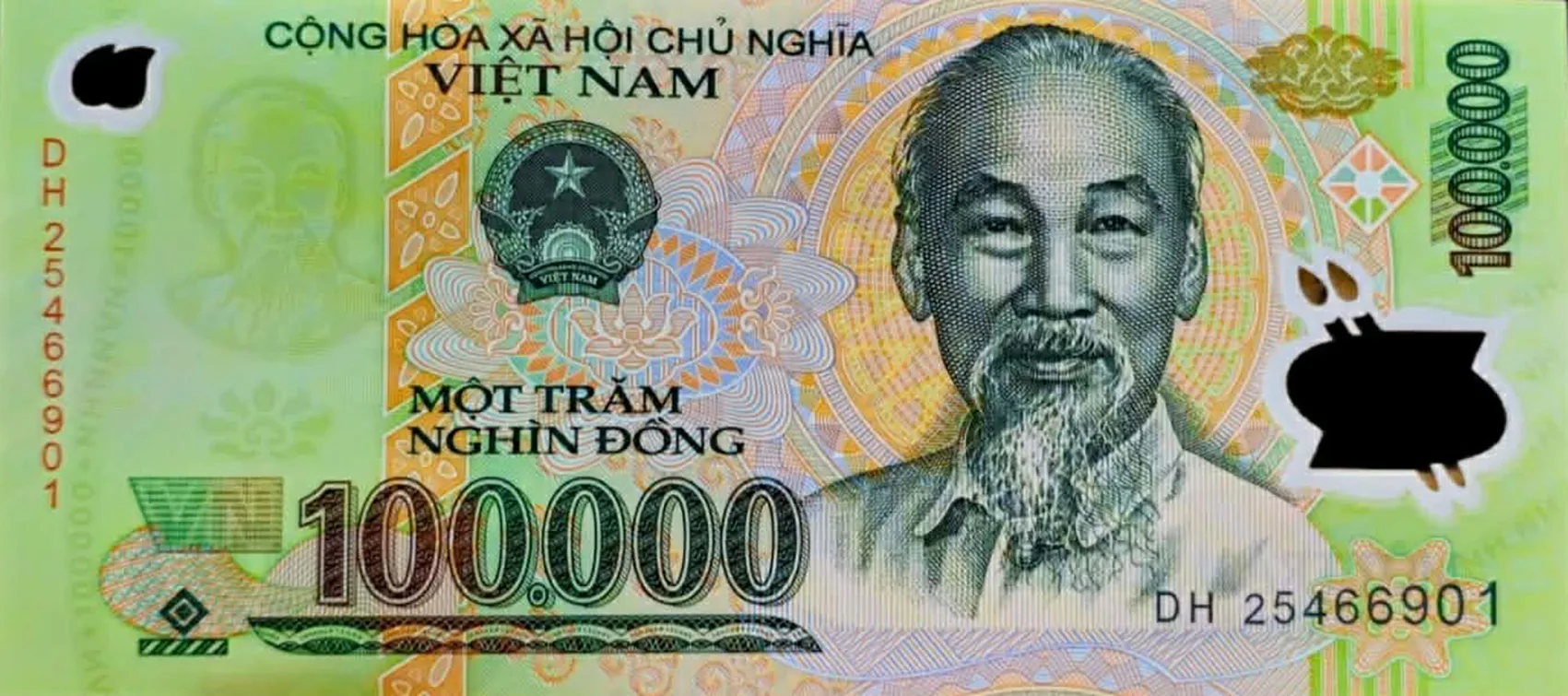
Vietnam uses the Vietnamese Dong (VND).
£1 ≈ ₫32,233.5 · indicative mid-market rate, possibly a few days old

Carry small dong notes
Cash in Vietnamese dong is still standard for street food, markets and small shops. Watch out for the 20,000 and 500,000 notes, which are a similar blue shade.

Cards work in cities
Visa and Mastercard are widely accepted at hotels, restaurants and shops in larger cities, and contactless payment is increasingly common.

Use bank ATMs and plan withdrawals
International cards work at ATMs nationwide, but local banks cap withdrawals lower than international ones. Withdraw extra cash before heading to rural areas with fewer ATMs.
| Month | High, °C | Low, °C | Rain, mm |
|---|---|---|---|
| January | 20.3 | 10.6 | 31.9 |
| February | 23.4 | 13 | 21.8 |
| March | 26.6 | 16.2 | 49 |
| April · best | 30.4 | 19.9 | 77.7 |
| May · best | 31.8 | 23.3 | 178.9 |
| June | 31.9 | 25 | 201.3 |
| July | 31.7 | 25 | 299.8 |
| August | 31 | 24.8 | 321.8 |
| September · best | 30.2 | 23.2 | 222.9 |
| October · best | 27.7 | 19.8 | 124 |
| November · best | 24.7 | 15.8 | 52.2 |
| December | 20.8 | 11.2 | 25.1 |
Monthly averages. Source: NASA POWER climatology, 2001-2020.
April · ideal
The best window runs April, May, September, October and November.
High 30.4°CLow 19.9°CRain 77.7 mm
Sweet spot: Hanoi has a cool, misty winter from December to March, a hot and humid rainy season from June to August, and its most comfortable weather in spring (April to June) and autumn (September to November).
London
--:--:--
Hanoi
--:--:--
₫500,000(£15.51)
Restaurants
Not part of Vietnamese custom, but appreciated, especially if service isn't already included.
0–10%
on a ₫500,000 bill: ₫0 · £0
Hotel porters and housekeeping
Per bag or per day, more common at higher-end hotels.
₫10,000–₫50,000
£0.31–£1.55
Taxis and ride-hailing
Rounding up the fare is common but not expected.
No tip expected
Private tour guides and drivers
Per day, more for multi-day tours.
₫50,000–₫150,000
£1.55–£4.65
Spas and salons
Increasingly expected in tourist areas.
5–10%
on a ₫500,000 bill: ₫25,000 · £0.78
Local SIM
RecommendedAirport arrival counters or shops of Viettel, Mobifone or Vinaphone in any city Usually the cheapest option, with wide 4G/5G coverage even outside major cities. Bring your passport to register the SIM.
eSIM
Online, before you travel, from an eSIM provider or your phone's own eSIM store Convenient if your phone supports eSIM, since you can activate it before landing without swapping a physical SIM.
Roaming
Activated through your home mobile provider before departure The simplest option but usually the most expensive; check your provider's Vietnam rates before you rely on it.

Get your Vietnam visa in about ten business days, without the portal headaches
Upload a phone photo and your passport, we check them against every rule above, submit, and send your approval to your inbox. From £43 all-in.