


Kenya Visa for Egyptian Citizens: Visa-Free Entry Rules
- No visa needed
- Verified
Plusvisa is a private visa application service, not a government agency or embassy. Official government source: Kenya Electronic Travel Authorisation (eTA), etakenya.go.ke.

Stay limit
60 days per visit
Set by Kenya's exemption list

Passport
6 months, 1 blank page
Per Kenya's official eTA page

Yellow fever
Only from a risk country
Travellers over one year old
One route into Kenya
Most people
Visa-free entry
Egypt is on Kenya's list of exempt nationalities for up to 60 days. No eTA or visa is needed for a typical tourist trip. Immigration officers still decide entry at the port.
How long you may stay
Egyptian citizens may stay in Kenya for up to 60 days per visit without a visa or eTA. The limit comes from Kenya's exemption list.

60 days per visit: Egypt is on the list for stays not exceeding 60 days. A visit longer than that needs another route.

Longer stays: The official eTA site publishes no online extension. Contact Kenya's Department of Immigration Services (immigration.go.ke) before your 60 days end.

Exemption is not a guarantee: Admissibility is decided by an immigration officer at the port of entry. Carry proof of your travel plans.

Overstays: The official sources do not publish a fixed overstay penalty. Resolve any overstay with the Department of Immigration Services before you leave.
Your document checklist
Six things to have ready before you start your application, as an Egyptian applicant.

Valid passport
Six months' validity from arrival and at least one blank page, as set on Kenya's official eTA page.

Travel itinerary
Arrival and departure dates and flight details. Kenya's official eTA page lists it among the required documents.

Accommodation proof
A hotel booking confirmation, or a host's invitation if staying with friends or family. Listed as required on Kenya's official eTA page.
Customs declaration (Form F88)
Complete before the customs desk. Declare goods, currency over the set threshold and restricted items.
Only for some visa types

Invitation or supporting letter
Only if Business, family, medical, conference, employment or diplomatic travel. Business: company invitation letter and company registration copy. Family: host's invitation and host's ID. Medical, conference or employment: matching letter.Yellow fever certificate
Only if Arrival from a yellow fever risk country. A valid vaccination certificate, for travellers over one year old arriving from a country with yellow fever risk.
Questions Egyptian travellers actually ask
No, for a stay of up to 60 days per visit. Egypt is on Kenya's exemption list, so no eTA or visa is needed for that stay.
The 60 days is the limit for a visit under the exemption. The official eTA site publishes no online extension. Contact Kenya's Department of Immigration Services (immigration.go.ke) before your 60 days end.
No. For a stay of up to 60 days you are on the exemption list and do not apply for an eTA. Official eTA fees apply only to travellers who must apply.
No. An immigration officer makes the final decision at the port of entry. Carry proof of your travel plans, such as your flight details and where you will stay.
Travellers over one year old arriving from a country with yellow fever risk must show a valid vaccination certificate. Check the rule before you fly if you have been in such a country.
Yes. All arriving passengers complete Kenya's customs declaration form (Form F88) before the customs desk. It covers goods, currency over the set threshold and restricted items.
Passengers in transit who stay within the airport precincts and leave on the same aircraft are on the exemption list. They do not need an eTA for that transit.
No. The 60-day exemption is for visits. Work and study need the right permit. Holders of valid Kenya work permits and passes are on a separate exemption list. Check with the Department of Immigration Services before you travel.

Visa sorted
The things that make the first
48 hours easy, compared with home
Your Egyptian plug won't fit. Here's what will.
Type G
Three flat pins · 13 A
Type G
Kenya uses type G sockets and your plugs are type C and F. A C-to-G adapter works for the whole trip.
Voltage
240 V · 50 Hz
Against 220 V · 50 Hz at home. Check the label on chargers and appliances: anything marked 100–240 V, 50/60 Hz works in both.

Pack: one type G adapter and a small power strip — hotel rooms rarely have more than two sockets.
Kenya drives on the left — the opposite of home
Compare traffic side:
Kenya · left-hand traffic — the opposite of Egypt

Getting around
Nairobi and Mombasa have taxis and ride-hailing apps; matatus run widely but get crowded. Safaris are usually done with a driver-guide or domestic flight, not self-drive.

Health
Malaria risk exists outside Nairobi's centre and the highlands, so antimalarial medication and mosquito protection are worth arranging. Drink bottled or treated water.

Customs and etiquette
A handshake and friendly greeting matter. Dress modestly away from beach resorts, ask before photographing people, and avoid public displays of affection.
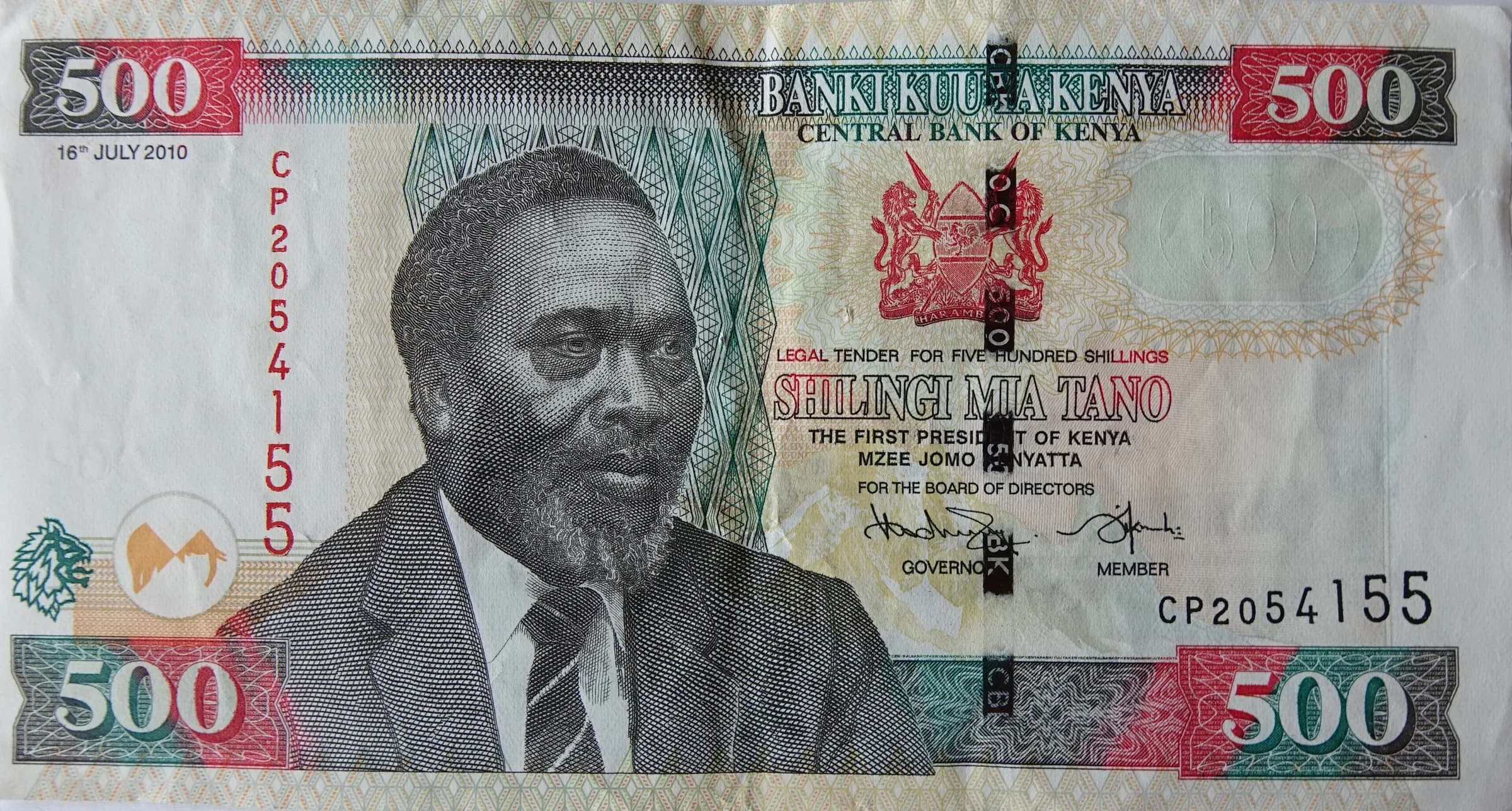
Kenyan Shillings, cash and cards
Kenya uses the Kenyan Shilling (KES).
E£1 ≈ KES2.7 · indicative mid-market rate, possibly a few days old

Cards work in cities
Hotels, larger shops and restaurants in Nairobi, Mombasa and tourist lodges take cards, but smaller shops, markets and matatus expect cash in Kenyan shillings.

M-Pesa is everywhere
Mobile money (M-Pesa) is widely used by locals for payments. Visitors can sometimes use it too once they have a local SIM, though cash still works everywhere.

ATMs in towns
ATMs are common in cities and larger towns but scarce in rural and safari areas, so withdraw shillings before heading out of town.
Weather by month (Nairobi)
- Daytime high
- Grey row = night low
- Best time to go
- Daytime high
- Grey row = night low
- Best time to go
| Month | High, °C | Low, °C | Rain, mm |
|---|---|---|---|
| January · best | 27.3 | 13.7 | 39.4 |
| February · best | 28.8 | 14.1 | 29.1 |
| March | 28.5 | 14.7 | 64.2 |
| April | 26.5 | 14.6 | 114 |
| May | 25.3 | 13.4 | 72.5 |
| June · best | 25.1 | 12.4 | 25.2 |
| July · best | 25.5 | 11.9 | 16.4 |
| August · best | 26.3 | 12.1 | 21.7 |
| September · best | 27.8 | 12.9 | 20.4 |
| October | 28 | 13.7 | 53.3 |
| November | 26 | 14.3 | 80.7 |
| December | 25.9 | 14 | 65.1 |
Monthly averages. Source: NASA POWER climatology, 2001-2020.
January · ideal
The best window runs January, February, June, July, August and September.
High 27.3°CLow 13.7°CRain 39.4 mm
Sweet spot: Nairobi has a mild highland climate year round. January, February, June, July, August and September are the driest months, good for travel. Long rains fall from March to May and shorter rains in November, with cooler, cloudier days during both wet seasons.
One time zone
Cairo
--:--:--
Nairobi
--:--:--
How much to tip, in EGP
KES 40(E£14.95)
Restaurant bill
Check if a service charge is already added
5–10%
on a KES 40 bill: KES 2 · E£0.75
Safari guide or driver
Per guide, per day
KES 1,000–KES 2,000
E£373.79–E£747.57
Hotel porter
Per bag
KES 100–KES 200
E£37.38–E£74.76
Taxi driver
Rounding up the fare is common but not expected
No tip expected
SIM, eSIM or roaming?
Local SIM
RecommendedLocal SIM card
≈ E£373.79KES 1,000
Safaricom or Airtel counters at the airport or in town, with passport shown for registration Price varies with the data bundle chosen
eSIM
Travel eSIM
≈ E£485.44US$10
Installed online before departure from an eSIM provider Convenient but usually pricier per GB than a local SIM
Roaming
Roaming from home
Activated through the traveller's home network before departure Usually the most expensive option; check rates with the home carrier first