

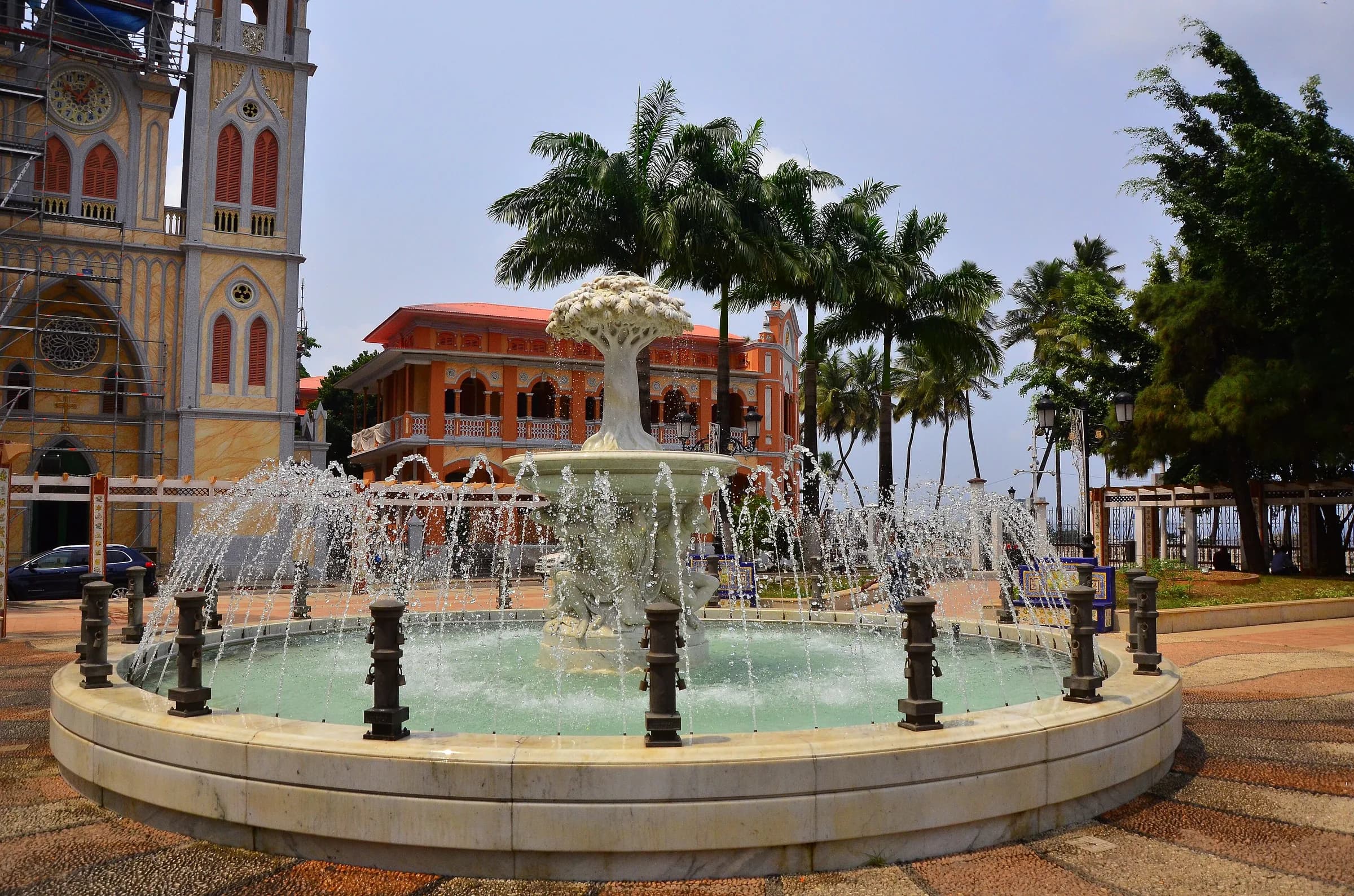
Equatorial Guinea Visa: Requirements and e-Visa Guide
Equatorial Guinea has run an e-visa system since July 2023, open to almost every nationality. A short list of passports, including Barbados, Tunisia, Turkey, the UAE and CEMAC nationals with a national ID or biometric passport, can enter without a visa. Everyone else applies online, and e-visa holders must arrive through Malabo International Airport.
- Verified
Plusvisa is a private visa application service, not a government agency or embassy. Official government source: Equatorial Guinea eVisa Portal, equatorialguinea-evisa.com.
Do you need a visa for Equatorial Guinea?
Most passports fall into the e-visa group. A short named list enters without any visa.
Which passport will you travel on?
Your route
Pick a passport
We will show the route Equatorial Guinea puts you on, the government fee for each visa type, and the guide written for your nationality.
The two routes
- e-Visa eligible
e-Visa eligible
Travellers of any nationality not on the visa-exempt list apply online before flying. The e-visa is issued by the Ministry of Foreign Affairs and used to enter through Malabo International Airport.
- Visa-free
Visa-free entry
Citizens of Barbados, Tunisia, Turkey and the UAE enter visa-free for a set number of days. CEMAC nationals (Cameroon, CAR, Chad, Congo, Gabon) enter with a national ID or biometric passport. Some diplomatic passports are also exempt.
How Equatorial Guinea visa fees work

Set by the government. The e-visa fee is a fixed government charge collected through the official online portal, in US dollars, for applicants of every nationality.

No published seasonal rates. No official source mentions seasonal or reciprocal fee variations for the e-visa; the published fee appears to be the same for all applicants.

Paid online only. Payment is made through the e-visa portal itself as part of the application. We could not confirm which card schemes or other methods it accepts.

Refunds not confirmed. Official announcements do not state whether the fee is refundable if an application is refused. Treat it as non-refundable unless the portal says otherwise.

No confirmed express option. No official source describes a separate paid express or fast-track service for the e-visa.
What Plusvisa charges
The government fee is passed through at cost. Our service fee is on top, and every passport's page shows the total before you start.
If we make a mistake that leads to a refusal, we refund our fee and re-apply free.
See the total for my passportYour document checklist

Passport bio page scan
A clear colour scan or photo of the passport's data page. The passport should have enough remaining validity to cover the trip.

Passport-style digital photo
A recent photo of the applicant, uploaded as part of the online form.

Yellow fever vaccination certificate
Required for entry into Equatorial Guinea; carried on arrival rather than uploaded with the e-visa application.

Travel and accommodation details
Flight and accommodation information entered on the online application form.
Where the visa is accepted
The e-visa is tied to a single gateway.
- Malabo International Airport
Choose your port of arrival carefully
The application, step by step
Before you apply
- 1
Check if a visa is needed
Confirm your passport is not on the short visa-exempt list before starting an application.
- 2
Gather documents
Prepare a passport scan, a digital photo and your travel details. Arrange a yellow fever vaccination certificate, which is required for entry.
On the official portal
- 3
Register an account
Create an account on the official e-visa portal.
- 4
Complete the form and upload documents
Enter personal and travel details and upload the required files.
- 5
Pay the fee online
Pay the processing fee through the portal's online payment option.
After you apply
- 6
Wait for the decision
The Ministry of Foreign Affairs reviews the application and sends the outcome by email.
- 7
Download and carry the e-visa
Print or save the approved e-visa and present it, with your passport, when boarding and on arrival at Malabo International Airport.
Official website: equatorialguinea-evisa.com (opens in a new tab)
One thing to have before you fly
Besides the visa itself, there is one health document travellers should carry.
- 1
Yellow fever certificate
A valid yellow fever vaccination certificate is required for entry into Equatorial Guinea. Carry the physical or digital certificate and be ready to show it on arrival. Official page (opens in a new tab)
The only official website, and how to check status
This is the only official channel for the Equatorial Guinea e-visa, launched by the Ministry of Foreign Affairs with VFS Global as technical partner. Any other site offering to apply on your behalf is a private, unaffiliated service.
equatorialguinea-evisa.com (opens in a new tab)Equatorial Guinea eVisa PortalChecking your status
Applicants can log back into their account on the portal to track the status of a submitted application.
Why Equatorial Guinea visas get rejected
Almost every refusal is a file problem, not a judgement about you.
Passport not valid for the trip
A passport that is damaged, expired, or close to expiry can lead to refusal.
Incomplete or unclear uploads
Blurry scans, cropped pages or missing documents are a common cause of rejection.

Mismatched details
Information on the form that does not match the passport or travel documents can delay or stop approval.

Missing travel details
An application without credible onward travel or accommodation details may be refused.
Sockets and power in Equatorial Guinea
Type C
Two round pins · 2.5 A
Type E
Two round pins · 16 A
Type C
Equatorial Guinea uses type C and E sockets. If your own plugs are a different type, one type C adapter covers the whole trip.
Voltage
220 V · 50 Hz
Check the label on chargers and appliances: anything marked 100–240 V, 50/60 Hz works here with only an adapter, no converter.
Pack: a type C adapter unless your own plugs already match, and a small power strip — hotel rooms rarely have more than two sockets.
Equatorial Guinea drives on the right
Traffic side:
Equatorial Guinea · right-hand traffic

Getting around
There is little organised public transport. Shared minibuses and motorcycle taxis are used by locals but not generally recommended for visitors. A hired car with a local driver is the common choice.

Health precautions
Malaria is widespread, so use repellent and cover up in the evenings. A yellow fever certificate is required for entry. Travel health insurance is strongly recommended, as hospital capacity is limited.

Food and water
Stick to bottled water and eat at hotels or better-quality restaurants, where food safety standards are more consistent.
Central African CFA Francs, cash and cards
Equatorial Guinea uses the Central African CFA Franc (XAF).

Carry some cash
ATMs do not always work reliably, so keep enough CFA francs on hand, especially outside Malabo.

Cards work in bigger venues
Hotels, better restaurants and larger shops generally accept card payments, but smaller businesses may not.

Exchange euros or dollars
Euros and US dollars can be exchanged at banks and hotels. The CFA franc is pegged to the euro, so its exchange rate against the euro is fixed.
Weather by month (Malabo)
- Daytime high
- Grey row = night low
- Best time to go
- Daytime high
- Grey row = night low
- Best time to go
| Month | High, °C | Low, °C | Rain, mm |
|---|---|---|---|
| January · best | 28.3 | 26.9 | 30.4 |
| February · best | 28.4 | 27.4 | 73.5 |
| March | 28.6 | 27.7 | 148.2 |
| April | 28.6 | 27.7 | 189.6 |
| May | 28.3 | 27.4 | 202.1 |
| June | 27.3 | 26.5 | 346.5 |
| July | 26.4 | 25.6 | 424.4 |
| August | 26 | 25.3 | 479.9 |
| September | 26.3 | 25.6 | 409.5 |
| October | 26.9 | 26.1 | 256.7 |
| November | 27.5 | 26.6 | 150.3 |
| December · best | 28 | 26.9 | 25.7 |
Monthly averages. Source: NASA POWER climatology, 2001-2020.
January · ideal
The best window runs January, February and December.
High 28.3°CLow 26.9°CRain 30.4 mm
Sweet spot: Malabo has a hot, humid, equatorial climate all year. Rain falls in most months, heaviest from around June to October, while December to February is comparatively drier and is the most comfortable window for a visit.
Tipping in Equatorial Guinea
FCFA 2,000
Restaurant bill
Check whether a service charge is already included.
5–10%
on a FCFA 2,000 bill: FCFA 100
Hotel porter
Per bag, in CFA francs.
FCFA 500–FCFA 1,000
Taxi driver
Not expected; agree the fare in advance instead.
No tip expected
Tour guide or driver
Per day, depending on service.
FCFA 2,000–FCFA 5,000
SIM, eSIM or roaming?
Local SIM
RecommendedLocal SIM card
Mobile operator shops and kiosks in Malabo and other towns Bring your passport to register a SIM. Coverage is best in Malabo and other main towns.
eSIM
Travel eSIM
International eSIM providers' apps or websites, bought before departure Convenient if your phone supports eSIM and local coverage from the provider is confirmed.
Roaming
Roaming from home
Your home mobile operator Usually the most expensive option; check your operator's rates for Equatorial Guinea before travel.
If it's your first time: three you shouldn't skip
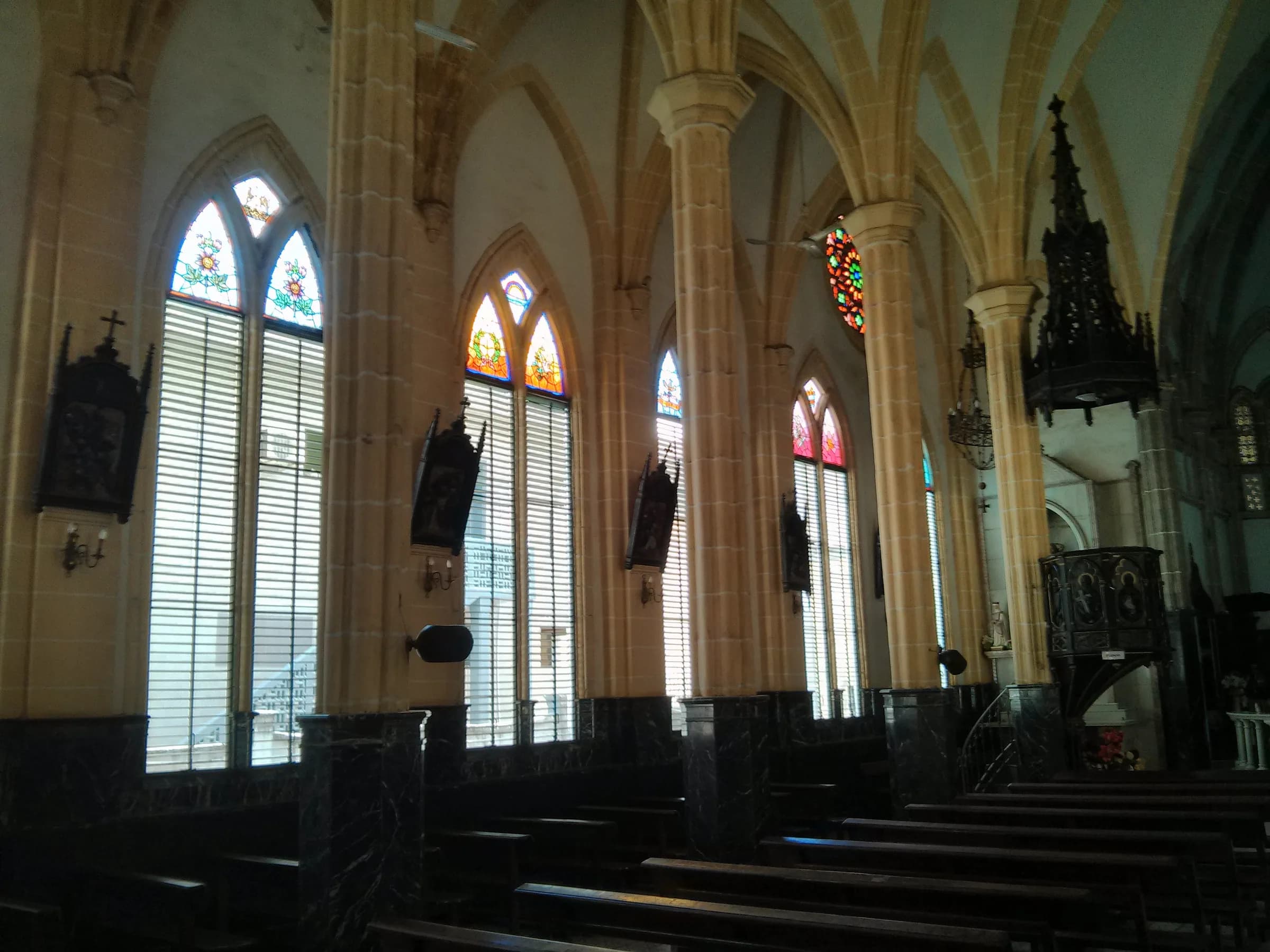
Malabo
Malabo old town
Spanish colonial buildings, the Catedral de Santa Isabel and the seafront Malecón make up the capital's historic core.
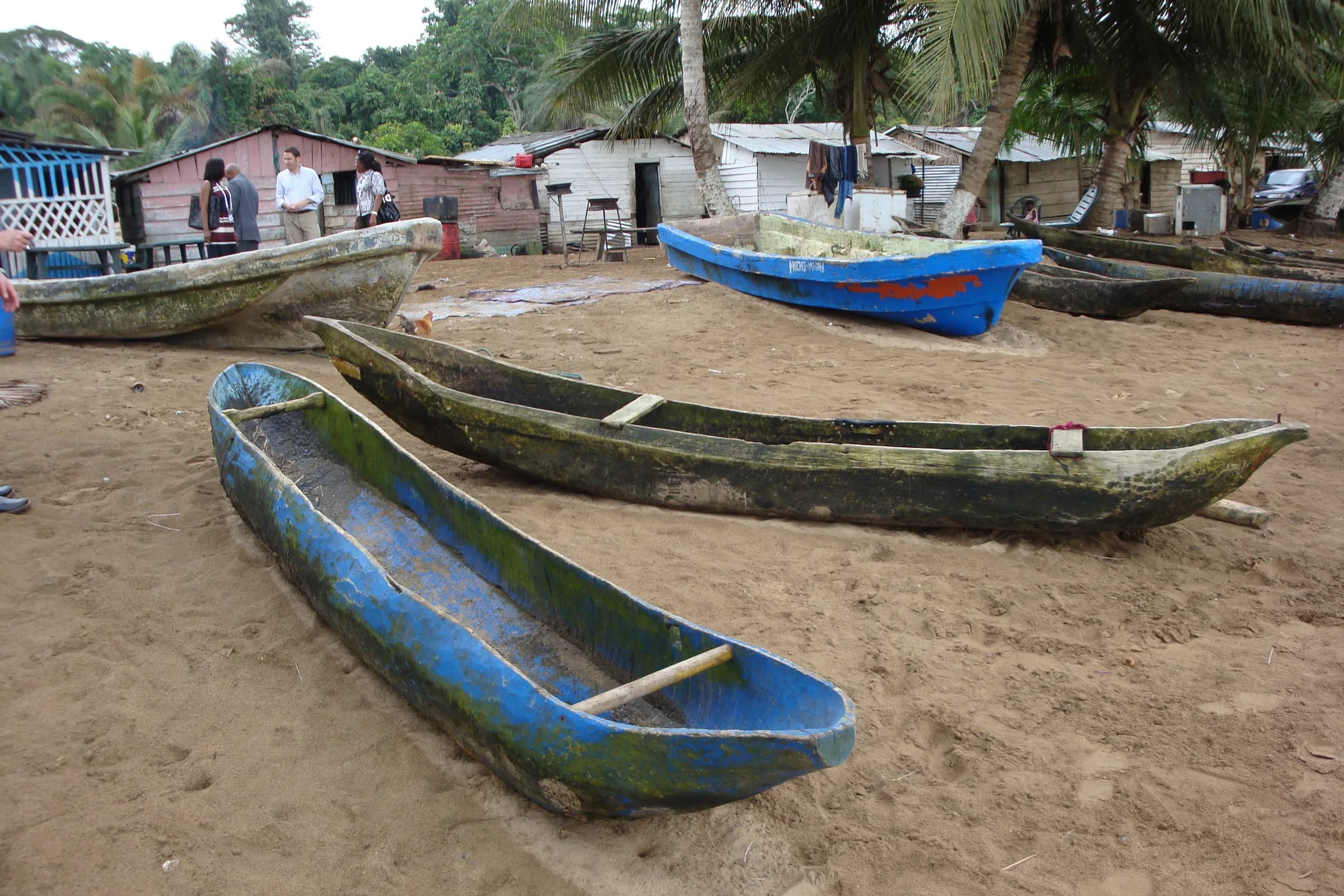
Bioko Island
Arena Blanca and Moka
A white sand beach near Luba and the cool highland village of Moka showcase Bioko Island's coast and rainforest.
Río Muni (mainland)
Monte Alen National Park
A rainforest reserve on the mainland known for gorillas, forest elephants and birdlife.
Questions everyone asks about Equatorial Guinea visas
Most travellers do. Unless your passport is on the short visa-exempt list, you need an e-visa before you fly, applied for through the official online portal.
No. Equatorial Guinea does not offer a visa on arrival. Travellers who need a visa must have it approved before departure.
e-visa holders must arrive through Malabo International Airport.
Citizens of Barbados, Tunisia, Turkey and the UAE can enter visa-free for a set number of days. CEMAC nationals can enter with a national ID or biometric passport, and some diplomatic or service passport holders are also exempt.
Yes. A valid yellow fever vaccination certificate is required for entry into Equatorial Guinea, separate from the visa itself.
The visa page on this site shows the processing time from the official catalog. Apply well before your trip to allow time to fix any document issues.
No official source currently describes a process for extending a stay in Equatorial Guinea.
Only through the official government portal. Other websites offering to apply on your behalf are private services, not the government itself.
Now read the one written for your passport
Each guide has the fee for that passport, its maximum stay, the rules that apply only to it, and the application itself.
Uzbekistan
Route, fee and documents for this passport
United Kingdom
Route, fee and documents for this passport
United Arab Emirates
Route, fee and documents for this passport
Türkiye
Route, fee and documents for this passport
Tajikistan
Route, fee and documents for this passport
Spain
Route, fee and documents for this passport
Saudi Arabia
Route, fee and documents for this passport
Russia
Route, fee and documents for this passport
Qatar
Route, fee and documents for this passport
Portugal
Route, fee and documents for this passport
Oman
Route, fee and documents for this passport
Nigeria
Route, fee and documents for this passport
Morocco
Route, fee and documents for this passport
Lebanon
Route, fee and documents for this passport
Kyrgyzstan
Route, fee and documents for this passport
Kuwait
Route, fee and documents for this passport
Kazakhstan
Route, fee and documents for this passport
Jordan
Route, fee and documents for this passport
Italy
Route, fee and documents for this passport
India
Route, fee and documents for this passport
Ghana
Route, fee and documents for this passport
Germany
Route, fee and documents for this passport
Georgia
Route, fee and documents for this passport
France
Route, fee and documents for this passport
Egypt
Route, fee and documents for this passport
China
Route, fee and documents for this passport
Brazil
Route, fee and documents for this passport
Bahrain
Route, fee and documents for this passport
Azerbaijan
Route, fee and documents for this passport
Every other passport →
Pick your passport for your route, your fee and your documents.