

Canada Visa Guide: eTA, Visitor Visa and Entry Rules
Most visa-exempt passports can get an Electronic Travel Authorization (eTA) online before flying to Canada. United States citizens and lawful permanent residents travel without a visa or an eTA. Everyone else needs a visitor visa from a Canadian visa office before they travel, by any mode of transport.
- e-Visa for 243 passports
- Government fee from $6
- Verified
Plusvisa is a private visa application service, not a government agency or embassy. Official government source: Immigration, Refugees and Citizenship Canada (IRCC), canada.ca.
Do you need a visa for Canada?
Which route applies depends on your passport and, for some passports, how you arrive.
Which passport will you travel on?
Your route
Pick a passport
We will show the route Canada puts you on, the government fee for each visa type, and the guide written for your nationality.
The three routes
- e-Visa eligible
243 passports
About 50 visa-exempt countries, including the EU, EFTA states, the UK, Australia, Japan and South Korea, use an eTA by air. Some otherwise visa-required countries, like Mexico, Brazil and Thailand, can also use it if conditions are met.
- Visa-free
No visa or eTA
United States citizens and US lawful permanent residents do not need a visa or an eTA. They travel with a valid passport, and permanent residents also carry proof of their US status.
- Embassy visa only
Visitor visa required
Most other nationalities, across Asia, Africa, the Middle East and Latin America, need a visitor visa from IRCC before travelling, whatever their transport, unless they qualify for the eTA-by-air exception above.
Government fees by passport
| Passport | Standard Processing | Super Urgent Processing | Urgent Processing | Guide |
|---|---|---|---|---|
| United Kingdom | $6 | $6 | $6 | Read guide |
| United States | — | — | — | — |
| Canada | — | — | — | — |
| Australia | $6 | $6 | $6 | Read guide |
| Ireland | $6 | $6 | $6 | Read guide |
| Germany | $6 | $6 | $6 | Read guide |
| Sweden | $6 | $6 | $6 | Read guide |
| Norway | $6 | $6 | $6 | Read guide |
| Denmark | $6 | $6 | $6 | Read guide |
| Belgium | $6 | $6 | $6 | Read guide |
| Singapore | $6 | $6 | $6 | Read guide |
| Switzerland | $6 | $6 | $6 | Read guide |
| Spain | $6 | $6 | $6 | Read guide |
| Portugal | $6 | $6 | $6 | Read guide |
| New Zealand | $6 | $6 | $6 | Read guide |
| Mexico | $6 | $6 | $6 | Read guide |
| Israel | $6 | $6 | $6 | Read guide |
| Hong Kong | $6 | $6 | $6 | Read guide |
| Austria | $6 | $6 | $6 | Read guide |
| Taiwan | — | — | — | Read guide |
| South Korea | $6 | $6 | $6 | Read guide |
| Philippines | — | — | — | Read guide |
| Netherlands | $6 | $6 | $6 | Read guide |
| Japan | $6 | $6 | $6 | Read guide |
| Italy | $6 | $6 | $6 | Read guide |
| France | $6 | $6 | $6 | Read guide |
| Finland | $6 | $6 | $6 | Read guide |
| Brazil | $6 | $6 | $6 | Read guide |
Which Canada visa exists, and what it allows
| e-Visa | Options | Processing | Usual government fee |
|---|---|---|---|
| Standard ProcessingeVisa · 243 passports |
| 2–3 business days | $6 |
| Super Urgent ProcessingeVisa · 243 passports |
| 12 hours | $6 |
| Urgent ProcessingeVisa · 243 passports |
| 1 business day | $6 |
How Canada visa fees work

Set in Canadian dollars. IRCC sets the eTA and visitor visa fees in Canadian dollars. Every applicant pays the same amount for the same product, whatever their nationality.

No seasonal rates. Fees do not change with the season or with how far ahead you apply.

Separate biometrics fee. Most visitor-visa applicants aged 14 to 79 also pay a biometrics fee for their fingerprints and photo, on top of the processing fee. Some applicants are exempt.

Limited refunds. IRCC refunds a fee only in specific situations it sets, such as a payment made in error. Refunds are not automatic once an application has been processed.

No express service. IRCC does not sell a paid option to speed up the decision on a visa or an eTA.
What Plusvisa charges
The government fee is passed through at cost. Our service fee is on top, and every passport's page shows the total before you start.
If we make a mistake that leads to a refusal, we refund our fee and re-apply free.
See the total for my passportYour document checklist

Passport or travel document
A clear colour scan of the photo page. No fixed minimum validity is set, but most visa offices expect 6 months left on it. An eTA expires when the passport used for it expires.
Only for some travellers

Proof of funds
Only if Visitor visa applicants. Bank statements covering at least 6 months, showing your name, address and account balance, to show you can support yourself during the visit.Employer letter
Only if Visitor visa applicants showing ties to home-country employment. On company letterhead, dated within 3 months, confirming your job, start date, salary and manager's contact details.Letter of invitation
Only if Applicants visiting family, friends or a business contact. From the person, business or event in Canada inviting you, explaining the purpose and length of the visit.Travel history
Only if Recommended for visitor visa applicants, if available. Copies of earlier passports or visas, entry and exit stamps, or study and work permits from the last 10 years.Consent letter for minors
Only if Minors travelling without both parents or legal guardians. Signed by any parent or legal guardian not travelling, with their full name, address and phone number, ideally notarised.Biometrics (fingerprints and photo)
Only if Most visitor-visa applicants aged 14 to 79. Given in person at a visa application centre after you apply; valid for 10 years.
Not eligible for any e-Visa
The application, step by step
Before you apply
- 1
Check which route you need
Use the official tool to see whether your passport needs an eTA, a visitor visa, or neither.
- 2
Gather your documents
Prepare a digital copy of your passport and, for a visitor visa, proof of funds, ties to home and an invitation letter if relevant.
On the official portal
- 3
Apply online
Complete the eTA form, or create an IRCC secure account to apply for a visitor visa, and pay the fee by credit or debit card.
- 4
Give biometrics if asked
Most first-time visitor-visa applicants aged 14 to 79 must also book an appointment to give fingerprints and a photo.
After you apply
- 5
Wait for a decision
Most eTAs are approved within minutes; a visitor visa usually takes a few weeks. Check your application status online.
- 6
Travel with the right passport
Fly with the same passport you applied with. If you were issued a visitor visa, it is stamped into that passport before you travel.
An eTA or visa does not guarantee entry; a border officer decides at the airport or border.
Official website: canada.ca (opens in a new tab)
Three things to have before you fly
Besides an eTA or visa, everyone arriving in Canada completes a customs and immigration declaration.
- 1
Customs and immigration declaration
Arriving by air, submit it online with Advance Declaration up to 72 hours before landing, or complete it at an airport kiosk, eGate or on a paper Declaration Card handed out on board. Everyone arriving must complete one. Official page (opens in a new tab)
- 2
Verbal declaration by land
Arriving by land, a border services officer takes your declaration verbally at the first checkpoint; there is no separate form to fill in beforehand. Official page (opens in a new tab)
- 3
Consent letter for travelling minors
A child travelling without both parents or guardians should carry a signed consent letter, checked at the border alongside other documents. Official page (opens in a new tab)
The only official website, and how to check status
IRCC's own canada.ca pages are the only official place to apply for a Canadian eTA or visitor visa. Other websites that charge to submit an application or offer extra help are private services, not the government.
canada.ca (opens in a new tab)Immigration, Refugees and Citizenship Canada (IRCC)Checking your status
Use the eTA online status tool, or sign in to your IRCC secure account for a visitor visa, after you receive an acknowledgement of receipt. The Client Application Status tool is updated daily.
Why Canada e-Visas get rejected
Almost every refusal is a file problem, not a judgement about you.

Incomplete application
Missing documents or an incomplete form are a common reason applications are refused or delayed.
Not enough proof of ties home
Officers must be convinced you have a job, home, finances or family that will bring you back, and that you will leave Canada at the end of your visit.

Insufficient funds
You must show enough money for your stay, based on its length and whether you will stay in a hotel or with family or friends.

Criminal or security concerns
Past crimes, including impaired driving, security concerns, or links to organised crime, human rights violations or terrorism can make you inadmissible.

Medical reasons
A medical condition that could endanger public health or safety, or cause excessive demand on health or social services, can lead to refusal.

Misrepresentation
Giving false information, or leaving out information relevant to the decision, can result in refusal and a period of inadmissibility.
Past immigration non-compliance
Previously overstaying, working or studying without the right permit, or being removed from Canada can count against a new application.
Sockets and power in Canada
Type A
Two flat pins
Type B
Two flat pins · earthed
Type A
Canada uses type A and B sockets. If your own plugs are a different type, one type A adapter covers the whole trip.
Voltage
120 V · 60 Hz
Check the label on chargers and appliances: anything marked 100–240 V, 50/60 Hz works here with only an adapter, no converter.
Pack: a type A adapter unless your own plugs already match, and a small power strip — hotel rooms rarely have more than two sockets.
Canada drives on the right
Traffic side:
Canada · right-hand traffic

Distances are big
Canada is vast, so plan transport between cities by domestic flight, train or long-distance bus, and expect intercity drives to take many hours. Cities themselves have transit, taxis and ride-hailing.
Carry travel insurance
Visitors are not covered by Canada's public health system, and medical care can be expensive. Buy travel insurance that covers emergency care before you go.

Tipping and queuing are expected
Tipping in restaurants and bars is the norm, and queuing in order is taken seriously. Punctuality and polite, low-key manners are generally appreciated.
Canadian Dollars, cash and cards
Canada uses the Canadian Dollar (CAD).
$1 ≈ $1.4 · indicative mid-market rate, possibly a few days old

Cards are the default
Debit and credit cards, including contactless and tap payments, are accepted almost everywhere in Canada, from cafes to taxis.

ATMs are easy to find
ATMs are widely available at banks, airports and shopping areas. Your home bank may charge a foreign transaction or withdrawal fee on top of any local ATM fee.

Keep some cash for small amounts
A little Canadian cash is useful for small vendors, some markets and cash-only tips, especially outside big cities.
Weather by month (Ottawa)
- Daytime high
- Grey row = night low
- Best time to go
- Daytime high
- Grey row = night low
- Best time to go
| Month | High, °C | Low, °C | Rain, mm |
|---|---|---|---|
| January | -6.4 | -16.3 | 61.4 |
| February | -4.8 | -15.5 | 55.4 |
| March | 1.5 | -8.8 | 64.5 |
| April | 10.7 | -0.8 | 85.2 |
| May | 18.6 | 6.6 | 85.3 |
| June · best | 23.2 | 12.4 | 103.8 |
| July · best | 25.8 | 15.3 | 98.3 |
| August · best | 25.1 | 14.3 | 88 |
| September · best | 21.4 | 9.9 | 87.3 |
| October | 12.9 | 3.4 | 99.2 |
| November | 5.1 | -3 | 73.2 |
| December | -2.7 | -10.9 | 80.3 |
Monthly averages. Source: NASA POWER climatology, 2001-2020.
June · ideal
The best window runs June, July, August and September.
High 23.2°CLow 12.4°CRain 103.8 mm
Sweet spot: Ottawa has warm summers and very cold, snowy winters. Late spring through early autumn (June to September) is the most comfortable time to visit, with mild to warm days. Winter, from December to March, brings freezing temperatures and heavy snow.
Tipping in Canada
CA$20($14.60)
Restaurant bill
Often prompted on the card machine
15–20%
on a CA$20 bill: CA$3 · $2.19
Bar drink
Per drink
CA$1–CA$2
$0.73–$1.46
Taxi or rideshare
10–15%
on a CA$20 bill: CA$2 · $1.46
Hotel housekeeping
Per night
CA$2–CA$5
$1.46–$3.65
Hotel porter
Per bag
CA$2–CA$5
$1.46–$3.65
SIM, eSIM or roaming?
Local SIM
RecommendedLocal prepaid SIM
≈ $29.20CA$40
Carrier stores and kiosks at airports, such as Rogers, Bell, Telus or Freedom Mobile, and convenience stores Needs an unlocked phone; good value for longer stays
eSIM
Travel eSIM
≈ $20
Installed before you arrive via an eSIM provider's app or website Convenient if your phone supports eSIM and you want data as soon as you land
Roaming
Roaming on your home plan
Activated through your home mobile carrier before you travel Simplest option but usually the most expensive for heavy data use
If it's your first time: three you shouldn't skip
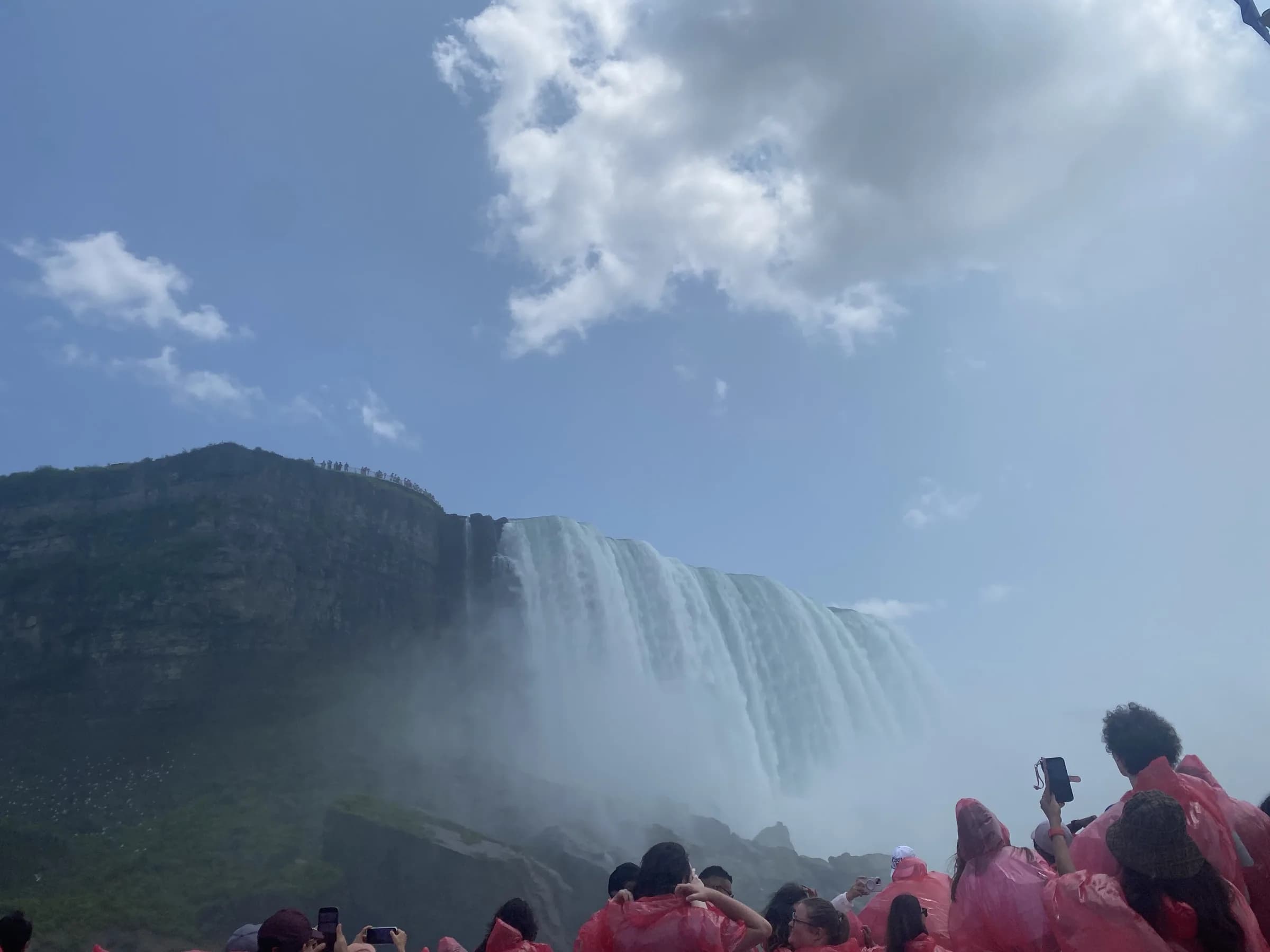
Niagara Falls, Ontario
Niagara Falls
One of the world's most famous waterfalls, with boat trips and viewpoints on the Canadian side.
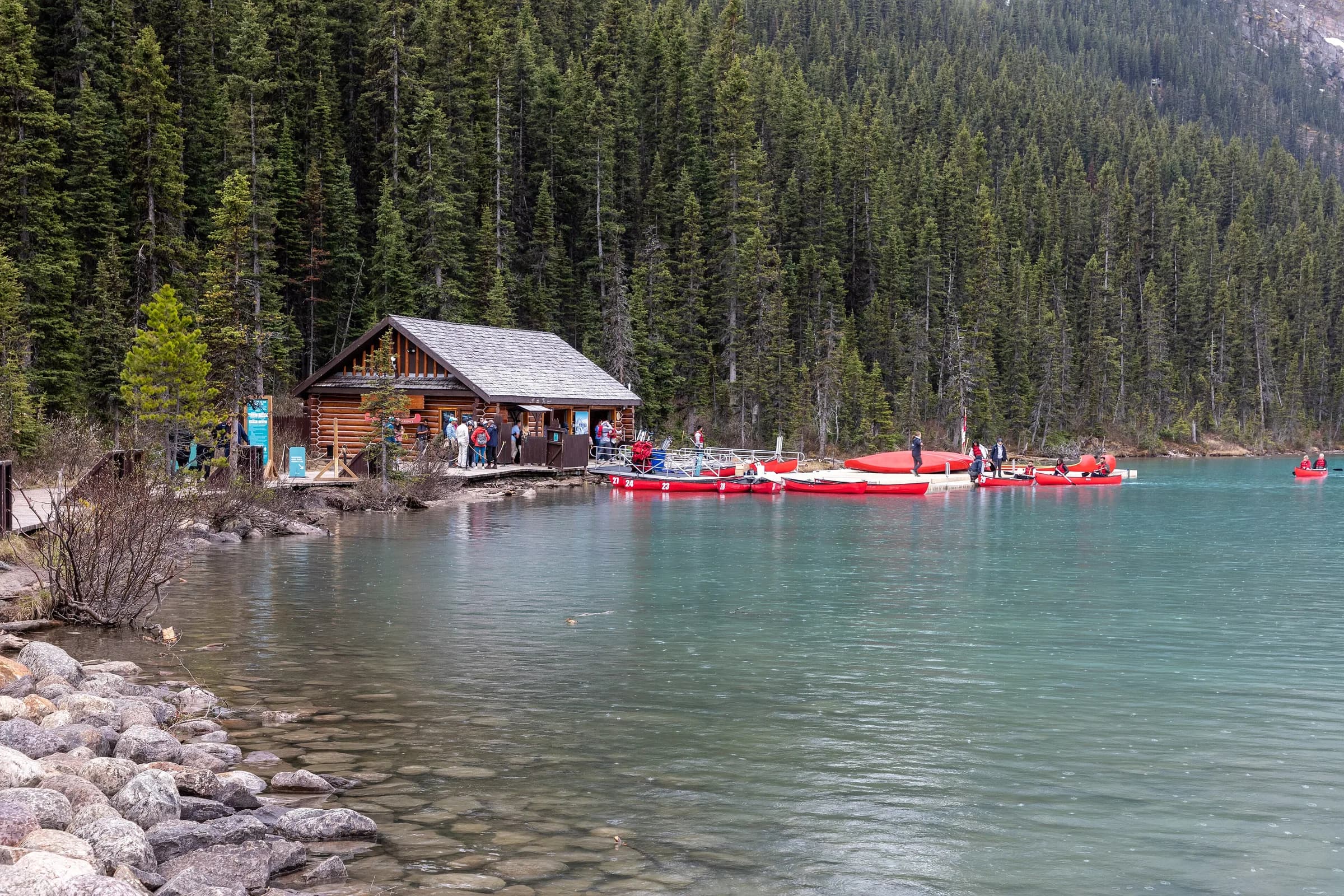
Banff, Alberta
Banff National Park
Turquoise lakes and Rocky Mountain peaks, Canada's oldest national park and a classic road-trip stop.
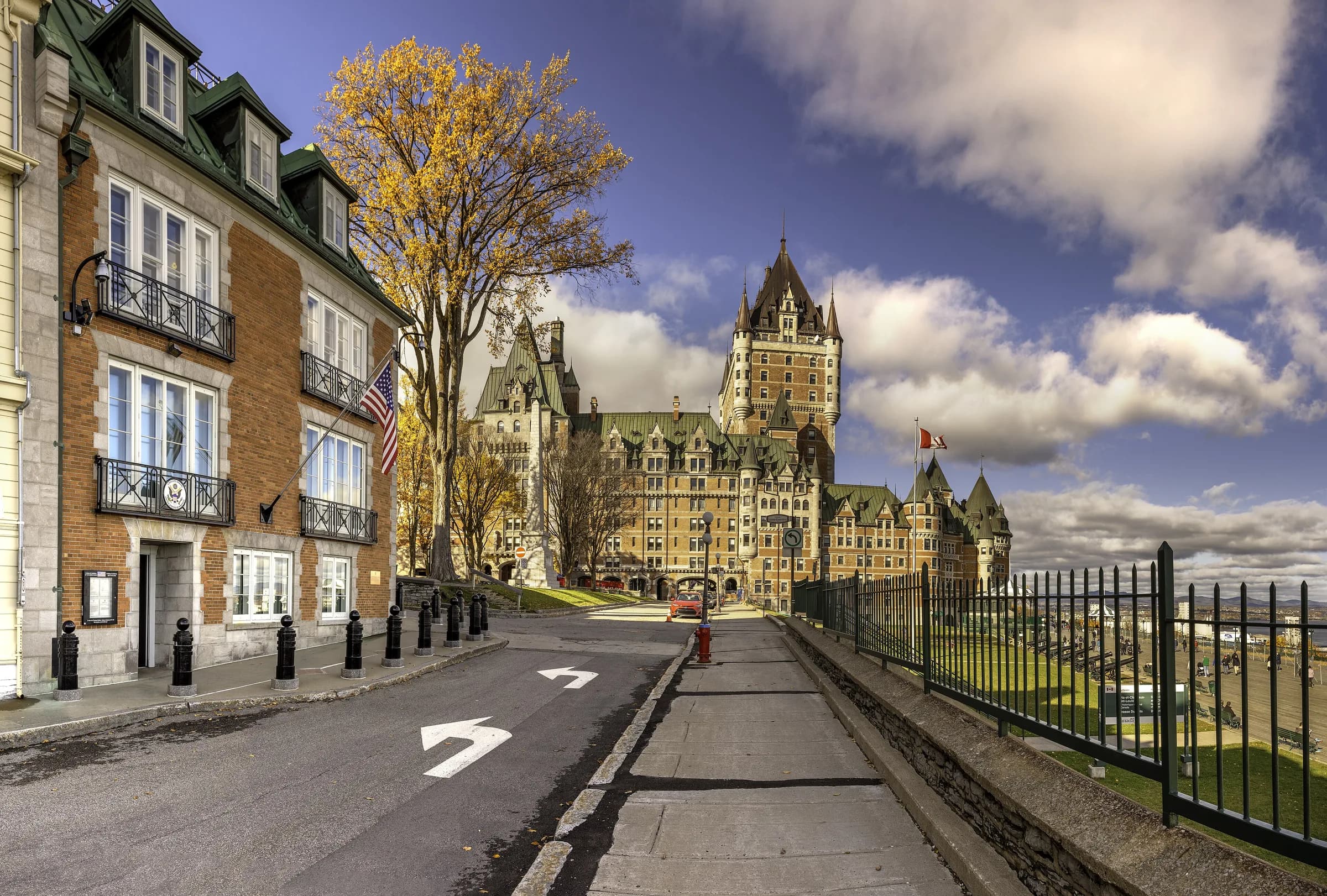
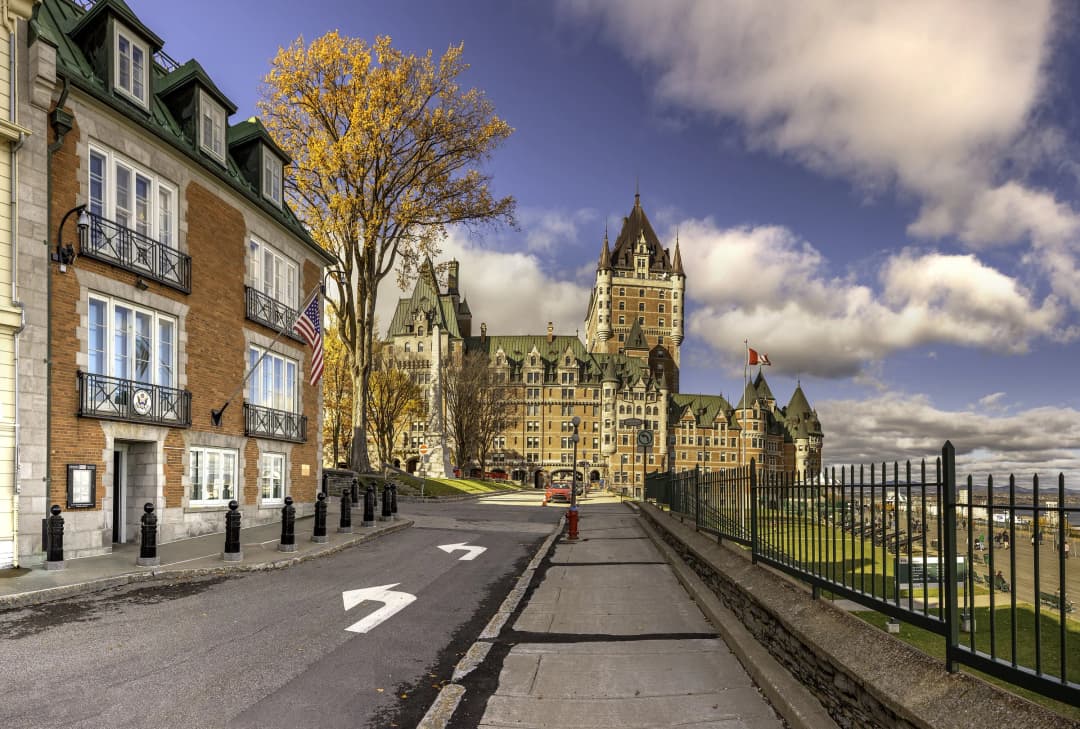
Quebec City
Old Quebec
A walled, cobblestoned old town with a French colonial feel, and a UNESCO World Heritage Site.
Questions everyone asks about Canada visas
It depends on your passport. Most visa-exempt nationals flying to Canada need an eTA. US citizens and permanent residents need neither. Everyone else needs a visitor visa, whatever their mode of transport.
No. The eTA only applies to visa-exempt travellers arriving by air. Travelling by land or sea, a valid passport is normally enough for visa-exempt nationals.
No. Canada does not issue any visa on arrival. You must get an eTA or a visitor visa before you travel, if your passport needs one.
A border officer decides at entry, usually up to 6 months, or until your passport or biometrics expire, whichever comes first, unless a different date is given.
Yes. You can apply online to extend your stay as a visitor before your current authorised period ends. Apply at least 30 days ahead if you can.
Everyone arriving in Canada completes a customs and immigration declaration, either in advance online or on arrival, whatever their visa status.
No. A border services officer makes the final decision at the airport or border, even if you hold a valid eTA or visa.
The only official application channel is IRCC's own canada.ca pages. Other sites that charge for the application are private services, not the government.
Now read the one written for your passport
Each guide has the fee for that passport, its maximum stay, the rules that apply only to it, and the application itself.
United Kingdom
Government fee from $6
Sweden
Government fee from $6
Norway
Government fee from $6
Denmark
Government fee from $6
Belgium
Government fee from $6
Singapore
Government fee from $6
Switzerland
Government fee from $6
Spain
Government fee from $6
Portugal
Government fee from $6
New Zealand
Government fee from $6
Mexico
Government fee from $6
Israel
Government fee from $6
Hong Kong
Government fee from $6
Germany
Government fee from $6
Austria
Government fee from $6
Australia
Government fee from $6
Taiwan
Route, fee and documents for this passport
South Korea
Government fee from $6
Philippines
Route, fee and documents for this passport
Netherlands
Government fee from $6
Japan
Government fee from $6
Italy
Government fee from $6
Ireland
Government fee from $6
France
Government fee from $6
Finland
Government fee from $6
Brazil
Government fee from $6
Every other passport →
Pick your passport for your route, your fee and your documents.
Canada visa for every other passport (219)
- Afghan citizens
- Aland-Islander citizens
- Albanian citizens
- Algerian citizens
- American-Samoan citizens
- Andorran citizens
- Angolan citizens
- Anguillan citizens
- Antiguan citizens
- Argentinian citizens
- Aruban citizens
- Azerbaijani citizens
- Bahamian citizens
- Bahraini citizens
- Bangladeshi citizens
- Barbadian citizens
- Belarusian citizens
- Belizean citizens
- Beninese citizens
- Bermudian citizens
- Bhutanese citizens
- Bolivian citizens
- Caribbean-Netherlands citizens
- Bosnian citizens
- Botswanan citizens
- Bouvet-Island citizens
- British-Indian-Ocean-Territory citizens
- Bruneian citizens
- Bulgarian citizens
- Burkinabe citizens
- Burundian citizens
- Cambodian citizens
- Cameroonian citizens
- Cape-Verdean citizens
- Caymanian citizens
- Central-African citizens
- Chadian citizens
- Chilean citizens
- Chinese citizens
- Christmas-Islander citizens
- Cocos-Islander citizens
- Colombian citizens
- Comoran citizens
- Congolese citizens
- Cook-Islander citizens
- Costa-Rican citizens
- Ivorian citizens
- Croatian citizens
- Cuban citizens
- Curacaoan citizens
- Cypriot citizens
- Czech citizens
- Djiboutian citizens
- Dominica citizens
- Dominican citizens
- DRC citizens
- Ecuadorian citizens
- Egyptian citizens
- Salvadoran citizens
- Equatoguinean citizens
- Eritrean citizens
- Estonian citizens
- Swazi citizens
- Ethiopian citizens
- Falkland-Islander citizens
- Faroese citizens
- Fijian citizens
- French-Guianese citizens
- French-Polynesian citizens
- French-Southern-Territories citizens
- Gabonese citizens
- Gambian citizens
- Georgian citizens
- Ghanaian citizens
- Gibraltarian citizens
- Greek citizens
- Greenlandic citizens
- Grenadian citizens
- Guadeloupean citizens
- Guamanian citizens
- Guatemalan citizens
- Guernsey citizens
- Guinean citizens
- Bissau-Guinean citizens
- Guyanese citizens
- Heard-And-Mcdonald-Islands citizens
- Vatican citizens
- Honduran citizens
- Hungarian citizens
- Icelandic citizens
- Indian citizens
- Indonesian citizens
- Iranian citizens
- Iraqi citizens
- Manx citizens
- Jamaican citizens
- Jersey citizens
- Jordanian citizens
- Kazakh citizens
- Kenyan citizens
- I-Kiribati citizens
- Kosovar citizens
- Kuwaiti citizens
- Kyrgyz citizens
- LAO citizens
- Latvian citizens
- Lebanese citizens
- Basotho citizens
- Liberian citizens
- Libyan citizens
- Liechtensteiner citizens
- Lithuanian citizens
- Luxembourgish citizens
- Macanese citizens
- Malagasy citizens
- Malawian citizens
- Malaysian citizens
- Maldivian citizens
- Malian citizens
- Maltese citizens
- Marshallese citizens
- Martinican citizens
- Mauritanian citizens
- Mauritian citizens
- Mayotte citizens
- Micronesian citizens
- Moldovan citizens
- Monegasque citizens
- Mongolian citizens
- Montenegrin citizens
- Montserratian citizens
- Moroccan citizens
- Mozambican citizens
- Burmese citizens
- Namibian citizens
- Nauruan citizens
- Nepali citizens
- New-Caledonian citizens
- Nicaraguan citizens
- Nigerien citizens
- Nigerian citizens
- Niuean citizens
- Norfolk-Islander citizens
- North-Korean citizens
- Macedonian citizens
- Northern-Mariana-Islander citizens
- Omani citizens
- Pakistani citizens
- Palauan citizens
- Palestinian citizens
- Panamanian citizens
- Papua-New-Guinean citizens
- Paraguayan citizens
- Peruvian citizens
- Pitcairn-Islander citizens
- Polish citizens
- Puerto-Rican citizens
- Qatari citizens
- Reunionese citizens
- Romanian citizens
- Russian citizens
- Rwandan citizens
- Saint-Barthelemy citizens
- Saint-Helenian citizens
- Kittitian citizens
- Saint-Lucian citizens
- Saint-Martin citizens
- Saint-Pierre-And-Miquelon citizens
- Vincentian citizens
- Samoan citizens
- Sammarinese citizens
- Santomean citizens
- Saudi citizens
- Senegalese citizens
- Serbian citizens
- Seychellois citizens
- Sierra-Leonean citizens
- Sint-Maarten citizens
- Slovak citizens
- Slovenian citizens
- Solomon-Islander citizens
- Somali citizens
- South-African citizens
- South-Georgia citizens
- South-Sudanese citizens
- Sri-Lankan citizens
- Sudanese citizens
- Surinamese citizens
- Svalbard citizens
- Syrian citizens
- Tajik citizens
- Tanzanian citizens
- Thai citizens
- Timorese citizens
- Togolese citizens
- Tokelauan citizens
- Tongan citizens
- Trinidadian citizens
- Tunisian citizens
- Turkish citizens
- Turkmen citizens
- Turks-And-Caicos-Islander citizens
- Tuvaluan citizens
- Ugandan citizens
- Ukrainian citizens
- Emirati citizens
- Us-Minor-Outlying-Islands citizens
- Uruguayan citizens
- Uzbek citizens
- Ni-Vanuatu citizens
- Venezuelan citizens
- Vietnamese citizens
- British-Virgin-Islander citizens
- Us-Virgin-Islander citizens
- Wallis-And-Futuna citizens
- Sahrawi citizens
- Yemeni citizens
- Zambian citizens
- Zimbabwean citizens