

 Table of contents
- What Is Considered a Damaged Passport?
- Can Water Damage Affect Your E-Visa Application?
- Can You Apply for an E-Visa With a Damaged Passport?
- Can an Airline Refuse Boarding Because of Passport Damage?
- Can Immigration Refuse Entry Because of a Damaged Passport?
- Is a Damaged Passport Cover a Problem?
- Can You Travel With a Torn Passport Page?
- What If the Bio Page Is Damaged?
- What If the Passport Chip Is Damaged?
- Should You Replace Your Passport Before Applying for an E-Visa?
- Can You Repair a Damaged Passport?
- Check Your Passport Before Travelling
- Damaged Passport: What Should You Do?
- Frequently Asked Questions
Can You Travel With a Damaged Passport or Water-Stained Passport?
- Published
- 6 min read
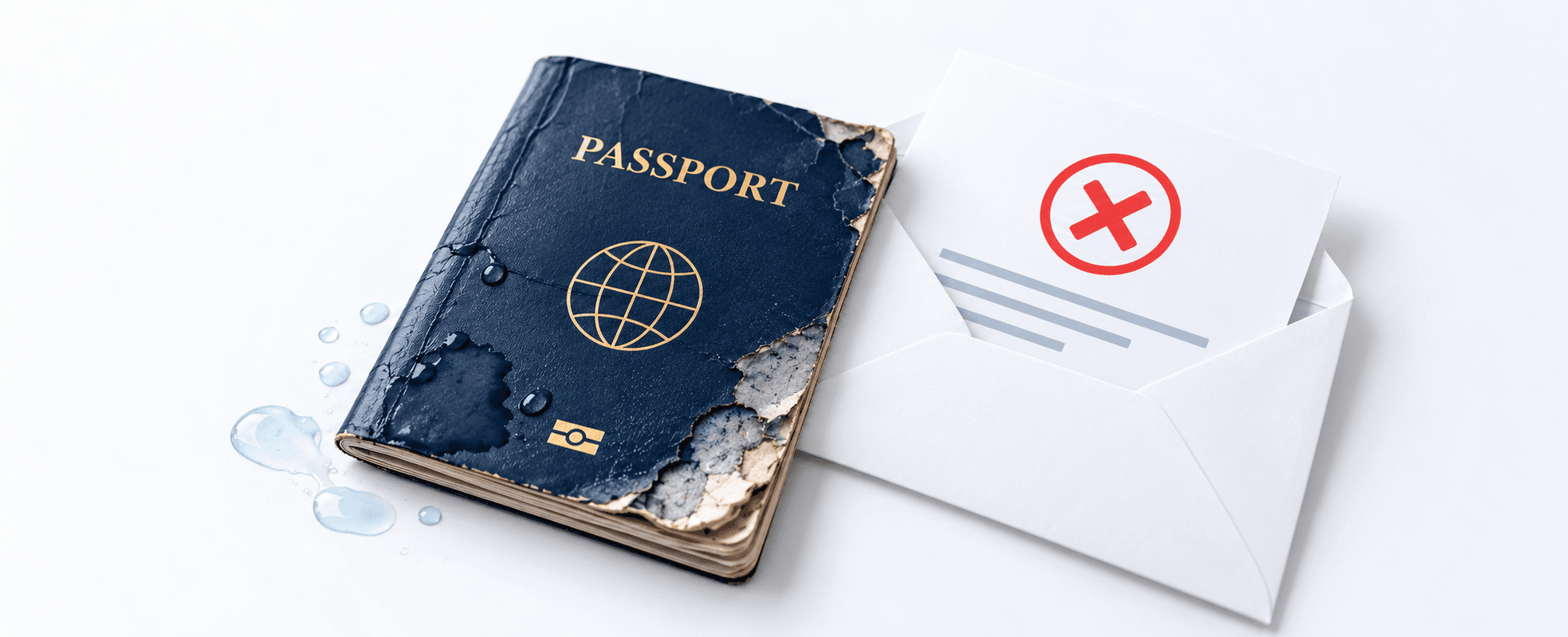
Yes, a damaged passport can cause problems with an e-visa application, airline check-in or entry at the border. The risk depends on how serious the damage is and whether it affects important parts of the passport.
Small signs of normal wear, such as slight bending or minor edge wear, are usually different from serious passport damage.
If your passport has water stains, torn pages, a damaged bio page or damaged security features, you should check the rules before applying for an e-visa or travelling.
What Is Considered a Damaged Passport?
Not every mark means that your passport is invalid. However, the following types of damage can be serious:
- Large water stains or heavy water damage
- Torn or missing pages
- Damage to the personal-details page
- A damaged photograph or laminate
- Damaged passport chip
- Damaged security features
- Unofficial marks on the bio page
- Damage affecting visas or immigration stamps
The U.S. Department of State includes water damage, significant tears, missing or torn visa pages and damage to the personal-details page among examples of passport damage.
Can Water Damage Affect Your E-Visa Application?
A water-stained passport is not automatically unacceptable, but serious water damage can create problems.
For example, your passport may be considered problematic if water damage:
- Makes your personal information difficult to read
- Damages your photograph
- Affects the laminate
- Separates the pages
- Damages the passport chip
- Makes visas or immigration stamps unclear
The most important factor is whether the passport remains readable, secure and valid as a travel document.
Can You Apply for an E-Visa With a Damaged Passport?
You may be able to submit an e-visa application using a damaged passport, but application submission does not guarantee that the passport will be accepted for travel.
An e-visa is generally connected to the passport details used in the application. If the passport is later rejected by an airline or immigration authority, an approved e-visa may not solve the problem.
If your passport is seriously damaged, replacing it before applying for an e-visa is usually the safer option.
Can an Airline Refuse Boarding Because of Passport Damage?
Yes.
Even if you have a valid visa or approved e-visa, an airline can refuse boarding if your passport does not meet the destination's travel-document requirements.
This means:
Valid e-visa + seriously damaged passport = possible boarding problem
Airlines check travel documents before departure, so do not wait until the airport to find out whether your passport is acceptable.
Can Immigration Refuse Entry Because of a Damaged Passport?
Yes. A border authority can refuse a passport that is considered damaged or invalid.
For example, New Zealand Immigration states that it may not accept a damaged passport or travel document.
Rules vary between countries, so you should always check the requirements of your destination before travelling with a damaged passport.
Is a Damaged Passport Cover a Problem?
Not necessarily.
Minor damage to the cover may not make a passport unusable if the personal-details page, security features, visas and binding are unaffected.
However, a heavily damaged cover can still raise concerns during airline or border checks.
If the damage is significant, replacing the passport is the safer choice.
Can You Travel With a Torn Passport Page?
A torn or missing passport page can be considered serious passport damage.
This is especially important if the damaged page contains a visa, immigration stamp or other important information.
Do not try to fix a torn passport page with tape or glue. Contact the passport-issuing authority if you believe the document needs to be replaced.
What If the Bio Page Is Damaged?
The bio page is one of the most important parts of your passport because it contains your personal and security information.
Travel can become difficult if the bio page has:
- Tears
- Blurred information
- A damaged photograph
- Broken laminate
- Unofficial markings
- Damaged security features
If the personal-details page is damaged, consider replacing the passport before applying for an e-visa or booking your trip.
What If the Passport Chip Is Damaged?
A damaged passport chip can cause additional problems during check-in and border control.
Even if your passport number and personal information are still readable, damage to the chip or other security features can affect whether the passport is accepted.
If you suspect that the chip or security features are damaged, check with the authority that issued your passport.
Should You Replace Your Passport Before Applying for an E-Visa?
If the damage is serious, yes.
Applying for an e-visa first and replacing your passport later can create a passport and visa mismatch.
A safer process is:
Replace damaged passport → apply for e-visa with the new passport → travel with the same passport
If your e-visa has already been approved and you later replace your passport, check the destination's rules. You may need to transfer the visa or submit a new application.
Can You Repair a Damaged Passport?
Do not try to repair serious passport damage yourself.
Avoid:
- Gluing pages
- Using tape
- Laminating the passport
- Altering damaged areas
- Adding unofficial markings
A passport is a security document, and attempts to repair or alter it can create additional problems.
If your passport is seriously damaged, contact the authority that issued it about replacement.
Check Your Passport Before Travelling
Before applying for an e-visa or travelling internationally, check:
- Personal-details page
- Photograph and laminate
- Passport binding
- Pages and edges
- Visa pages
- Passport chip
- Machine-readable zone
If an important part is damaged, check the destination's requirements before travelling.
Damaged Passport: What Should You Do?
A simple rule can help:
Minor bending or normal wear → usually not a serious problem
Small edge damage → check the passport authority's guidance
Water stains → check whether important information or security features are affected
Torn or missing page → consider replacing the passport
Damaged bio page → replace the passport
Damaged chip or security features → replace the passport
Frequently Asked Questions
Can I travel with a water-damaged passport?
It depends on the severity of the damage. Minor stains may not automatically make a passport unacceptable, but significant water damage can cause problems at airline check-in or border control.
Will an e-visa work if my passport is damaged?
Not necessarily. An approved e-visa does not guarantee that a seriously damaged passport will be accepted for travel.
Can an airline refuse boarding because of a damaged passport?
Yes. An airline may refuse boarding if your passport is considered damaged or does not meet the destination's travel-document requirements.
Is a slightly bent passport considered damaged?
Usually, minor bending and normal signs of use are different from serious passport damage. However, the passport must still be readable and its security features must remain intact.
What should I do if my passport page is torn?
Do not repair it yourself with tape or glue. Contact the passport-issuing authority and check whether you need a replacement passport.
Should I replace my passport before applying for an e-visa?
If the passport is seriously damaged, replacing it first can help avoid problems with your e-visa and passport details later.
Share this post:


